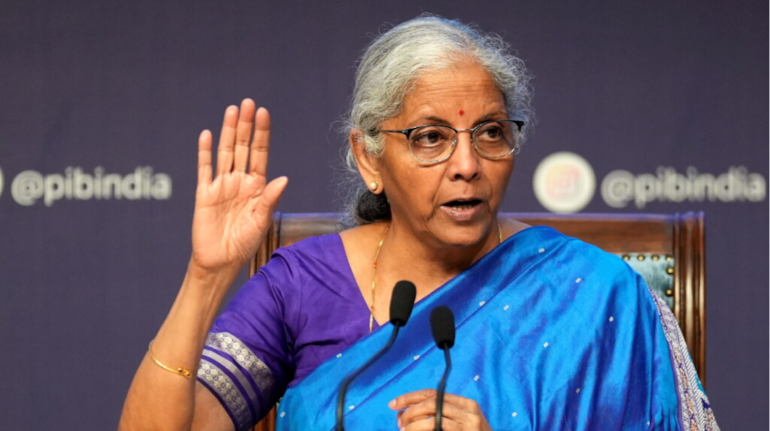
Finance Minister Nirmala Sitharaman said on December 2 that rapid digitalisation, financial products and complex ownership structures are creating new challenges for global tax systems, as she called for international cooperation to maintain fiscal integrity and prevent illicit financial flows.
“The digitalisation of the economy, the emergence of new financial products and evolving structures of beneficial ownership require continued cooperation between jurisdictions. Confidentiality and cybersecurity must also be maintained with great care. These are not challenges that any one country can address alone,” Sitharaman said.
The minister was speaking at the inaugural session of the Organisation for Economic Co-operation and Development (OECD)’s 18th Global Forum Plenary on Transparency and Exchange of Information for Tax Purposes in New Delhi.
“We must also adapt to new challenges, including digital economy taxation and crypto assets reporting framework, which calls for both technical innovation and coordinated action,” revenue secretary Arvind Shrivastava said.
Transparency critical
Sitharaman said tax transparency must be seen as more than a compliance measure, describing it as “a foundation for sustainable development and fiscal resilience”.
The minister said when national wealth escapes legislative taxation, it creates both revenue and development gaps, particularly in emerging economies.
New vulnerabilities created by digitalisation and complex financial instruments need stronger global coordination to safeguard confidentiality and cybersecurity. “Transparency in taxation is essential for mobilising domestic resources and preventing development gaps,” she said.
Voluntary compliance
Pointing to India’s experience, the minister said over the past decade, voluntary compliance has strengthened visibly.
“Our laws against illicit financial goods and undisclosed foreign assets reflect this view, as does our participation in both the exchange of information on request and the automatic exchange of information standards,” she said.
Transparency also has a direct effect on development. Public infrastructure, education, health services, and welfare programmes all depend on domestic resources. “For developing countries, this effect is particularly significant. Every rupee or dollar mobilised through transparency can help improve lives,” she said. “It is therefore important to view transparency not only as a compliance tool, but also as a foundation for sustainable development and fiscal resilience.”
Citizens are more willing to participate when they are certain that the system rewards honesty and acts firmly against evasion. “That improvement in tax morale did not come from enforcement alone. It came equally from parity, simplification, and a consistent effort to build trust with actors,” she added. “This connection between transparency and public trust is vital, both nationally and internationally.”
Fairness and credibility, when demonstrated in practice, encourages participation far more effectively than coercion. “That lesson, we believe, holds relevance beyond national borders,” she said.

Discover the latest Business News, Sensex, and Nifty updates. Obtain Personal Finance insights, tax queries, and expert opinions on Moneycontrol or download the Moneycontrol App to stay updated!

Find the best of Al News in one place, specially curated for you every weekend.
Stay on top of the latest tech trends and biggest startup news.