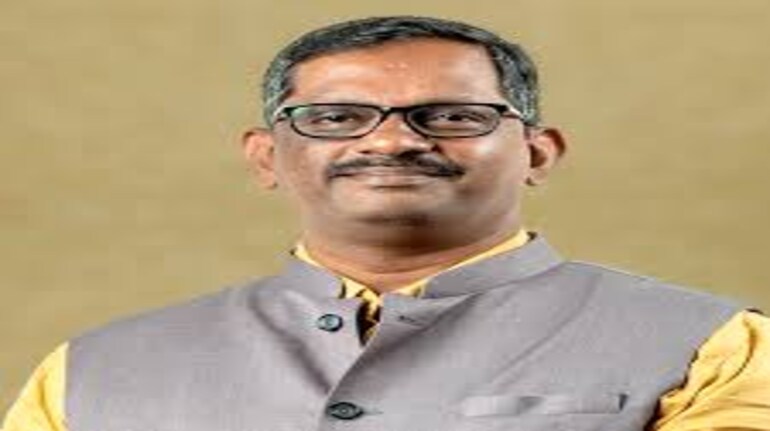
India should not keep China at bay even as the country's "resilient" domestic demand allows for better trade deals with the likes of United States, European Union and United Kingdom, NR Bhanumurthy, Director, Madras School of Economics said in an interview with Moneycontrol.
Bhanumurthy said trade agreements should be a ‘win-win situation’ for the nations involved, and India is definitely better-placed to negotiate trade agreements with the countries it is talking to right now – UK, US, EU and Australia.
"We have to be apprehensive about our trade relations with China. It’s not an easy task. However, in this situation of trade uncertainty, we should not keep China at bay," Bhanumurthy added.
The economist projected India’s GDP to grow by at least 6.3% in FY26, in the backdrop of lower crude oil prices and the forecast of above-normal monsoon.
Edited Excerpts:Q. Our goods exports have inched up 0.1% on year in FY25, while imports have grown 6.5%. Given the uncertainty of tariffs, how do you see exports performance in FY26?
A. US tariffs are still work in progress. We need to wait until the 90-day pause gets over, only then the tariffs’ full impact on India could be assessed. It’s also important to assess the overall tariff situation across countries. On India, I see three stages of impact. One is the direct impact of tariffs, in whichever sectors the tariffs are imposed, it will be difficult for India to export those sector-specific commodities. Second is how the global trade be impacted. Since India’s exports are largely dependent on global economy, we need to see whether and to what extent the tariffs will slow down the global economy. And the third is, how India will attract foreign investment, both in the short and medium term.
Q. Do you think India needs to lower tariffs to make exports more competitive, and in which sectors?
A. Some of us have been arguing for lower tariffs to improve our competitiveness. The government has also shown its intent in reducing tariffs, as seen in the Union Budget for FY26. I saw in the news that India is the only country that has erased all the losses in the stock market since April 2. That shows, India has the resilience to face any kind of shocks. The sector where we may reduce tariffs is perhaps agriculture, but we need to also look at how that will impact domestic prices.
Q. What should be India’s focus when brokering trade deal with the US?
A. We’ve been running trade surplus with US. But now the US President Donald Trump’s purpose is to reduce trade deficit to zero, which will be a big issue for us. Trade is supposed to improve to welfare of both the nations, not make each other poorer. Wherever we need to keep domestic industry’s welfare in mind, we need to protect them. There are some areas, such as oil & defence, where we can’t agree with US. We can’t only import oil from US, as that would be expensive for us.
Pharma, automobiles, electronics, gems & jewellery, and textiles are some sectors where we have a slightly better advantage. These sectors also provide a lot of employment domestically. We need to protect jobs as well. This entire exercise is heavily data oriented.
Q. Given the US and China trade war, should India look to leverage the situation by getting closer to Beijing which may help narrow the trade deficit with them?
A. We have to be apprehensive about our trade relations with China. It’s not an easy task. However, in this situation of trade uncertainty, we should not keep China at bay. Our domestic demand is resilient, and that should increase our bargaining capacity whenever we strike any trade deals. Demand, competitiveness, and productivity are our strength, which would help in bargaining better deals. At the end of the day, trade agreements should be a win-win situation for both the countries. And we’re definitely better placed to negotiate trade deals with the countries we’re talking to right now – UK, US, EU and Australia.
Read More: India, US look to wrap up talks before fall as BTA contours finalised
Q. What’s your GDP growth outlook for FY26, in the backdrop of looming global tariff war?
A. The Economic Survey has projected India’s growth between 6.3-6.8% in FY26. This figure itself has taken care of an expected slowdown in exports as against FY25. I would not be very pessimistic in my growth projections. I believe 6.3% is doable. There are some positives too, oil prices are down, inflation is contained, and inflation expectations are low. The only assumption is that there should be a normal monsoon, if that happens, 6.3% will be achieved.
Q. The India Meteorological Department (IMD) has forecasted the southwest monsoon at 105% of Long-Period Average (LPA), above-normal monsoon…
A. This would benefit both Rabi & Kharif crops. Since Rabi heavily depends on reservoir levels, 105% forecast certainly augurs well for agriculture output. In the absence of external demand, with better agriculture output, 6.3% growth would definitely be achieved.
Discover the latest Business News, Sensex, and Nifty updates. Obtain Personal Finance insights, tax queries, and expert opinions on Moneycontrol or download the Moneycontrol App to stay updated!
Find the best of Al News in one place, specially curated for you every weekend.
Stay on top of the latest tech trends and biggest startup news.