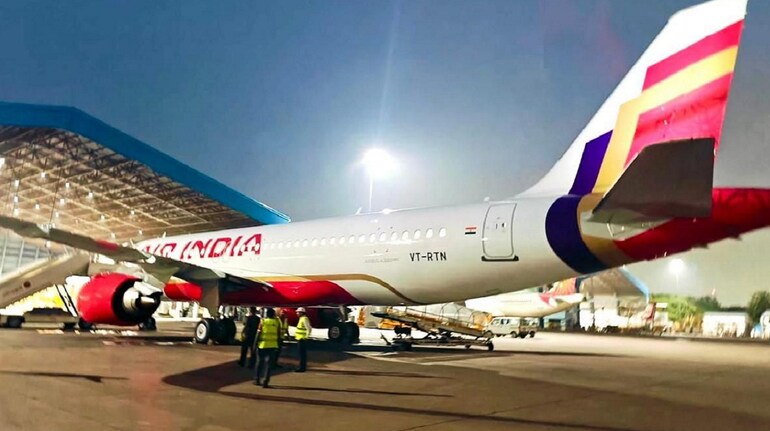

Air India’s troubling safety-related ratings with the European Union Aviation Safety Agency (EASA), which placed the airline under “elevated concern”, could begin improving before the end of 2026 as retrofitted wide-body aircraft enter the fleet and gradually replace ageing planes.
The Air India, owned by Tata Sons, said it remains on track to induct nearly a dozen refurbished wide-body aircraft in the coming months following extensive retrofit programmes. The upgraded aircraft, featuring refreshed cabins, are expected to address several issues flagged during European inspections, including broken seats and faulty tray tables.
“From 1.96 at the start of 2026, Air India’s score is already down to 1.6 as of March 16,” an airline official said. “Our first retrofitted B787 will arrive in the next few weeks. Throughout this year, 10–12 such retrofitted aircraft will join the fleet, and by next year 80–90 percent of these issues will be resolved.”
Air India flies a mix of narrow and wide body planes made by Airbus and Boeing. While the narrow body fleet comprises either completely new planes or retrofitted planes, the airline has quality and durability issues with its wide-bodies including the Boeing 787 and the Boeing 777 which are the oldest in its fleet.
How EASA inspections work?
The EU aviation watchdog conducts Safety Assessment of Foreign Aircraft (SAFA) inspections — surprise ramp checks carried out when non-European airlines land at airports across the 27-member country bloc. These inspections verify whether aircraft operations comply with international safety standards set by the International Civil Aviation Organization (ICAO).
Inspectors record “findings” whenever deviations from safety standards are detected. Airlines are evaluated through a “findings per inspection” ratio:
*Below 1: strong compliance
*Around 1–1.5: moderate deficiencies
*Around 2 or higher: may trigger enhanced monitoring or operational restrictions.
Differences in regulatory interpretation
Air India maintains that differences between European and Indian regulatory interpretations partly explain the higher findings.
For instance, a broken passenger seat may not be classified as a safety issue by the Directorate General of Civil Aviation (DGCA) but could still be flagged in a European inspection.
“These aircraft flying to Europe are fully airworthy and undergo periodic reviews by the DGCA,” the airline official said. “Every regulator has a different perspective. For example, sliding doors on the B787 are not approved by the FAA but are approved by EASA. None of the findings in these audits were safety-critical operational issues — most related to documentation.”
Failure to report defects
Air India also acknowledged that some issues were not reported to EASA as required, which contributed to the elevated inspection ratio.
“EASA expects airlines to log such defects with them. We did not log some of these issues as problems, and the absence of reporting itself became a factor that increased the inspection ratio,” the official said.
Still higher than global peers
Although the airline has managed to bring down its SAFA ratio to levels that reduce the risk of restrictions on European operations, its score remains significantly higher than leading global carriers such as Lufthansa, Air France, Emirates, British Airways and Singapore Airlines, whose inspection ratios typically range between 0.3 and 0.8.
During ramp inspections, EASA officials use a 53-item checklist covering aspects such as pilot licences, cockpit manuals, crew procedures, safety equipment, cargo documentation and the aircraft’s technical condition. Because the time between arrival and departure is often limited, inspectors may not always complete the full checklist during each inspection.
Air India hopes that fleet modernisation and improved reporting practices will gradually bring its inspection ratios closer to global benchmarks over the next year.

Discover the latest Business News, Sensex, and Nifty updates. Obtain Personal Finance insights, tax queries, and expert opinions on Moneycontrol or download the Moneycontrol App to stay updated!
Find the best of Al News in one place, specially curated for you every weekend.
Stay on top of the latest tech trends and biggest startup news.