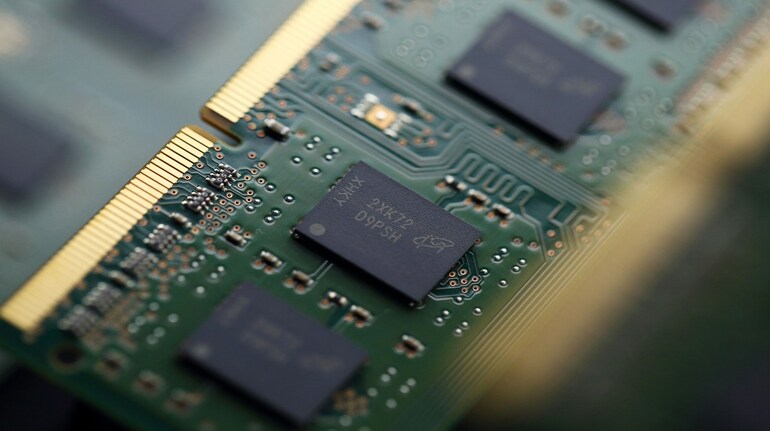
Global chipmakers powering most consumer electronics and smartphones sold in India — including Qualcomm and MediaTek — are increasingly eyeing the country’s fast-evolving semiconductor manufacturing and packaging ecosystem. Local sourcing, they say, could help cut costs, strengthen supply chains and ultimately make devices more affordable for Indian consumers.
Both fabless chipmakers have expressed willingness to tap into India’s emerging fabrication and chip packaging capacities if local production proves strategically and commercially viable.
“India has had multiple false starts over the last 20 years in building a semiconductor manufacturing ecosystem. But this time, I believe things are truly taking off. We’ll certainly evaluate that possibility. It depends on how the ecosystem matures, but if it makes sense strategically and commercially, we’d be happy to source locally,” Anku Jain, managing director of MediaTek India, told Moneycontrol.
Jain added that every major supplier now wants to be in India because others are entering the market, and the government’s PLI schemes have played a major role in driving this momentum.
“Already, around ten major semiconductor projects have been announced. This growth isn’t limited to fabs and OSATs but extends to electronics manufacturing as a whole. For MediaTek, even though we’re a fabless company, this ecosystem expansion excites us because it can enable more local collaboration and innovation,” he said.
Taiwanese MediaTek’s American rival Qualcomm is already in talks with multiple suppliers, including the Tata Group, to utilise the country’s chip packaging capacity and is open to engaging with new fab players, said Akash Palkhiwala, the company’s chief operating officer and chief financial officer.
“The government is launching very strong initiatives around semiconductors, Made in India, and digitising the country. We’re supporting these efforts in multiple ways…we’re in discussions with various suppliers, and as they scale capacity and build the kind of manufacturing we need, we plan to tap into that. We’re also closely engaged with groups like the Tata Group and others,” he recently told Moneycontrol.
Tarun Pathak, research director at Counterpoint Research, said Qualcomm and MediaTek already have strong R&D bases in India and can play a key role in shaping the value chain that emerging local players will drive. “They can even build custom solutions and back companies that need strong IP and design support,” he added.
India R&D Focus
Both Qualcomm and MediaTek specialise in designing chips and are best known for processors that power smartphones, tablets, IoT devices, and telecom equipment. Both have been expanding their India presence through increased R&D investments.
“Our Indian R&D centers play two key roles. First, we’re an extension of global R&D, working on technologies like 5G, AI, Wi-Fi, and connectivity—covering both hardware and software design. Second, as India’s local ecosystem develops, our teams also focus on supporting local partners and companies, helping them integrate and optimize our solutions,” Jain said.
He added that this dual focus—global innovation and local collaboration—makes the Taiwanese chipmaker’s India operations strategically very important.
Qualcomm’s Palkhiwala also said the company’s R&D operations in India have grown significantly over the past two decades, especially in the last five years.
“The talent pool is incredible. Secondly, we have many strong customers here and we want engineering to be close to customers to support them. I don’t see any of that changing. As we continue to grow as a company, we’re going to need different skill sets, and those are available in India, so we’ll tap into them,” he said, adding that more investments are expected.
Chip Prototypes Rollout Soon
Under the Rs 76,000-crore India Semiconductor Mission (ISM), a total of 10 semiconductor projects have been approved with proposed investments of about Rs 1.6 lakh crore across six states, according to government data.
In August, the government cleared four new semiconductor projects worth Rs 4,594 crore under the ISM, taking the total number of approved chip manufacturing facilities to ten. Among these, Micron, CG Semi, Tata Electronics’ chip assembly plant in Assam, and Kaynes OSAT plant together account for investments of around Rs 66,000 crore.
CG Semi, Micron, Tata Electronics, and Kaynes are preparing to launch chip prototypes from their pilot production lines this year, with commercial rollouts expected next year. While full-scale fabrication facilities are still under development, pilot lines and small-scale production setups used for testing chip batches are now nearing completion.



Discover the latest Business News, Sensex, and Nifty updates. Obtain Personal Finance insights, tax queries, and expert opinions on Moneycontrol or download the Moneycontrol App to stay updated!





Find the best of Al News in one place, specially curated for you every weekend.
Stay on top of the latest tech trends and biggest startup news.