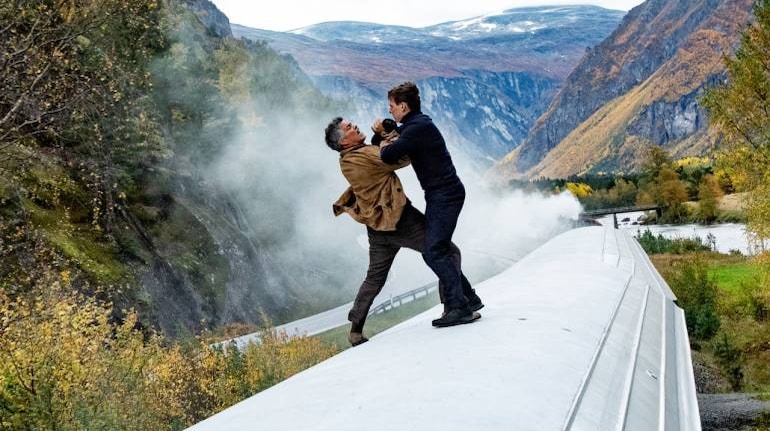
The final scenes of Mission: Impossible 7 are set on the Orient Express. As the party moves from Venice to Innsbruck, Ethan Hunt and his team have to find a way to get on the train and get out with the two interlocking keys that are, well, the key to saving the world.
Also read: Mission: Impossible 7: Ending Explained
Filmed in Norway and the United Kingdom (the shot where the train engine goes off the rails and falls into a river has been filmed in Darlton Quarry in the UK. In reality, the engine lands into something of a puddle and not a lush river), the final scenes of the latest Mission: Impossible film are awesome no doubt, but even the most casual observer would not miss the luxury train they’re set in.
Thanks to a dialogue earlier in the film, we know that the train that the gang was planning to get on board is The Orient Express. They were all scheduled get on board at Venice and alight at Innsbruck, a plan that goes awry thanks to the antagonist that is only known as the Entity.
By the time the movie ends, several compartments of the train have crashed into a river below, the dining car has been trashed, the baby grand piano in the dining car has met a violent end and, overall, it isn’t a pleasant sight. Thanks to the BTS videos on YouTube, we know that the crew did not crash the real Orient Express but rather built a series of compartments that looked like the real deal. And then proceeded to destroy them.
Some of us know of The Orient Express from the Agatha Christie novel, Murder on The Orient Express. Those who find flickering images of the motion picture more alluring than the written word would likely remember it from the movie based on the same book. In any case, The Orient Express remains something like a relic from the past. A quick Google search would reveal that it isn’t unusual to wonder if the Orient Express is still running.
Is The Orient Express still going?That’s a tricky question to answer. A cursory Google search suggests that The Orient Express stopped running in 1977 or 2009. Technically, the correct answer to when The Orient Express stopped running is December 12, 2009, when the EuroNight sleeper train 469 Orient Express chugged out of Strasbourg on its final overnight journey to Vienna. The following day, on December 13, 2009, for the first time in 126 years, the name Orient Express was erased from official European train timetables.
So which Orient Express shut down in 1977?That would be the privately-run Venice Simplon-Orient-Express (VSOE). This is the train that most of us associate with the Agatha Christie book and the film - Murder on The Orient Express. It was as glamorous as you would imagine, and it was a privately run train.
1977 was when The Orient Express stopped running up to Istanbul. Its immediate successor was a decidedly less luxurious overnight service that ran between Paris and Bucharest. By 1991 the train ran only up to Budapest and by the turn of the century the route was shortened to Vienna. Over time, the route, which still went by Orient Express, was reduced even further, with Strasbourg as the starting point. By the time it shut in 2009, it was connecting Vienna, a city miles away from the original destination Istanbul. There was nothing ‘Oriental’ about The Orient Express, a term one could suggest as being politically incorrect and having colonial overtones.
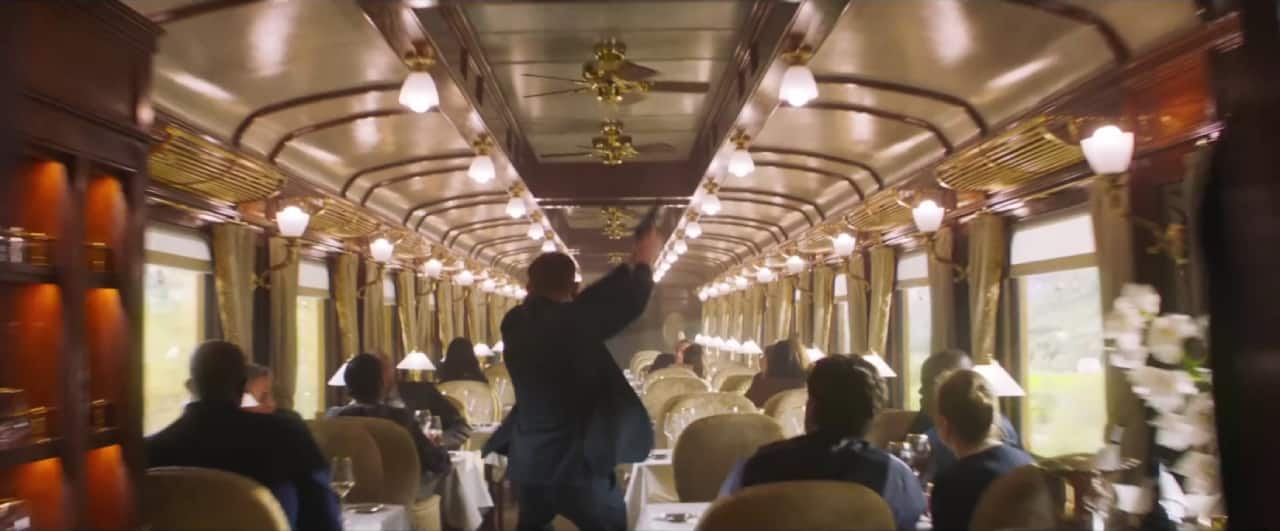 A cabin on The Orient Express today will set you back by £3,353 - £17,600 per passenger per night. (Screen grab from MI7)Which is the Orient Express in Mission: Impossible 7?
Through the 1980s, several iterations of the Orient Express were resurrected only to be shut down almost immediately. Only one survives – the Venice Simplon Orient Express (VSOE). It is also the luxury train referred to in Mission: Impossible 7.
Owned by Belmond, which itself merged into LVMH in April 2019, the Venice Simplon Orient Express continues to run vintage carriages restored from the 1920s and '30s and features three levels of accommodation – Grand Suites, Suites, and Historic Cabins.
Can I travel on the Orient Express?Yes, you can travel on the Venice Simplon Orient Express if you can afford it. Depending on where you’d like to start, the train has some 80 routes. The shortest of these journeys is for one night, with cabins starting from £3,353 per passenger and going up to a whopping £17,600 per passenger.
The cheapest accommodation is categorized as Historic Cabin, which is exactly what you’d imagine it to be – a snug space with two berths, one on top of the other. If you have trouble picturing it, imagine a First-Class AC coupé on an Indian Railways train but only way, way more luxurious.
One level up from the Historic Cabin are the Suites, which are a lot roomier. The room design is inspired by the landscape through which the train travels and the Art Deco period. Expect plush fabrics and furnishings that channel famed Art Deco designers, such as Dufrene and Lalique. The suites were reimagined and restored by French craftsmen, and feature double or twin beds, a private marble ensuite bathroom and a lounge area by day, as your bed converts to seating area. Here, you can also expect complimentary amenities including a kimono and slippers to take home, a nice touch when you’re paying north of £6,600, wouldn’t you say?
Go yet another level higher and enter the world of Grand Suites, which feature a spacious lounging area, allowing you to dine-in private, while champagne flows freely and a 24-hour butler is on call to service whatever your heart desires.
The on-board menu features fresh seasonal supplies that are loaded to the train at different stops along the journey and brought to life on your plate by renowned chefs even as mixologists dream up elegant cocktails to the sound of the resident pianist, playing requests on the baby grand piano.
Are there any more Orient Express trains being launched?The French Hospitality group Accor is set to relaunch what it calls the original Orient Express. The group uses the name Orient Express under licence from SNCF, the national train service of France.
Accor’s Orient Express is set to chug along in 2024, just in time for the Paris Olympics, and be as luxurious and opulent as you could possibly imagine. Details of itineraries are yet to be confirmed but it wouldn’t be a surprise if at least one route ends in Istanbul.
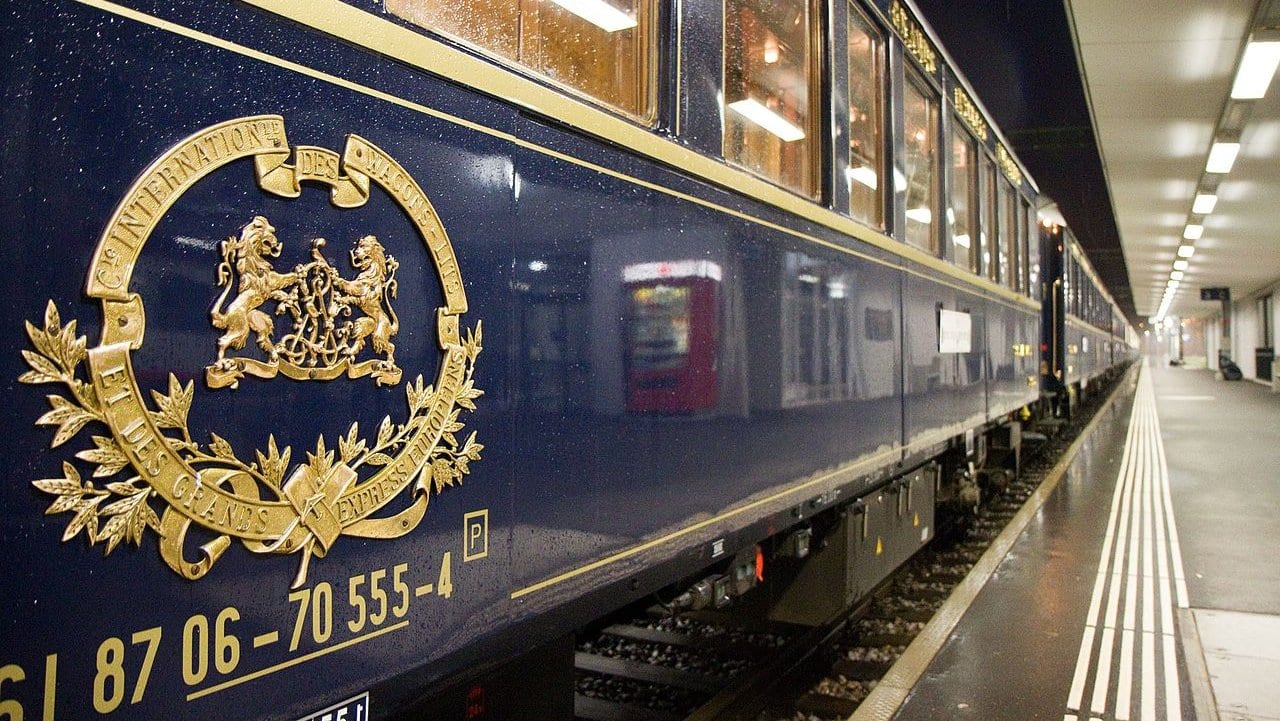 The Orient Express, formally the Compagnie Internationale des Wagons-Lits, during a halt at Buchs (St. Gallen), border station between Liechtenstein and Switzerland. (Photo via Wikimedia Commons)What was the original Orient Express known for?
When it launched, The Orient Express was the first long-distance luxury passenger train that connected Paris and Istanbul. While its route has changed over the years, The Orient Express originally ran through most major European cities such as Belgrade, Bucharest, Budapest, and Vienna.
With luxurious amenities, The Orient Express was practically a five-star hotel on wheels. Unsurprisingly, it became the most preferred way to travel for wealthy tourists and diplomats alike.
The brainchild of a Belgian engineer called Georges Nagelmackers, The Orient Express was imagined as ‘a train that would span a continent, running on a continuous ribbon of metal for more than 1,500 miles.’ It wasn’t long before newspapers dubbed the train The Orient Express, a hat-tip to its destination, Istanbul, the gateway to the East. Nagelmackers loved it and instead of dismissing it, actually embraced it.
And so, on June 5, 1983, The Orient Express set out on its maiden journey from Paris’ Gare de l’Est. At first it travelled only up to Vienna, which remained the final stop for The Orient Express for some months until the route was extended to Giurgiu, Romania.
Here, the passengers were ferried across the Danube to Ruse, Bulgaria. From here, they boarded another train to Varna and then to Constantinople or Istanbul as we know it today.
It would take another few years before a new route would make it possible for passengers to travel directly to Constantinople/Istanbul via rail without the hassle of changing modes of transport.
The Orient Express became famous not merely because it was a luxury train but rather what it represented. In 80 short hours, you could transport yourself from the quiet sophistication of Parisian arrondissements to the bustling bazaars of Istanbul. It didn’t just connect countries and kingdoms but also cultures and did so in a manner so glamorous that the Orient Express came to be called the king of trains and the train of kings.
Discover the latest Business News, Sensex, and Nifty updates. Obtain Personal Finance insights, tax queries, and expert opinions on Moneycontrol or download the Moneycontrol App to stay updated!
Find the best of Al News in one place, specially curated for you every weekend.
Stay on top of the latest tech trends and biggest startup news.