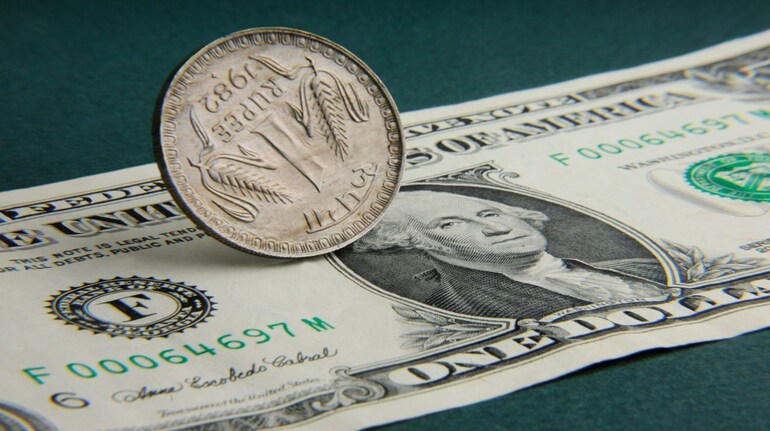
Indian rupee has depreciated to a record low on December 1 despite the a very strong GDP print in the second quarter of the current financial year, but experts believe that the central bank will protect the currency from the free fall amid tariffs uncertainties.
Experts added that foreign fund outflows, high demand for dollars from importers, and delays in the India-US trade deal put heavy pressure on the rupee.
The rupee declined to 89.76 against the US dollar, dipping past its previous record low of 89.49 hit about two weeks back.
“RBI is very well aware of the depreciation and may protect the weaker rupee level. The central bank has never targeted any level and in the past they said exchange rate to be market driven and intervene to curb volatility,” said Dilip Parmar, a foreign exchange analyst at HDFC Securities.
Further, Abhilash Koikkara EVP - Head Forex & Commodities at Nuvama Professional Clients Group said RBI’s FX strategy shifted as external pressures intensified. Through the summer and early autumn, it intervened consistently to stabilise the currency, but the cost of defending a single level grew progressively heavier.
RBI's concerns may persist
Experts said that the central bank is expected to acknowledge the currency’s depreciation in the upcoming monetary policy on December, but may avoid signaling any levels to the currency.
“RBI is likely to acknowledge currency weakness as a risk but will avoid signalling any explicit line in the sand,” said Koikkara.
RBI Governor Sanjay Malhotra has repeatedly stated that the central bank “does not target any specific level” of the rupee and instead prioritises curbing abnormal volatility.
Malhotra added recently that the rupee's recent weakness reflects natural market dynamics, and that annual depreciation of around 3-3.5 percent aligns with long-term trends. This stance allows the MPC to retain room for a growth-supportive rate cut without being tied to defending any particular level and intervene in the markets to stabilise the volatility.
INR Vs Rest of the market: a comparison
According to the Bloomberg data, Indian rupee depreciated 4.46 percent between December 31, 2024, and December 1, 2025. It has become a worst performing currency among Asian peers, after Indonesian Rupiah which depreciated 3.34 percent during same period, Philippine Peso depreciated 1.20 percent, and Hong Kong Dollar depreciated 0.26 percent.
Among the Emerging Markets, Indian rupee is third worst performing currency. Argentina Peso and Turkish Lira is among the worst performing currencies in Emerging Market, with depreciation of 28.90 percent and 16.80 percent, respectively.
The depreciation in the local currency is highest in last three years due to tariffs related impact leading to higher demand for dollars among importers and outflows of funds from domestic equity market.
Data also showed that, the domestic currency was down 1.76 percent in 2024, 0.67 percent in 2023, and 8.48 percent down in 2022.
What has caused so much depreciation?
Koikkara explained saying that pressure on the currency built steadily through the second half of the year amid the lack of a trade deal, despite India being one of the first countries to start negotiations on tariffs with the US. October and November saw the sharpest stress as the dollar surged during the prolonged US government data blackout, global EMFX weakened amid dollar strength, and fiscal and political issues worldwide put pressure most notably on the pound and yen.
Further, he added that RBI acted as the primary stabiliser in the market during those months, absorbing elevated dollar demand from large corporates and importers. “This pressure is expected to increase further as India reduces Russian oil purchases under US sanction constraints when India was importing close to 35% of its total oil needs from Russia.”

Discover the latest Business News, Sensex, and Nifty updates. Obtain Personal Finance insights, tax queries, and expert opinions on Moneycontrol or download the Moneycontrol App to stay updated!
Find the best of Al News in one place, specially curated for you every weekend.
Stay on top of the latest tech trends and biggest startup news.