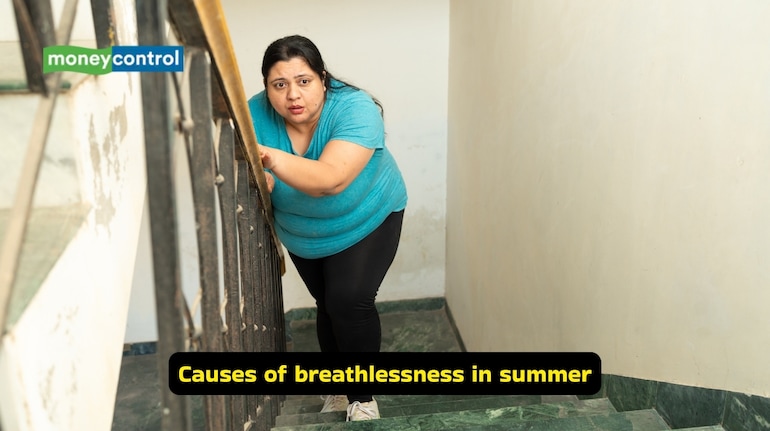

With summer months threatening to increase temperatures across the country, you need to protect yourself against seasonal illnesses. However, with rising temperatures, there is another risk you must be aware of: Increased breathlessness.
While many think it is a minor issue, the situation can escalate if not addressed adequately in the beginning. While the exact causes of breathlessness in summer are still unclear, experts say it has a lot to do with increased temperature.
Hot weather, humidity, and pollution are some of the major factors that affect the lungs in summer. Rising temperature puts strain on the lungs, which can make breathing more difficult than usual.
Also read | Out of breath going up stairs? It could be symptom of heart attack, lung disease
Dr Omkar Konjeti, Attending Consultant – Interventional Pulmonology, Lung Transplantation & Sleep Medicine, KIMS Hospitals (Krishna Institute of Medical Sciences), Bengaluru, tells Moneycontrol, “Understanding the underlying causes of these triggers and taking some simple precautions will go a long way in keeping our lungs healthy in summer.”
When summer temperatures rise, the air is not only hotter and more humid, but also less dense. Hot air can irritate the airways and create heaviness in your chest. This is especially evident in people with chronic respiratory illnesses such as asthma or chronic obstructive pulmonary disease (COPD).
How to handle it: Rest in a cool, well-ventilated area, and try to avoid outdoor activities around peak heat (12-4 pm) whenever possible.
Also read | Struggling to breathe? 8 medical reasons you should know
The body loses excess fluids through sweating during the hot summer months. When you become dehydrated, the mucus in your airways becomes thickened, which reduces the efficient exchange of oxygen and creates a sensation of effortful breathing.
How to handle it: Drink enough fluid daily to maintain hydration. Coconut water and fluids containing electrolytes can also help maintain hydration.
Air pollution levels are typically higher with hot temperatures. Dust, pollen, and other air pollutants can irritate and trigger respiratory discomfort in the lungs.
How to handle it: Check the local air quality history before leaving your house and wear a protective mask if the air has high emissions.
When the humidity level rises, the air feels heavier. Rising moisture levels in the air can cause sweat to evaporate less quickly; thus, the body feels breathless or distressed from overheating because the body cannot regulate its temperature.
How to handle it: Use one or more fans, air conditioners, or dehumidifiers indoors during high humidity, and avoid doing any strenuous exercise outside.
Most people continue to follow their normal exercise routine throughout the summer heat; however, exercising during extreme heat levels can place even greater demands on your heart and lungs due to how hard you have to push yourself when it's hot.
How to handle it: If you have to exercise outside during the summer, then do it only during the very early morning hours or the very late afternoon hours when the temperatures are cooler.
People who have existing cardiovascular or respiratory problems will typically experience more frequent episodes of breathlessness during periods of summer heat.
How to handle it: If you see increased shortness of breath, lightheadedness/dizziness, or chest pains, get medical help right away.
1. Why does hot air cause breathlessness?
Rising summer temperatures make the air hotter and more humid, which can irritate airways and cause chest heaviness, especially in people with asthma or COPD.
2. How does dehydration affect breathing?
Dehydration thickens the mucus in airways, reducing efficient oxygen exchange and causing effortful breathing. Staying hydrated with fluids like coconut water is essential.
3. How does air pollution contribute to breathlessness?
Higher temperatures often increase air pollution levels. Dust, pollen, and pollutants can irritate the lungs and trigger respiratory discomfort.
4. Why does high humidity make breathing difficult?
Increased humidity makes the air feel heavier and slows sweat evaporation, leading to overheating and breathlessness as the body struggles to regulate its temperature.
5. Does exercising in heat affect breathlessness?
Exercising in extreme heat places extra demands on the heart and lungs, causing greater breathlessness. It's best to exercise during cooler early mornings or late afternoons.
Disclaimer: This article, including health and fitness advice, only provides generic information. Don’t treat it as a substitute for qualified medical opinion. Always consult a specialist for specific health diagnosis.
Discover the latest Business News, Sensex, and Nifty updates. Obtain Personal Finance insights, tax queries, and expert opinions on Moneycontrol or download the Moneycontrol App to stay updated!
Find the best of Al News in one place, specially curated for you every weekend.
Stay on top of the latest tech trends and biggest startup news.