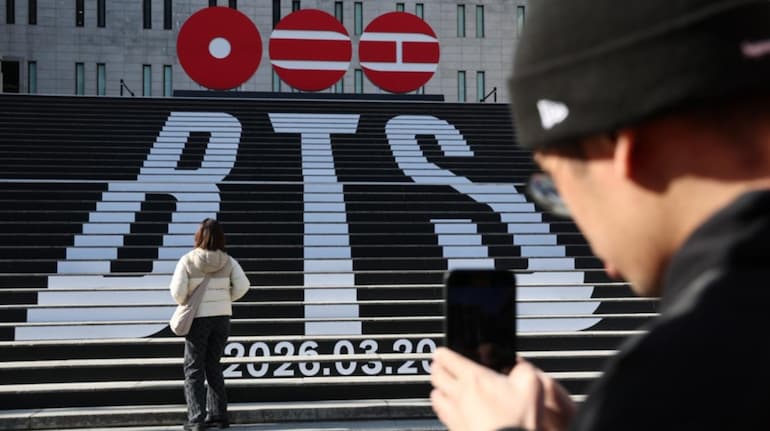

What was meant to be a landmark comeback for BTS has now spiraled into a major public controversy, as the aftermath of their large-scale performance at Gwanghwamun Square continues to dominate online discourse.
A detailed list of disruptions experienced by residents and businesses in central Seoul reportedly began circulating across online communities and social media. The post quickly went viral, with many users expressing frustration over the scale and duration of the inconvenience caused by the event.
The list outlined extensive citywide disruptions, including the suspension of subway services and closures at major stations such as Gwanghwamun, Gyeongbokgung Palace, and City Hall. Additional stations, including Euljiro Entrance, Anguk, and Jonggak, reportedly faced potential service interruptions. Public transport systems were heavily affected, with bus routes diverted and bike-sharing services, including Seoul’s Ddareungi network, restricted at dozens of locations.
Cultural landmarks and institutions also faced temporary shutdowns. Key sites such as Gyeongbokgung Palace and the National Palace Museum of Korea were closed, alongside multiple museums, galleries, and libraries in the area. Scheduled performances at venues like the Sejong Center and Sejong Grand Theater were canceled, further amplifying the impact on the city’s cultural calendar.
Beyond public infrastructure, the disruptions extended into everyday life. Roads around Gwanghwamun Square were fully closed for over 30 hours, while access to commercial buildings was restricted. Businesses were forced to shut early, delivery services were delayed or incurred higher fees, and even private events such as weddings were affected, with reports of strict security checks for guests.
Additional concerns included restrictions on gatherings, parcel delivery limitations in Jongno, and reports of drone signal jamming and crackdowns on unauthorised merchandise sales. Some citizens also raised concerns about privacy, alleging random ID checks and increased surveillance in the area.
The financial cost has also come under scrutiny, with approximately ₩38.0 million KRW reportedly spent on post-event cleanup alone. Critics argue that despite significant use of public resources, affected citizens and business owners were not offered compensation, nor did they receive formal apologies from authorities.
As frustration mounted, some netizens drew stark comparisons between the situation and emergency-level restrictions, even referencing the South Korea martial law lockdown 2025.
"The martial law ended after some snoozes. This is even worse," commented a netizen. "The martial law ended after 3 hours, f*ck, but they’ve been inconveniencing so many people for days. Frustrating," wrote another.
Discover the latest Business News, Sensex, and Nifty updates. Obtain Personal Finance insights, tax queries, and expert opinions on Moneycontrol or download the Moneycontrol App to stay updated!





Find the best of Al News in one place, specially curated for you every weekend.
Stay on top of the latest tech trends and biggest startup news.