






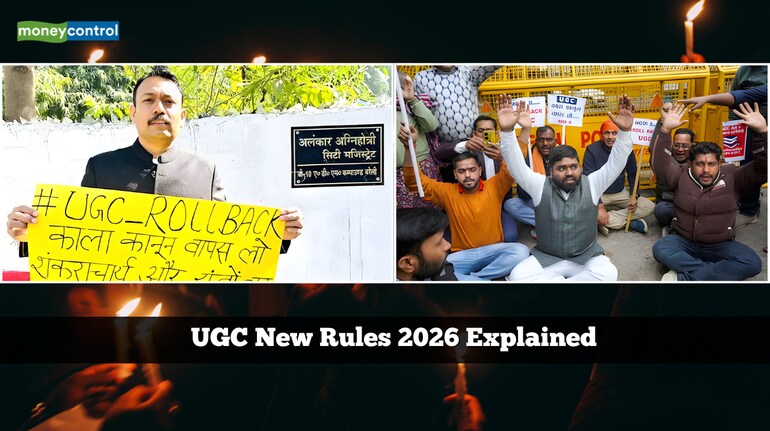

In a major move to make college and university campuses fairer for everyone, the Indian government has introduced new "Equity Regulations" through the University Grants Commission (UGC). These rules aim to address caste-based discrimination head-on. However, their announcement has led to protests and a heated national debate.
What Are the New UGC Equity Regulations?
The core of the new regulations requires every college and university (Higher Education Institution or HEI) to set up a special body called an Equal Opportunity Centre (EOC) on campus.
The job of this centre is to:
Why Were these Rules Created?
These regulations didn't come out of the blue. They were implemented following a Supreme Court order related to a petition. This petition was filed by the mothers of Rohith Vemula and Payal Tadvi.
The rules are an attempt to fix a system that has often failed to protect students from discrimination. Official UGC data itself shows that complaints of caste-based discrimination in universities more than doubled between 2019 and 2024.
Why Are People Protesting?
Despite the goal of promoting equality, the new rules have sparked protests, mainly led by a group called the "Savarna Sena" outside the UGC office in Delhi. Their main concerns are:
No Clear Provision for General Category Students: Protesters argue that while the rules create a system for students from Scheduled Castes (SC), Scheduled Tribes (ST), and Other Backward Classes (OBC) to raise complaints, there is no clear, separate provision for students from the General or upper-caste categories to report issues they might face.
Fear of Rising Tensions: They worry that the regulations might lead to a sudden increase in complaints, which could create division and unrest on campus instead of fostering unity.
Ambiguity in Rules: Some, like the All India Student Association (AISA), have pointed out that the definition of discrimination in the rules is broad. They fear this could give college administrations too much power to interpret incidents subjectively, potentially letting them off the hook.
What Has the Government Said in Response?
The government has taken note of the protests and has given a direct assurance. The government has stated that it will add a new provision to the Equity Regulations specifically to address complaints from General category students. This means the system will be expanded to hear grievances from all student groups.
The Ministry of Education maintains that the sole aim of the rules is to build more inclusive campuses and that no student group is being targeted. They are expected to issue more clarifications to clear up confusion and counter misinformation spreading online.
Reactions and Ripples
The debate has moved beyond university gates:
While many see them as a necessary step towards justice, others fear unintended consequences and a lack of balance. How these rules are finally implemented on the ground will determine their success in creating truly equitable campuses for every student.
Discover the latest Business News, Sensex, and Nifty updates. Obtain Personal Finance insights, tax queries, and expert opinions on Moneycontrol or download the Moneycontrol App to stay updated!
Find the best of Al News in one place, specially curated for you every weekend.
Stay on top of the latest tech trends and biggest startup news.










