






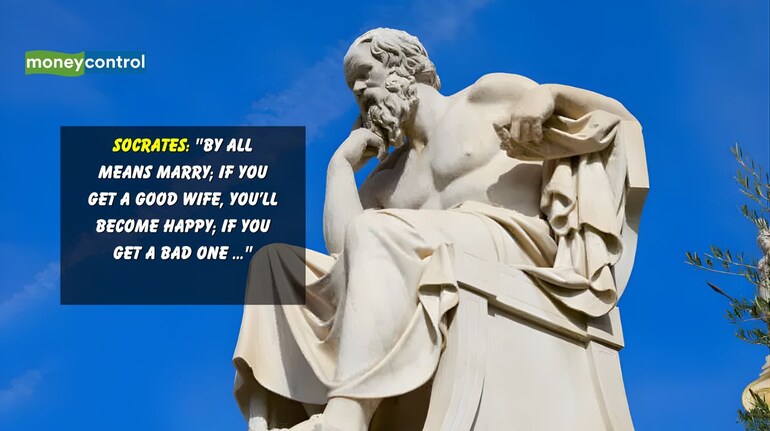
The ancient Greek thinker Socrates, known for his relentless questioning, also had thoughts on one of life's oldest institutions: marriage. With a tone that feels surprisingly modern, he offered this piece of advice: "By all means marry; if you get a good wife, you’ll become happy; if you get a bad one, you’ll become a philosopher."
At first read, this might sound like a simple, slightly cheeky take on marital luck. But with a second look, we see the classic Socratic depth hiding in plain sight, wrapped in a gentle joke.
On the surface, Socrates sets up marriage as a sort of win-win scenario, albeit with vastly different prizes.
The First Prize: Find a good partner, and you win the universal reward: happiness. It’s a straightforward, beautiful outcome that needs little explanation.
The Consolation Prize: Find a difficult partner, and you don’t walk away empty-handed. You gain something arguably more rare: the deep, examined understanding of a philosopher.
The humour comes from the stark contrast between the two outcomes. One path leads to domestic bliss; the other, apparently, leads to profound existential reflection.
The Deeper Truth: Philosophy Born from Friction
This is where Socrates' real insight begins. He isn’t just making a joke about difficult spouses. He is pointing to a universal truth: profound wisdom often grows from discomfort and challenge.
A "bad" marriage, in this context, becomes the ultimate classroom. It forces constant questioning—about patience, compromise, human nature, conflict, and one’s own flaws. To endure and understand such a complex relationship, a person must learn to observe, analyze, and reflect with extraordinary depth. They must develop patience, seek truth in messy emotions, and explore the meaning of virtue and endurance. In short, they are compelled to practice the very skills that define a philosopher.
Socrates, who famously declared “the unexamined life is not worth living,” is implying that a challenging relationship guarantees an examined life. You cannot sleepwalk through it. You are pushed to think, to adapt, and to seek deeper truths about yourself and others.
Ultimately, Socrates’ quote is less about judging spouses as "good" or "bad" and more about acknowledging how our closest relationships shape us. It suggests that while comfort may bring joy, friction can forge a different kind of richness: the richness of self-knowledge and wisdom.
Discover the latest Business News, Sensex, and Nifty updates. Obtain Personal Finance insights, tax queries, and expert opinions on Moneycontrol or download the Moneycontrol App to stay updated!
Find the best of Al News in one place, specially curated for you every weekend.
Stay on top of the latest tech trends and biggest startup news.









