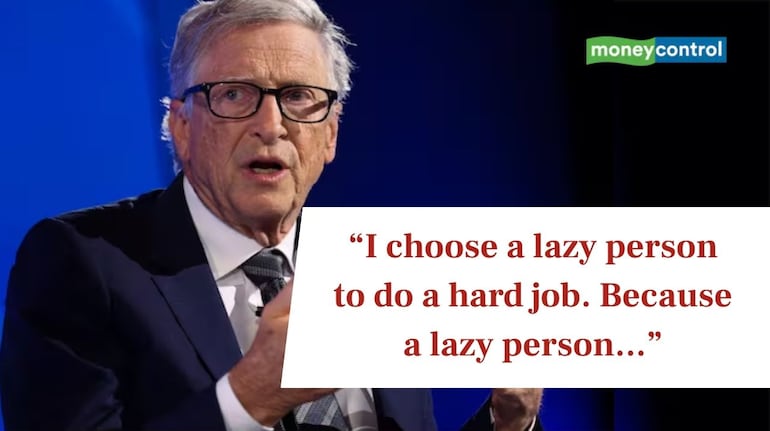

Bill Gates once said, “I choose a lazy person to do a hard job. Because a lazy person will find an easy way to do it.” The widely shared quote continues shaping modern workplace thinking, especially as organisations adapt to changing technologies, hybrid teams, and evolving productivity expectations.
What Bill Gates quote really means today
The statement is often misunderstood as praise for idleness. In reality, it reflects a deeper idea about efficiency. The so called lazy worker avoids unnecessary repetitive effort. Such individuals often question long and complex processes. They prefer simpler solutions that save both time and energy. Managers today increasingly recognise this behaviour as valuable thinking. Efficiency driven employees often redesign tasks and improve workflows. This approach reduces workload while maintaining consistent output quality. It also encourages creative problem solving within everyday tasks.
Why managers are rethinking laziness and efficiency
Traditional workplaces valued long hours and visible effort strongly. Employees staying late were often seen as highly committed. However, this view is gradually shifting across modern organisations. Leaders now focus more on outcomes rather than hours worked. A worker completing tasks quickly can deliver equal value. The idea supports measuring impact instead of measuring time spent. In fast moving industries, efficiency often determines overall success. Managers are beginning to reward innovation over routine effort. This shift aligns closely with Gates’ original observation about work.
At the same time, experts warn that not all shortcuts work. Poor shortcuts may reduce quality and create long term issues. Effective shortcuts remove unnecessary steps without harming final outcomes. Leaders must create environments where questioning workflows feels safe. Encouraging employees to rethink processes can unlock hidden improvements. Automation tools now support this shift across many industries. Routine work can be simplified using technology and better design.
What this means for future workplaces and leadership
The quote also highlights the importance of role suitability. Some professions require strict processes and careful execution always. In such roles, shortcuts can lead to serious consequences quickly. However, in technology and creative fields, efficiency drives innovation. Employees who dislike repetitive tasks often build automated solutions. This mindset leads to smarter systems and faster delivery outcomes.
Managers must balance efficiency with accountability across their teams. They should provide space for experimentation and independent thinking. Employees need tools and freedom to improve everyday work methods. Recognising efficiency as a strength can transform team performance. The idea continues influencing how modern workplaces define productivity.

Discover the latest Business News, Sensex, and Nifty updates. Obtain Personal Finance insights, tax queries, and expert opinions on Moneycontrol or download the Moneycontrol App to stay updated!





Find the best of Al News in one place, specially curated for you every weekend.
Stay on top of the latest tech trends and biggest startup news.