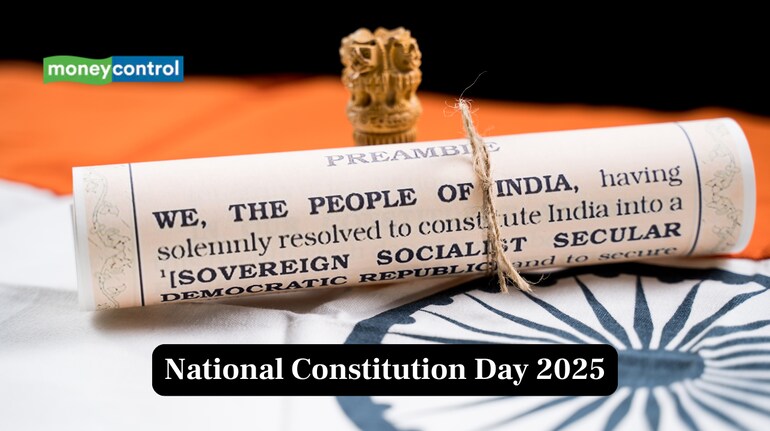
National Constitution Day, also known as Samvidhan Divas, is observed every year on 26 November to mark the adoption of the Indian Constitution. The day serves as a reminder of the vision of the Constituent Assembly and encourages people to understand the values that hold the country together. It is also an opportunity to strengthen constitutional awareness among students, public institutions and citizens.
History of National Constitution Day
The decision to officially observe Constitution Day was taken on 19 November 2015. Before this, the date was known informally as Law Day and was largely recognised within the legal community. The government chose to rename and formally acknowledge the day to highlight the importance of the Constitution and to honour Dr B.R. Ambedkar during his 125th birth anniversary year.
The Constitution itself took shape after long discussions and debates within the Constituent Assembly. The Assembly first met on 9 December 1946, and the drafting process went on for 2 years, 11 months and 18 days. The Drafting Committee, chaired by Dr B.R. Ambedkar was set up on 29 August 1947 to prepare the document. The draft was introduced before the Assembly on 4 November 1948, after which members examined each part in detail. The final version was adopted on 26 November 1949, and it came into full effect on 26 January 1950, the day India became a Republic.
Significance of Constitution Day
Constitution Day reminds citizens that the Constitution is not only a legal text but a guide for governance, rights and responsibilities. It reinforces India’s commitment to democratic values such as justice, equality, liberty and fraternity. The day also encourages people to understand Fundamental Rights, Duties and the principles that shape public life. It serves as a reminder of the work of the Constituent Assembly, especially the contribution of Dr B.R. Ambedkar, who played a central role in shaping the Constitution.
The day also allows people to reflect on values like secularism, federalism and the rule of law, which define India’s democratic structure. It encourages constitutional literacy and helps citizens recognise how these principles influence everyday life.
Drafting Timeline
The drafting of the Constitution was a detailed and extensive effort involving representatives from different parts of the country. The Constituent Assembly worked through social, political and administrative questions that shaped the nation’s future. Under the leadership of the Drafting Committee and continued debates in the Assembly, the Constitution evolved into a document that balanced rights, duties and governance structures.
With its adoption on 26 November 1949, the Constitution provided a clear framework for how independent India would function. It came into effect two months later, on 26 January 1950, which is now celebrated as Republic Day. The official designation of Constitution Day in 2015 further strengthened public engagement with the document and its values.
How Constitution Day Is Celebrated
Constitution Day is observed in schools, colleges, government offices and public institutions across the country. Activities often include the reading of the Preamble, discussions on constitutional rights and duties, and programmes that highlight the work of the Constituent Assembly and Dr B.R. Ambedkar. Educational events, quizzes, essay competitions and awareness drives are also organised to promote constitutional literacy.
Discover the latest Business News, Sensex, and Nifty updates. Obtain Personal Finance insights, tax queries, and expert opinions on Moneycontrol or download the Moneycontrol App to stay updated!
Find the best of Al News in one place, specially curated for you every weekend.
Stay on top of the latest tech trends and biggest startup news.