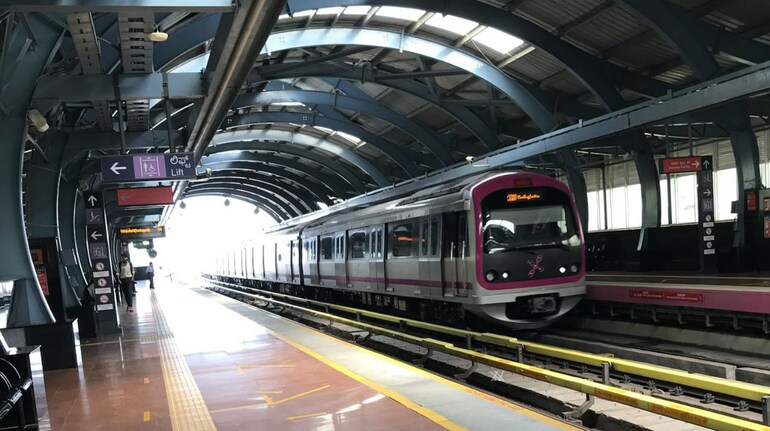
As Bengaluru’s Namma Metro marks its 14th anniversary, the vision of a fully connected city that launched with its first 6.7km stretch in 2011 remains a distant dream for its residents. A report by TOI reveals a system struggling to keep pace with the city's explosive growth, hampered by chronic delays, soaring costs and a critical shortage of trains.
While the network has grown to 97 km with 83 stations and now ferries over 10 lakh commuters daily, this expansion is being overwhelmingly outpaced by the city's burgeoning vehicle population.
According to transport department data, Bengaluru’s roads are inundated with over 1.2 crore vehicles, with approximately 5.5 lakh new vehicles added each year. In stark contrast, Namma Metro has been expanding at an average of just 6.5km annually.
A history of delays
The Metro's progress has been characterised by protracted timelines. Its inaugural Phase I, covering 43 km, took six years to become fully operational by June 2017. The subsequent Phase II, a more ambitious 75 km project, has seen even slower execution.
Since the first section opened in 2021, only 54 km of Phase II is functional. Key corridors, such as the Pink Line, have been under construction for over eight years, with its elevated section now slated for a May 2026 completion and the underground stretch by December 2026. The crucial airport line, Phase II A and B, is only expected to open partially by 2026.
This sluggish pace stands in sharp relief to other Indian metro systems. Urban transport experts point out that the Delhi Metro, for instance, averaged over 20 km of new lines per year during its expansion phases, highlighting a stark contrast in execution efficiency.
The costliest commute
Compounding the issue of accessibility is the title Namma Metro now holds as the most expensive metro system in India. A fare revision implemented this February, though capped at a 71% increase after public outrage, sparked widespread criticism. The initial proposal had been for a hike of over 110%.
The decision-making process was further clouded by a lack of transparency, with the fare fixation committee report being released only after the Karnataka High Court intervened. The committee has also authorised annual fare increases of up to 5% until the next review — a provision commuters argue is excessively harsh, especially when compared to a recent minimal Rs 1-4 increase (approximately 7%) on the Delhi Metro network.
Running on Empty
For those who do use the service, overcrowding and infrequent trains are a daily frustration. A significant rolling stock shortage is crippling service potential.
Currently, just 57 trainsets serve the Purple and Green Lines, while the newly operational Yellow Line runs with a mere four. A fifth train is expected in early November, but full-scale operations with adequate trains for all lines are not anticipated before 2026.
Urban mobility experts warn that this slow induction of new trains, combined with the delayed expansion of lines, severely limits the Metro's potential to alleviate Bengaluru's notorious traffic congestion.
Discover the latest Business News, Sensex, and Nifty updates. Obtain Personal Finance insights, tax queries, and expert opinions on Moneycontrol or download the Moneycontrol App to stay updated!





Find the best of Al News in one place, specially curated for you every weekend.
Stay on top of the latest tech trends and biggest startup news.