






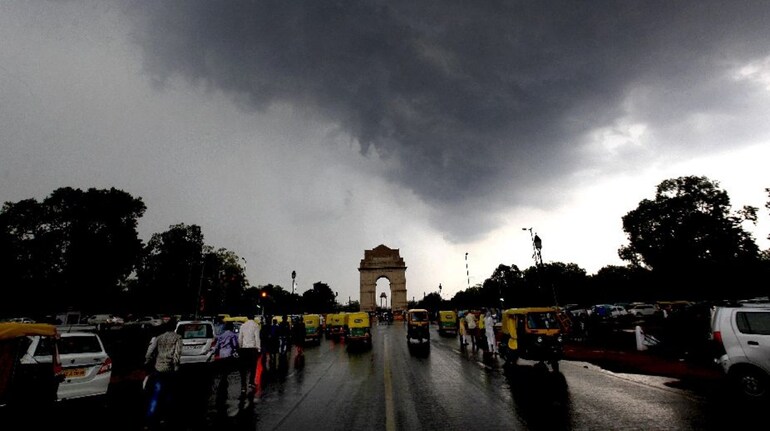
Delhi has officially recorded its wettest May since record-keeping began in 1901, with the India Meteorological Department (IMD) confirming a cumulative rainfall of 186.4 mm this month - shattering the previous all-time high of 165 mm set in May 2008, according to a PTI report.
The latest storm, which swept across the city in the early hours of Sunday, May 25, dumped 81.4 mm of rain within hours, accompanied by gusty winds peaking at 82 kmph and caused widespread waterlogging, flight disruptions and tree uprootings.
This storm was the fourth major weather event to hit Delhi this month — following similar violent systems on May 2, 17 and 21 — marking an exceptionally stormy May. Each of these systems brought damaging winds ranging between 74 and 82 km/h. In between, a strong dust storm on May 15 with wind speeds of up to 40 km/h severely impacted air quality, even though it didn’t bring any rain.
What's triggering these frequent storms?
Meteorologists are pointing to an unusual and persistent pattern of western disturbances, coupled with multiple cyclonic circulations and high atmospheric moisture, as key culprits behind this extreme weather.
"Western disturbances have been more frequent in May than in previous years," said Mrutyunjay Mohapatra, Director General of Meteorology at the IMD, in a statement to TOI. "Their interaction with other systems and high surface temperatures has triggered severe thunderstorms."
These western disturbances — low-pressure systems originating over the Mediterranean — typically bring pre-monsoon and winter rain to north India. But this year, they’ve been appearing more frequently and interacting with moist winds from both the Bay of Bengal and the Arabian Sea, creating a volatile mix in the atmosphere.
As per PTI, on May 26, three separate weather systems collided: a western disturbance over north Punjab and Jammu and Kashmir; an upper-air cyclonic circulation over northwest Uttar Pradesh and north Haryana; and another cyclonic circulation over west Rajasthan.
This potent trio, combined with already elevated humidity and ground-level heat, created ideal conditions for a severe thunderstorm, according to the IMD. In fact, temperatures at Safdarjung dropped from 31°C to 21°C in just 75 minutes—a rare 10-degree plunge overnight.
Why May is witnessing unsual extremes?
The impact has been deadly. At least 12 people have lost their lives this month across northern India, due to falling trees, collapsing walls and toppled infrastructure, including streetlights and poles, as reported by TOI.
Though Delhi has seen summer thunderstorms before, experts say both the frequency and intensity of storms this May are highly unusual. Mahesh Palawat, Vice President for Meteorology and Climate Change at Skymet, noted that “western disturbances have frequently appeared as cyclonic circulations over northwest India,” leading to moisture-heavy conditions ripe for late evening thunderstorms and dust storms, TOI quoted.
One such dust storm on May 15, though rainless, brought wind speeds of up to 40 kmph, severely impacting air quality and further compounding the region’s weather woes.
Weather analyst Navdeep Dahiya shared on X (formerly Twitter) that the most recent storm originated in north Punjab and moved southeast through Haryana before slamming into the Delhi-NCR region.
A sign of climate change?
Meteorologists are now increasingly linking such erratic weather patterns to broader climate shifts. As Mahesh Palawat told TOI, the frequent presence of cyclonic circulations — intensified by high temperatures and elevated moisture levels — led to storm formation, especially in the late evenings.
According to Mohapatra, "If such trends continue, it could indicate the growing impact of climate change,” quoted TOI.
What lies ahead?
Despite the severity of Sunday’s storm, the IMD has not issued any colour-coded weather alerts for the days ahead. However, intermittent light rain and thunderstorms - with wind speeds up to 50 kmph - are expected to continue through the week.
Sunday’s maximum temperature in the capital settled at a comfortable 31.6°C, which is nine degrees below normal for May. The minimum plunged to 19.8°C, seven degrees under the seasonal average.
Discover the latest Business News, Sensex, and Nifty updates. Obtain Personal Finance insights, tax queries, and expert opinions on Moneycontrol or download the Moneycontrol App to stay updated!
Find the best of Al News in one place, specially curated for you every weekend.
Stay on top of the latest tech trends and biggest startup news.









