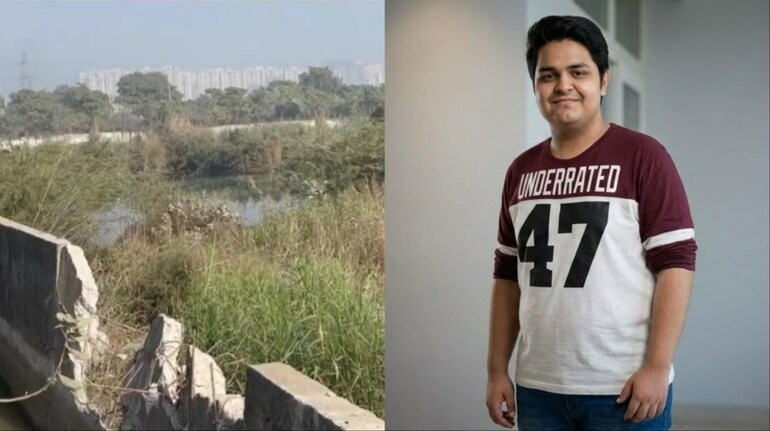

The tragic incident in Noida’s Sector 150 which claimed the life of a 27-year-old software engineer has brought long-pending civic failures into focus.
The techie, Yuvraj Mehta, drowned around early hours of Saturday after falling into a waterlogged trench in the area. The rain-filled pit was actually a decade-old trench that had turned into a pond due to years of neglect. The land was originally allotted for a private mall project, but over time it began collecting rainwater and wastewater from nearby housing societies, creating a deep and dangerous water body, The Times of India reported.
According to the official records, the trench remained waterlogged because there was no proper outlet to drain rainwater into the Hindon river. A stormwater management plan was proposed by the irrigation department as early as 2015, but it was never implemented.
Despite surveys, inspections, and repeated communication between departments, the plan was never executed. Meanwhile, more rainwater and sewage flowed into the trench, as nearby residential sectors developed, worsening the situation year after year.
What was the stormwater plan and why did it stall?
As per the documents, the irrigation department proposed building a “head regulator” in 2015 to divert excess rainwater into the Hindon river.
In February 2016, the Noida Authority released Rs 13.5 lakh for surveys and design work. Designs were later prepared through a consultant and even vetted by IIT-Delhi. However, during a joint inspection in October 2023, officials found that additional sectors had been connected to the drain, increasing water discharge.
This led to suggestions for changing the gate design, which delayed the project further. The irrigation department then asked for another Rs 30 lakh for a fresh survey and revised designs. That revised report is still pending.
Delays even led to severe waterlogging
The consequences of these delays became clear during the 2023 monsoon. Sector 150 and nearby areas experienced severe waterlogging. Basements of several housing societies developed by ATS, ACE, Godrej, Tata, Eldeco and Samridhi were flooded.
With no regulator to control water flow, rainwater stagnated in low-lying areas and even caused sewer backflow into homes. Residents alleged repeated inaction by the Noida Authority, forcing societies to install heavy dewatering pumps to remove water and protect their buildings.
What action is being taken after the death?
After Yuvraj Mehta’s death, authorities have finally promised swift action. Irrigation department executive engineer BK Singh said work on the head regulator would begin within a week. The project is estimated to cost Rs 10.5 crore and will be funded by the Noida Authority.
Singh said the contractor’s financial bid has already been received and remaining formalities, including paperwork and security deposit, will be completed soon. Officials now aim to finish the regulator before the upcoming monsoon season to prevent further incidents.
Residents say the tragedy could have been avoided if the regulator had been built on time. “If the regulator was in place, water would not have collected on the low-lying commercial plot,” TOI quoted Jitendra Meena, a resident of Tata Eureka Park, as saying He added that controlled water flow could have prevented stagnation and reduced risk.
Meanwhile, the Uttar Pradesh government has removed Lokesh M from his post as Chief Executive Officer of the Noida Authority, a day after techie’s death. UP CM Yogi Adityanath has also ordered the formation of a special investigation team (SIT) to probe the death. The SIT has been asked to submit its report within five days.
Discover the latest Business News, Sensex, and Nifty updates. Obtain Personal Finance insights, tax queries, and expert opinions on Moneycontrol or download the Moneycontrol App to stay updated!
Find the best of Al News in one place, specially curated for you every weekend.
Stay on top of the latest tech trends and biggest startup news.