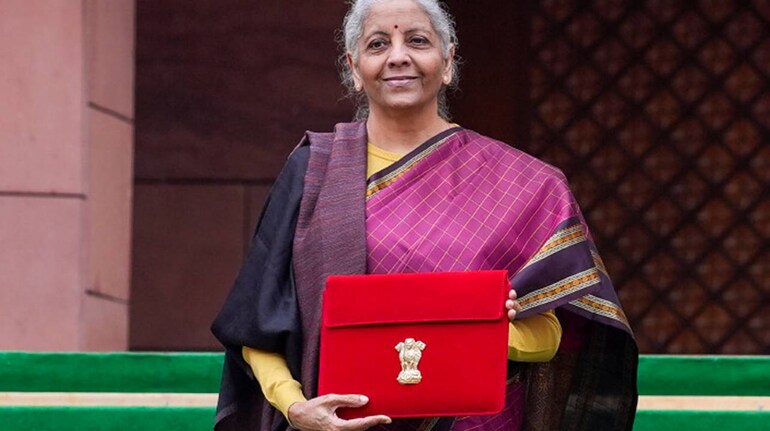
Highlights
Finance minister Nirmala Sitharaman has clearly walked the path of fiscal consolidation in the Union Budget and succeeded to keep the fiscal deficit to GDP for FY26 at 4.4 percent and pegged the fiscal deficit to GDP for FY27 at 4.3 percent although the new goal post appears to be the debt to GDP ratio. The debt to GDP glide path has been spelt out with the government targeting to bring it down to 50% +/- 1% by FY31 from 56.1% in FY26 and 55.6 percent in FY27. The government is in no mood to splurge on unproductive expenditure and the budget continues to put thrust on capex. Despite the apparent “no negative” in the budget, the equity markets nosedived, thanks to the increase in STT (securities transaction tax) on futures and options. The moot question therefore was it necessary to hike the STT to keep the finances in order?
Let us deep dive into the fiscal math
The fiscal deficit for FY27 is pegged at Rs 16.9 lakh crore which translates into fiscal deficit to GDP of 4.3 percent on a nominal GDP of Rs 393 lakh crore for FY27. This implies a nominal GDP growth of 10 percent, looking plausible given the consensus expectations of 7 percent real GDP growth in FY27.
Source: India Budget
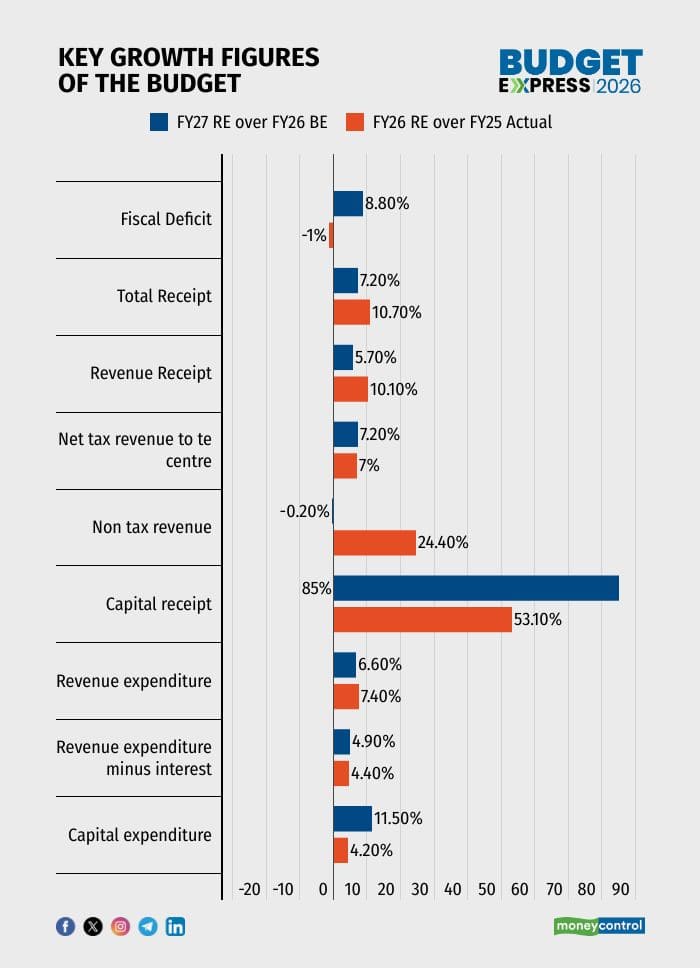
The YoY increase in fiscal deficit is close to 8.8 percent which is much higher than the nearly flat performance in FY26 over FY25.
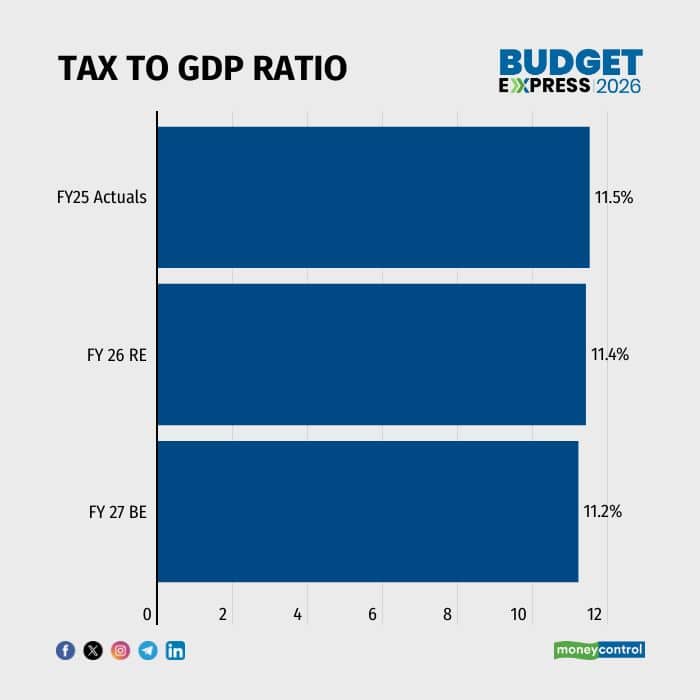
On the revenue front, overall receipt showed a slightly lower growth than last year, thanks to stagnant non-tax revenue. Turning to tax revenue, the overall gross tax revenue to GDP for FY27 at 11.2 percent of GDP is similar to what was seen in previous years. The projected YoY growth in corporate tax at 11 percent in FY27 is similar to the 12 percent achieved in the previous fiscal. It is the income tax head that warrants a hard look.
Source: India Budget
Income tax collection in FY26 RE (revised estimate) of Rs 13.1 lakh crore was way off the initial budget estimates of Rs 14.4 lakh crore. Thanks to this miss, the projected collection for FY27 at Rs 14.7 lakh crore shows a rather ambitious growth of 12 percent. However, it is barely a 2 percent increase over the initial income tax collection estimates of FY26. What’s more interesting is the STT (securities transaction tax figure) within income tax – at Rs 73,700 crore is only 5 percent of total collection and is expected to increase by Rs 10,030 crore in FY27 thanks to the tax tweaks with the increase in STT on Futures and options. The incremental gains from STT is barely 27 basis points of the government’s total receipts in FY27 and have negligible impact on the overall numbers.
One of the growth drivers on the revenue front in FY27 will be the sharp expected increase in the disinvestment target. While the government missed the target in FY26, the target for FY27 at Rs 80,000 crore looks a tad bit of a tall order given the FY26 achievement of Rs 33,837 crore and would require a supportive market environment.
Why the market ignored the budget?
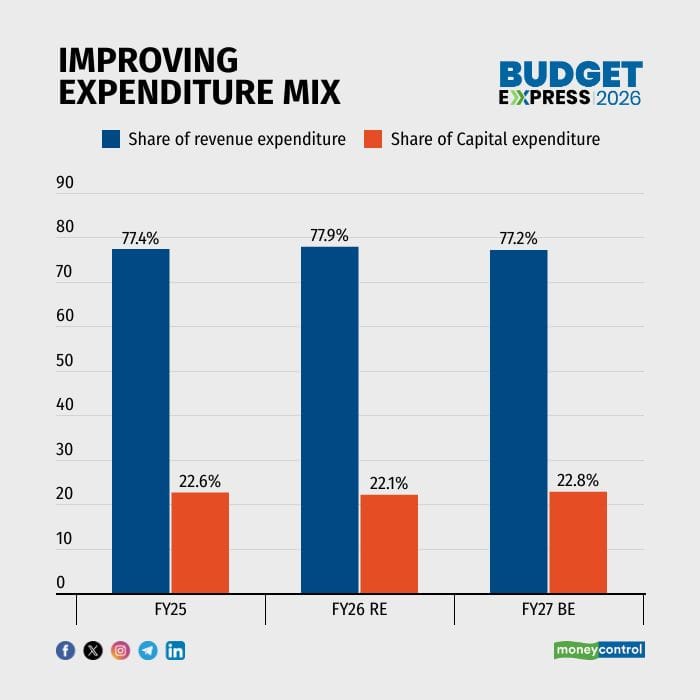
However, what turned out to be a serious spoiler that masked the steady improvement in the quality of expenditure is the STT hike. The break-up of the expenditure shows an improvement in the share of capital expenditure in total expenditure in FY27 over the previous fiscal.
Source: India Budget
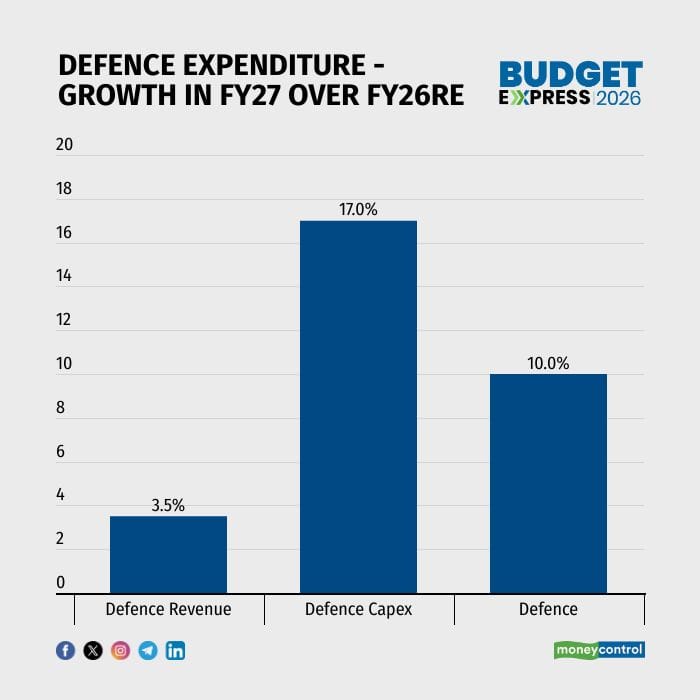
Defence expenditure, while not showing a runaway increase in FY27 over FY26RE, as the Revised Estimates of FY26 had a meaningful increase due to Operation Sindoor, showed a good momentum in defence capex.
Source: India Budget
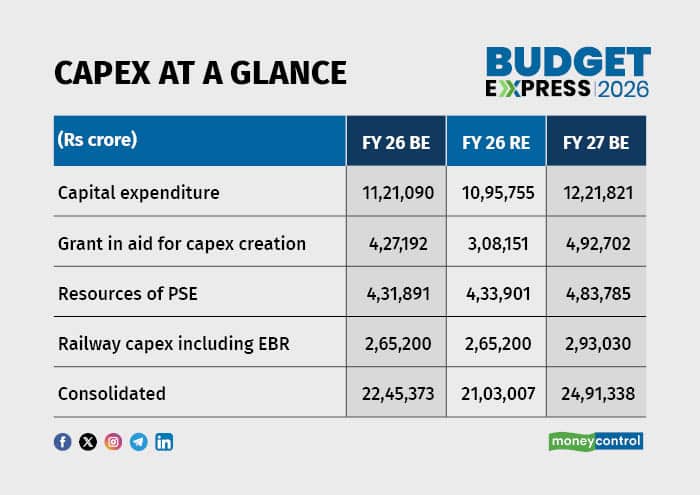
Overall capital expenditure, including railways and extra budgetary resources, has also seen a YoY increase of 18 percent in FY27 and at 6.3 percent of GDP marks a 40 basis points improvement over the previous fiscal.
Source: India Budget
In sum, the fiscal math is based on realistic assumptions and should have been welcomed by the market, had it not been for the spoiler in STT which has no meaningful impact on the fiscal numbers. To discipline excessive speculation by retail investors, the finance minister could have chosen a non-fiscal path or could have soothed the pain perhaps with an investor-friendly tweak to the capital gains tax that could have improved sentiment without breaking the fisc.

Discover the latest Business News, Sensex, and Nifty updates. Obtain Personal Finance insights, tax queries, and expert opinions on Moneycontrol or download the Moneycontrol App to stay updated!
Find the best of Al News in one place, specially curated for you every weekend.
Stay on top of the latest tech trends and biggest startup news.