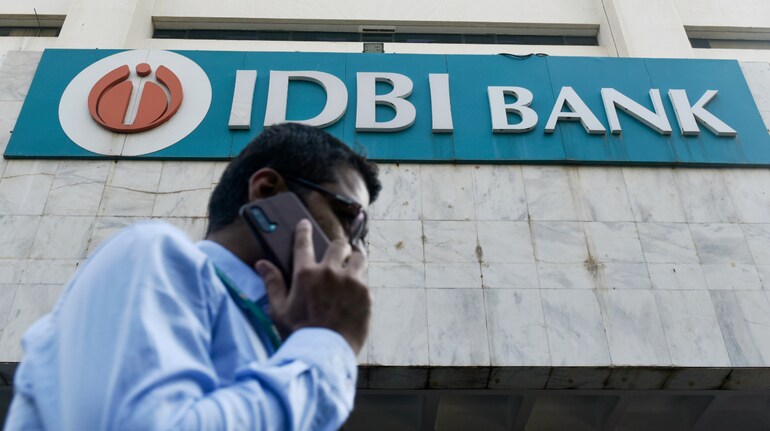

Investors in the IDBI Bank disinvestment process appear to have flagged concerns around management control, legacy risks and valuation assumptions, offering a clearer picture of why the government’s attempt to sell the lender did not elicit competitive bids, experts said.
On March 16, IDBI Bank shares fell over 13 percent, with intraday losses widening to around 16 percent, after reports that the government may scrap the stake sale due to lower-than-expected bids.
Experts say a slew of issues plague the bank, from governance transition — such as shifting from government-led decision-making to a private board structure, ensuring management autonomy and redefining oversight — to employee-related challenges and the complexities of integrating a legacy public sector institution into private ownership, they said.
At a broader level, the experience highlights that investors in regulated sectors such as banking place significant emphasis on governance clarity, regulatory certainty and execution flexibility – factors that can materially influence bid outcomes even when underlying financial performance has improved.
Why valuation mismatched
The IDBI Bank disinvestment bids failed after financial offers came in below the government’s reserve price, reflecting a gap between official valuation expectations and investor assessments.
A key issue appears to have been the divergence between how the government and investors assessed the bank’s value, with market participants pointing to gaps in expectations around pricing and reserve benchmarks.
“There appears to have been limited clarity on the reserve price, which may have widened the gap between the government’s valuation expectations and bidders’ calculations,” a person aware of the development told Moneycontrol.
Experts said valuation expectations may not have fully accounted for the risks investors typically price in, including capital requirements, execution challenges and long-term regulatory obligations.
“The IDBI Bank disinvestment process highlights the importance of aligning valuation expectations with market realities… valuations need to be viewed in context rather than applied as a rule of thumb,” Bhoopesh Jain, Managing Director at RNB Corporate Services, told Moneycontrol.
He added that the government was reportedly expecting bids at a premium to book value levels seen in comparable private sector banks, which may have limited investor appetite.
Legacy structure and operational risks
Beyond pricing, investors appear to have taken a cautious view of the bank’s legacy structure and operational complexities.
“The investors’ concerns could be valuation-driven… Apart from pricing, investors also appear to have had concerns around management control, organisational culture, HR practices, and the operational complexities that come with legacy institutions,” Jain said.
These concerns include a sizeable workforce with legacy employment terms, hierarchical decision-making structures, and the challenge of aligning existing systems and processes with private sector efficiency and profitability expectations.
IDBI Bank’s transition from a development financial institution to a commercial bank, along with its past asset quality stress and regulatory oversight, continues to shape investor perception despite improvements in recent years.
Experts noted that even as the bank’s financial metrics have stabilised, bidders tend to factor in potential liabilities — such as employee obligations, including pension liabilities, wage structures and union-related commitments, and the cost of transforming systems and processes under private ownership.
This transformation typically involves upgrading technology platforms, streamlining operations, and shifting to more performance-driven processes, all of which require significant capital and management bandwidth.
Governance transition
Clarity around management control and governance transition also emerged as a critical factor in investor evaluation. Strategic buyers typically seek flexibility in capital restructuring, operational autonomy and clear regulatory pathways, post-acquisition.
“Investors place significant weight not only on the financial health of the bank but also on regulatory clarity, operational autonomy, and the long-term flexibility available to the incoming promoter. Where bidders perceive uncertainties in governance or future regulatory obligations, it tends to translate into more conservative valuations,” Sonam Chandwani, Managing Partner at KS Legal & Associates, told Moneycontrol.
Experts added that greater clarity on employee transition arrangements, potential safeguards against legacy risks and regulatory treatment could improve the attractiveness of such transactions in a fresh bidding round.
Govt weighs fresh EoIs
With the current process now concluded, the government is yet to take a call on whether to restart the sale or put it on hold.
“The process is effectively over for now, and the government will have to decide whether to invite fresh EOIs (expression of interest) or shelve the disinvestment. There appears to have been a gap between the government’s valuation expectations and bidders’ calculations, with limited clarity around the reserve price. It would be speculative to link the outcome to the current global war situation. The finance ministry will take a call on the next steps,” a senior government official told Moneycontrol.
War impact seen as limited
Officials and experts indicated that global geopolitical tensions are unlikely to have been a decisive factor in shaping the outcome of the bidding process.
“Whether it was a result of the investor sentiment being hit in the current global war situation will be a conjecture,” the senior official said.
Market participants pointed out that bids were submitted before the latest escalation in global uncertainties, and such transactions typically involve long-term investors who take a broader view of market cycles.
Lessons for future bids
The IDBI Bank episode is being seen as a key learning point for future strategic disinvestment in the financial sector, particularly in balancing government expectations with investor risk assessment.
“It’s a classic case of market expectations running ahead of reality… the market seems to have banked on the government’s urgency to exit IDBI,” Jayesh H, Co-Founder at Juris Corp, told Moneycontrol.
He added that managing expectations and ensuring alignment between market pricing and government objectives will be critical in future transactions.
Experts said that if the government proceeds with a fresh round of bids, it may need to recalibrate valuation benchmarks, streamline the process and address legacy operational and legal issues more explicitly.
“The government may want to consider a shorter and quicker process,” Jayesh H said.

Discover the latest Business News, Sensex, and Nifty updates. Obtain Personal Finance insights, tax queries, and expert opinions on Moneycontrol or download the Moneycontrol App to stay updated!
Find the best of Al News in one place, specially curated for you every weekend.
Stay on top of the latest tech trends and biggest startup news.