
When payments became the hottest space between 2019 and 2022, even Bajaj Finance couldn’t stay away. India’s largest consumer lending company entered the payments business in early 2020.
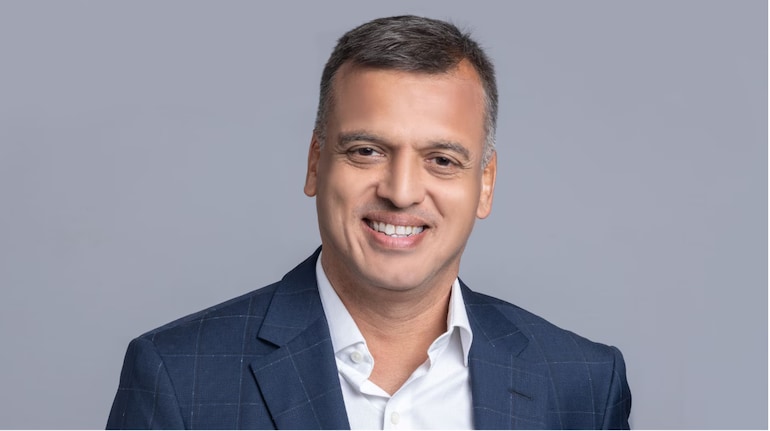
Six years later, Rajeev Jain, vice chairman and MD, Bajaj Finance, told Moneycontrol that while the company remains committed to payments, the economics remain challenging.
“I can’t burn Rs 1,500 crore a year. A plain strategy of cross-sell will never make money, not at the scale at which people are burning money,” Jain said.
For Bajaj Finance, merchant acquisition is now the key focus. The company has deployed 25,000 point-of-sale machines and is currently refreshing this business.
“We originally started with an open architecture, but the right to win seems much weaker in open architecture than in closed architecture. So we are pivoting,” Jain said.
“You cannot be a digital business and a financial services company without having a full-stack payments infrastructure. However, given the way the economics of the business are organised, it burns money. We would like businesses to be self-sufficient and not burn cash. The conclusion we have come to is: focus on your franchise.”
He added that Bajaj Finance’s payments business is expected to break even in FY29 and turn profitable thereafter.
Identifying the next blockbuster
Except for education loans, Bajaj Finance already addresses almost every retail customer need. From a product standpoint, Jain sees no major white spaces.
That said, the company is still actively working on what its future products should look like.
“One of the big things we are focusing on is what future products will look like. We are deploying a design thinking methodology that includes primary and secondary research. There is a framework, the festival framework, where we create prototypes and then launch products,” he said.
The goal is to identify the next blockbuster for Bajaj Finance.
Jain clarified that a blockbuster doesn’t necessarily mean a new product category.
“It is about understanding customer needs and transforming existing products into ones that work for the customer, not the company.”
To drive this, Bajaj Finance has adopted a globally benchmarked design thinking approach.
“This is a massive cultural shift. Across eight of our large business lines, we have invested in design thinking teams. We are also investing in a leading market research platform and a broader research ecosystem. Based on customer needs, we will offer products — and that creates much greater value,” he said.
Jain believes product transformation will unlock more value than simply expanding beyond the 43 products the company currently offers.
“In April, we are launching a very different kind of product for new cars that has the potential to be a blockbuster,” he said.
When asked what qualifies as a blockbuster, Jain said it must be a product that can build at least $1 billion in assets within three to four years.
“Otherwise, there’s no point. That’s how I see white space.”
Need for innovation
The push for continuous innovation is rooted in staying relevant to customers.
“We have 120 million customers today and will soon get to 200 million. India has only 302 million households. So I have to do more with existing customers rather than just finding new ones,” Jain said.
He added that every strategy has a shelf life, especially at scale.
“At 200 million customers, strategies need to evolve. We have to tweak our approach to reflect customer needs.”
The focus, he said, is clear: grow share of wallet and protect margins.
“This is a strategic need, to grow share of wallet from my customer and to protect margins. Innovation will come from understanding customer needs, not from blue-sky analysis,” Jain said.

Discover the latest Business News, Sensex, and Nifty updates. Obtain Personal Finance insights, tax queries, and expert opinions on Moneycontrol or download the Moneycontrol App to stay updated!
Find the best of Al News in one place, specially curated for you every weekend.
Stay on top of the latest tech trends and biggest startup news.