

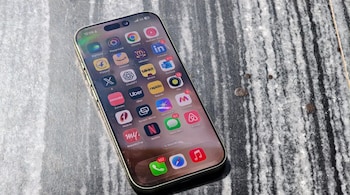
If you’ve bought the iPhone 17, you’ve probably heard Apple talk about its new Ceramic Shield 2. One of the biggest upgrades this year is the built-in anti-reflective (AR) coating, which cuts glare and makes the screen easier to see outdoors. In fact, early tests show it makes reflections almost 50% lower than on the iPhone 16.
But here’s the catch: if you put a regular screen protector on your iPhone 17, you might be cancelling out that benefit entirely.
A company called Astropad ran tests to understand what happens when you cover the iPhone 17 display with a typical protector. Their findings were pretty straightforward — the anti-reflective coating only works properly when it’s exposed to air. As soon as you place another layer of material on top, like a standard glass protector, the AR effect weakens or disappears. So while your screen is still protected, the glare-reduction Apple added this year won’t help you much.
Astropad did this testing because it sells its own screen protector, called Fresh Coat, which includes an AR coating. According to the company, using an AR-coated protector can actually restore or improve glare reduction. Astropad claims Fresh Coat can make an iPhone screen nearly four times less reflective than the iPhone 16’s display and twice as non-reflective as the naked iPhone 17 screen.
The company says it used controlled experiments with a light meter, and the detailed results are available on its website. Of course, these tests also double as promotion for Astropad’s own product, so take that into account. But the takeaway is clear: if you use a normal screen protector, you may lose the anti-reflective advantage Apple built into the iPhone 17.
So before you buy a protector, it may be worth checking whether it includes an anti-reflective layer of its own — especially if outdoor visibility matters to you.
Discover the latest Business News, Sensex, and Nifty updates. Obtain Personal Finance insights, tax queries, and expert opinions on Moneycontrol or download the Moneycontrol App to stay updated!





