




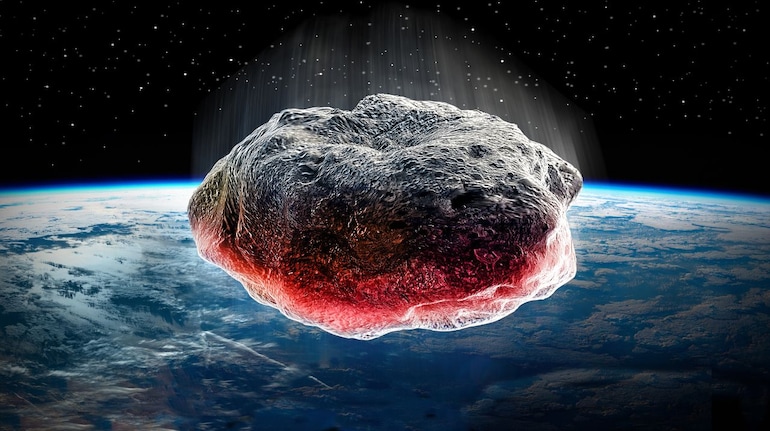
A 17-foot asteroid, roughly the size of an airplane, will approach Earth on October 4. Named 2024 TF, it will pass by at a distance of 186,000 miles. Despite its size, NASA assures there’s no immediate danger as the asteroid’s distance poses no significant threat. Smaller asteroids, like 2024 TF, are more frequent in close approaches, although they are rarely harmful.
Asteroids, also called minor planets, orbit within our solar system. These rocky or metallic bodies are remnants from its formation 4.6 billion years ago. Unlike planets, they lack atmospheres and vary in size and composition.
Scientists track asteroids through observations and advanced modelling techniques. Their goal is to predict asteroid paths and monitor potential threats. In Earth's past, asteroid impacts have caused geological changes. One such event, the Chicxulub impact, led to the extinction of the dinosaurs 66 million years ago.
NASA and other space agencies actively study these objects. They aim to identify potentially hazardous asteroids (PHAs). By tracking their movements, researchers can assess future risks. While 2024 TF isn't dangerous, studying it could help improve asteroid prediction methods. Understanding these space rocks is crucial to our planet's safety.
Discover the latest Business News, Sensex, and Nifty updates. Obtain Personal Finance insights, tax queries, and expert opinions on Moneycontrol or download the Moneycontrol App to stay updated!
Find the best of Al News in one place, specially curated for you every weekend.
Stay on top of the latest tech trends and biggest startup news.



