

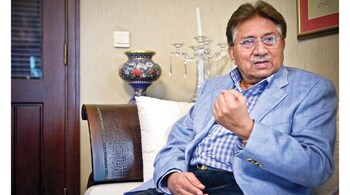
In July 20o2, 10 months after 9/11 had abruptly thrust Afghanistan and Pakistan under the global spotlight, the Asia edition of Time magazine put Pervez Musharraf on its cover, with the headline “The world’s toughest job” emblazoned across his chest.
Of course, leading Pakistan has always been a remarkably tough job. Not a single one of its prime ministers till date has lasted a full term. Only military dictators who called themselves presidents—and Asif Ali Zardari, who also did so—have made it to five years or more, though even their careers ended either in ignominy or assassination. However, even by these high standards, Musharraf had an unusually tough and dangerous job in the years after 9/11.
According to the man himself, he was called up by US President George W. Bush some hours after the attacks on American soil on September 11, 2001. Bush did not mince his words. “You are either with us or you are with the terrorists,” he said. In his memoirs, Musharraf recalled that he was told that “if we chose the terrorists, then we should be prepared to be bombed back to the Stone Age.” Musharraf assured Bush that he was firmly on America’s side.
But in fact, Musharraf had spotted a great opportunity. He had had ample experience in playing a double game with the US over Afghanistan and other strategic matters as a rising military officer in General Zia-ul-Haq’s regime and later as Pakistan’s army chief. Over the next few years, he played that game with great skill.
Also read: Pervez Musharraf – the man who waged war and then talked about peace
Years later, Congressman Matt Salmon would report, with great frustration, at a hearing of the US House of Representatives’ Committee on Foreign Affairs: “As we all know, the United States has spent tens of billions in taxpayer dollars in the form of aid to Pakistan since 9/11, all in the hope that Pakistan would become a partner in the fight against terrorism. Unfortunately, despite this significant investment, Pakistani military and intelligence services are still linked to terrorist groups.
“While the administration and the Pakistanis argue that there have been some successes in the fight against terrorist elements… terrorist organizations with close ties to Pakistan's military elite have been left untouched to the point of thriving while Pakistan's governing elite turns a blind eye.
“Recent history shows us that while Pakistan is getting money and weapons, US goals in the war on terror are sadly lacking, and Pakistan may in fact be using the assets we provide them to undermine some of our strategic diplomatic efforts in the region.”
Also read: Born in Delhi, Musharraf gifted birth certificate during 2005 India visit
Musharraf kept assuring the Americans that he was doing all he could and more to destroy the Taliban at the lawless Pakistan-Afghanistan border, and periodically threw Washington some breadcrumbs in the form of inconsequential Taliban leaders. He steadfastly maintained that his spies were hunting 24x7 for Osama bin Laden, while Laden was holed up in Abbottabad, within walking distance from Pakistan’s national military training academy.
All the while, he used the US’ aid to fund and arm the Taliban factions that he thought he could control in the years to come, and Pakistan-based organizations intent on spreading terror in India. He kept insisting that he was a committed partner in the US’ “war on terror”, but the number of terrorist attacks and civilian casualties in Kashmir rose to an all-time high in the years he was president and fell sharply after he was ousted.
Also read: Nawaz Sharif blames Gen Bajwa & Gen Faiz for Pakistan's current turmoil
But then, bare-faced lies and betrayal have been permanent features of Pakistani politics. Musharraf’s ascent, too, had been marked by these.
He rose to prominence in the early 1990s when he managed to ingratiate himself with Pakistan Prime Minister Benazir Bhutto and became a member of her close coterie. Yet, in 2011, he would be formally charged by Pakistan’s Anti-terrorism Court with conspiracy to murder Bhutto, who was assassinated in 2007 when Musharraf was president.
After Bhutto was replaced by her arch-rival Nawaz Sharif, he impressed him so much that Sharif made him army chief even though he was technically third in line for the post. A year later, he led a military coup against Sharif and deposed him.
Sometimes, all of this catches up. In 2008, after nine years in power, Musharraf, facing public wrath and certain impeachment, resigned and moved to London. When he returned five years later with the hope of contesting parliamentary elections once more, the courts issued an arrest warrant. He fled the country and was officially declared an “absconder”.
He has died in lonely exile, but will reportedly be buried in Karachi. He had a very good chance to use US money, arms and support to crush terrorism in his country and neighbourhood. Had he done so, Pakistan today may not be plagued by the violent radicalism that is claiming hundreds of innocent lives and pushing the country towards chaos. In the end, Musharraf thoroughly betrayed his own people.
Yet, one cannot help but grudgingly admire the man’s cunning, confidence and sheer audacity post-9/11, when he had to operate in a complex and perilous world, and keep both sides happy even as he pursued his own sinister goals. For years, he managed, with great success, to run with the hares and hunt with the hounds. If Charles Dickens were writing David Copperfield today, he would have studied Musharraf closely while creating the oily and treacherous Uriah Heep.
Discover the latest Business News, Sensex, and Nifty updates. Obtain Personal Finance insights, tax queries, and expert opinions on Moneycontrol or download the Moneycontrol App to stay updated!





