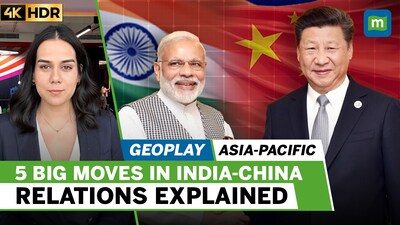
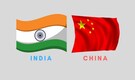
India and China are cautiously warming ties after years of tension. Chinese Foreign Minister Wang Yi met Prime Minister Narendra Modi, External Affairs Minister S. Jaishankar, and National Security Adviser Ajit Doval in New Delhi. The talks covered flights, trade, border security, water issues, and strategic supplies. The discussions mark the first serious step in years to reset relations. PM Modi is set to travel to China for the SCO Summit, his first visit in seven years. Both sides also spoke about easing cross-border travel, resuming trade, and ensuring stability along the Himalayan frontier. Water security and China’s mega dam project in Tibet were also on the table, as well as assurances on supplies critical to India’s economy. The big question now is whether these talks signal a lasting change, or simply cautious progress in a fragile relationship. Stay tuned to Moneycontrol for more global updates.
The eastern Ladakh border standoff between the Indian and Chinese militaries erupted on May 5, 2020, following a violent clash in the Pangong lake areas.
India may adopt a neutral stance to meet short-term goals like getting cheap Russian oil, but in the long term, India’s future will be best served by closer alignment with the western hemisphere
The comments come in the backdrop of the Chinese air force reportedly carrying out a big aerial exercise from its airbases opposite eastern Ladakh.
In spite of all the pandemic-related angst and anger against Beijing, the current crisis has not triggered any geopolitical rhetoric for censoring China or redesigning regulating agencies
Moneycontrol's Shraddha Sharma explains how countries are cornering China in the tech space as the globe witnesses a 5G rollout.
The Chinese hacking communities are discussing ways to 'teach India a lesson' and are primarily targeting Indian press and media outlets, government websites including defence, and companies in telecom, smartphones and pharma, among other sectors
China conducted such a test in January 2007 when its anti-satellite missile destroyed a defunct weather satellite.
These developments assume significance as India wants to increase exports to China with a view to bridging the ballooning trade deficit
The project, being piloted in Guiyang, the capital city of Guizhou, can also help citizens know if they are likely to win a case.
Troops of India and China were locked in a 73-day standoff in Doklam since June 16 last year after the Indian side stopped the construction of a road in the disputed area by the Chinese Army.
Sandeep Nayak, chief executive officer of Centrum Broking joins CNBC-TV18 to throw light on defense-related investments and companies playing the sector. Centrum Broking is organizing a one-day investor conference on the topic tomorrow.