-
My Account











Jupiter, Saturn form 'great conjunction' for the first time in 400 years
This "great conjunction", as it is known to astronomers, occurred fortuitously on the winter solstice for those in the Northern Hemisphere and the beginning of summer in the global south. The two planets were, in fact, more than 730 million kilometres (400 million miles) apart. But because of their alignment in relation to Earth, they appeared to be closer to each other than at any time in almost 400 years.




1/10
")
The solar system's two biggest planets, Jupiter and Saturn, came within planetary kissing range on December 21 evening sky, an intimacy that will not occur again until 2080. This "great conjunction", as it is known to astronomers, occurred fortuitously on the winter solstice for those in the Northern Hemisphere and the beginning of summer in the global south. (Image: AFP)
2/10
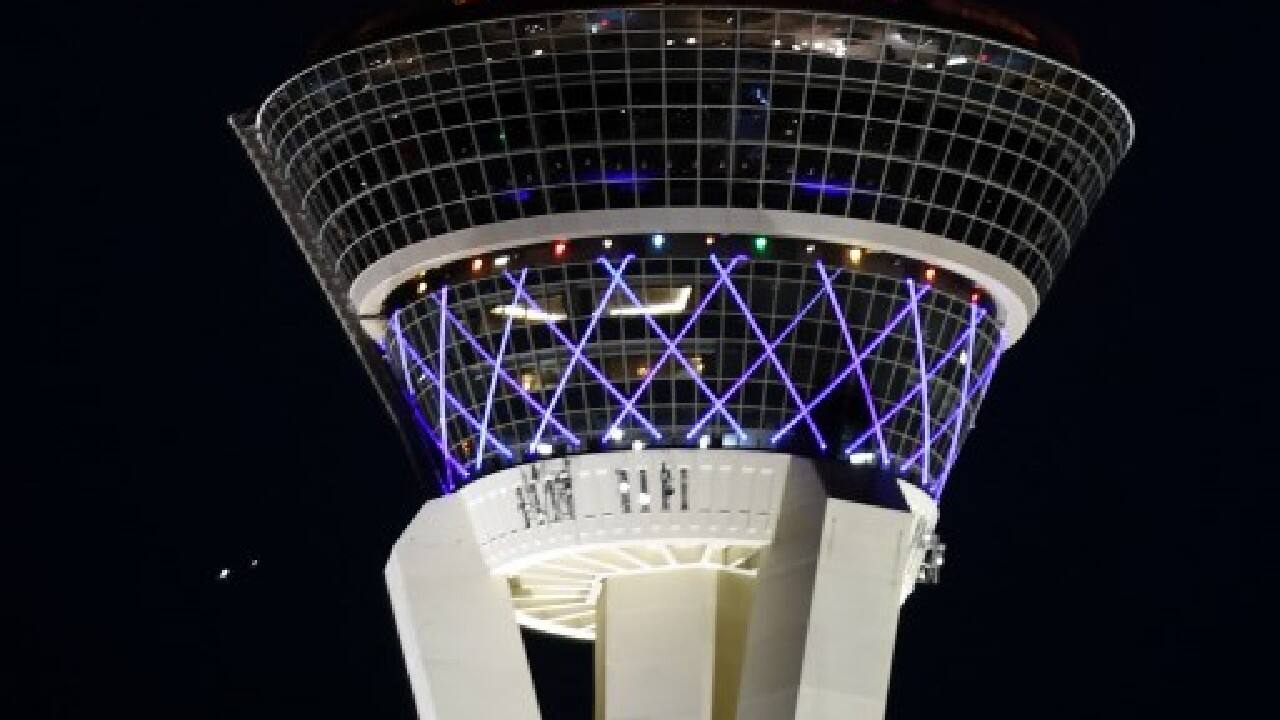
The two planets were, in fact, more than 730 million kilometres (400 million miles) apart. But because of their alignment in relation to Earth, they appeared to be closer to each other than at any time in almost 400 years. (Image: AFP)
3/10
")
Optimal "conjunction" took place at 11:52 IST on December 21. The best viewing conditions on December 21 were in clear skies and close to the Equator, while people in Western Europe and along a vast swathe of Africa had to train their sight to the southwest. (Image: AFP)
4/10
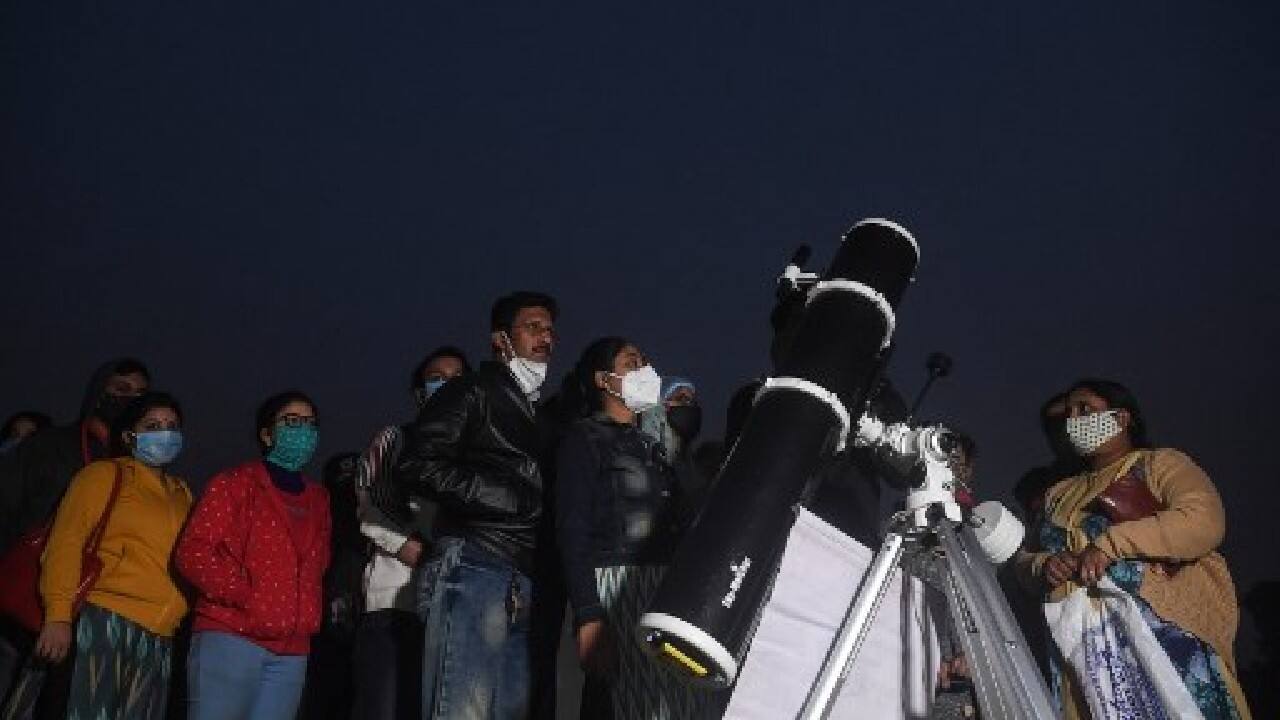
But hundreds of space fans also gathered in Kolkata to watch -- through a telescope at a technology museum in the city, or from surrounding rooftops and open areas. (Image: AFP)
5/10
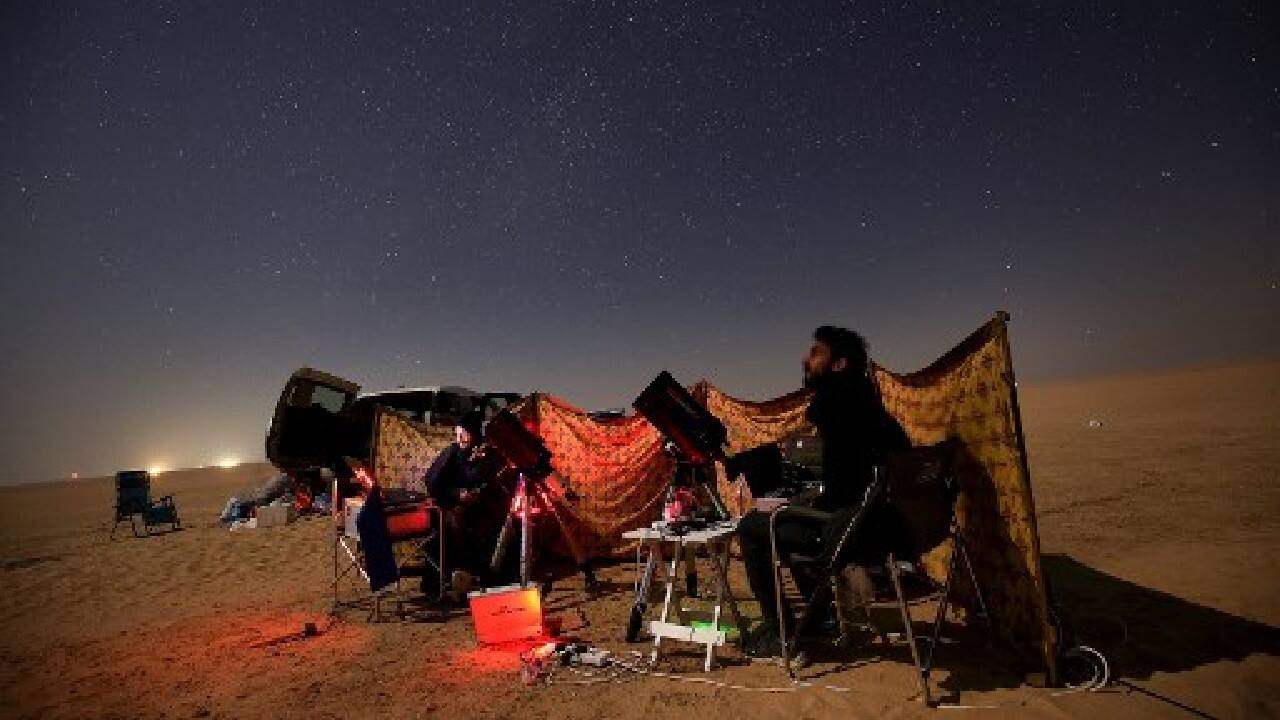
And in Kuwait, astrophotographers travelled into the desert west of Kuwait City to capture the once-in-a-lifetime event. (Image: AFP)
6/10
")
Looking with a telescope or even a good pair of binoculars, the two gas giants were separated by no more than a fifth of the diameter of a full moon. But with the naked eye, they would merge into a "highly luminous" double planet, said Florent Deleflie from the Paris Observatory. (Image: AFP)
7/10
")
"The Grand Conjunction refers to the period when two planets have relatively similar positions in relation to Earth," said Deleflie. (Image: AFP)
8/10
")
"With a small instrument -- even a small pair of binoculars -- people can see Jupiter's equatorial bands and its main satellites and Saturn's rings." (Image: AFP)
9/10
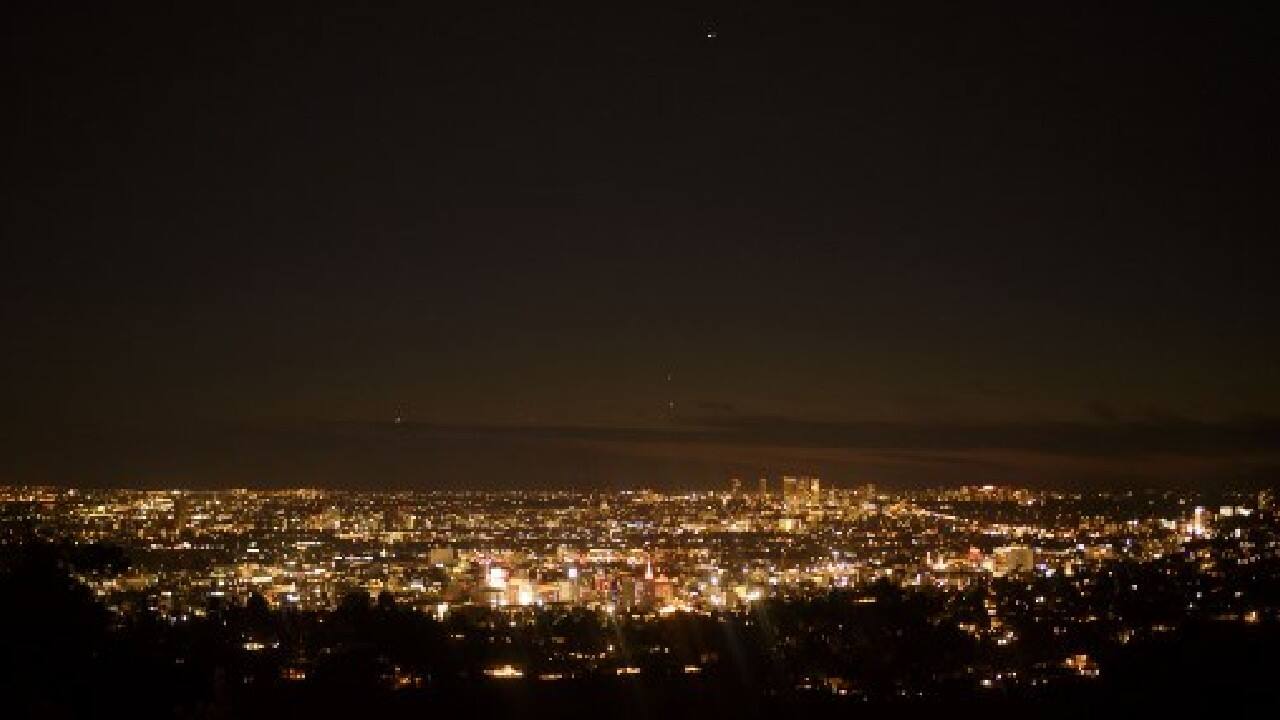
The last time Jupiter and Saturn nuzzled up this close was in 1623, but weather conditions in regions where the reunion could be seen blocked the view. Visibility was apparently better the time before that during the Middle Ages, on March 4, 1226 to be precise. (Image: AFP)
10/10
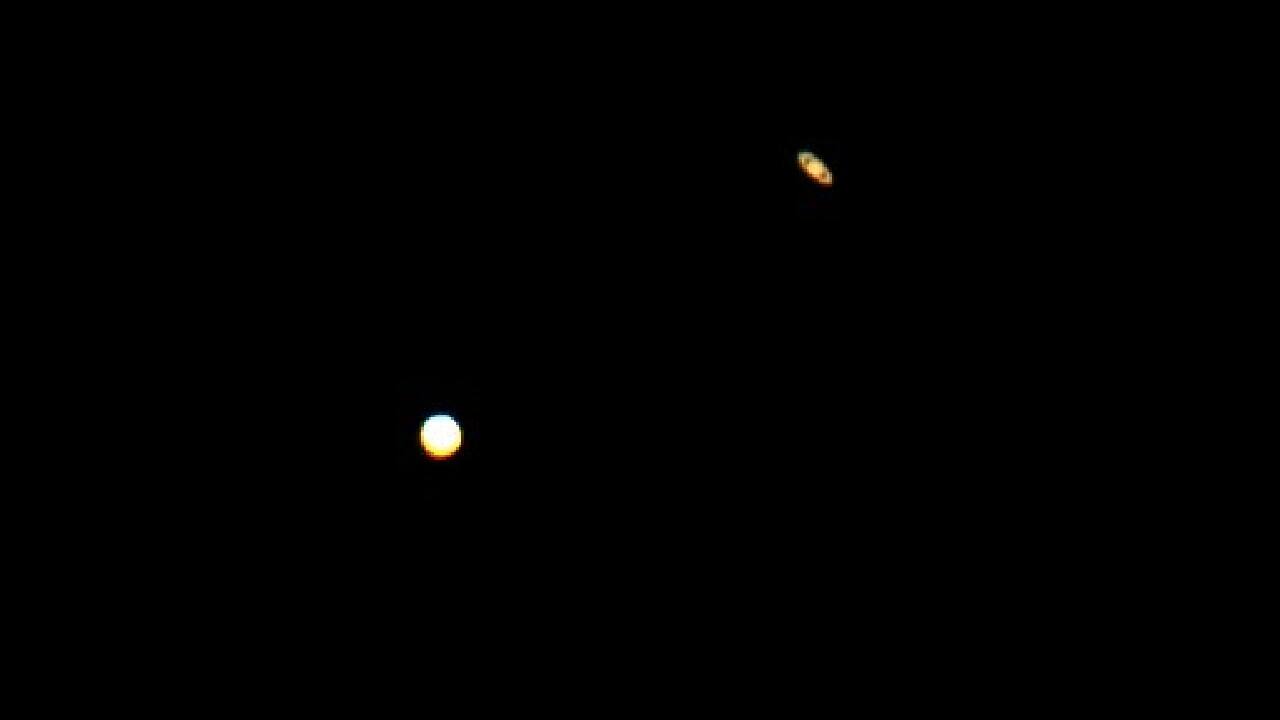
Jupiter, which is the larger planet, takes 12 years to revolve around the sun, while Saturn takes 29 years. Every 20 years or so, they appear to observers on Earth to come closer to each other. (Image: AFP)
Discover the latest Business News, Budget 2025 News, Sensex, and Nifty updates. Obtain Personal Finance insights, tax queries, and expert opinions on Moneycontrol or download the Moneycontrol App to stay updated!



