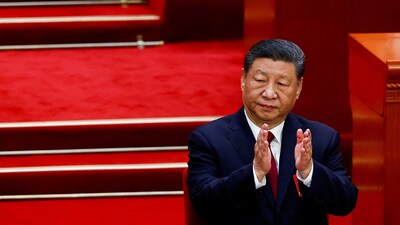
In Russia-Ukraine peace deal talks, China wants a seat at the table
Beijing is taking a long-term view, as is its wont, and clearly pointing out that it not only has a role in any peace process in Ukraine, but its role cannot be underplayed

Chart of the Day | The growing trend of premiumisation in India’s industrial real estate market
Grade A facilities are preferred by occupiers following demand created by the rising e-commerce, light manufacturing and consumption
AI Psychosis: Why your GenAI Chatbot is not your friend, philosopher and guide
The problems crop up, says an article in Psychology Today, because Chatbots tend to reinforce and amplify delusions
Start-up Street | How desi businesses are thriving and earning big
The culturally diverse and vast Indian market, with a new generation seeking cultural identity, makes a good market for ethnic start-up businesses that are commercially viable
IBC 2025: Ambitious reforms undermined by institutional weakness
The IBC Amendment Bill 2025 proposes major reforms to expedite insolvency resolution and empower creditors, but its success hinges on strengthening the NCLT’s capacity and addressing persistent institutional shortcomings
Affordable housing finance companies face growth slowdown as market matures
Elevated operating costs and pressure on margins would keep growth under check
From Trade to Coercion: What Trump’s India tariffs reveal about the new world order
Trump's punishing tariffs on India are not an isolated trade dispute but a stark sign of a deeper shift: the collapse of the US-led liberal order and the return of coercive, bloc-based imperialism
India GDP Q1 FY26: What to watch for in the Friday numbers
India's Q1 FY26 GDP data, releasing Friday, will test whether the economy can sustain growth above RBI's 6.5 percent forecast despite mixed industrial signals and evolving consumption patterns
The real risk to India’s gig economy isn’t platforms. It’s policy
Flexibility, ease of entry and short-term fallback options are core features of platform-based gig work. Undermining these features by introducing misplaced control can unintentionally harm the very stakeholders the Government is aiming to protect, including gig workers, consumers, and small businesses
Karnataka leads water governance with geo-tagging revolution
Karnataka’s geo-tagging of 41,875 water bodies is transforming water governance. By integrating technology, legal enforcement, and community participation, the state sets a model for sustainable, climate-resilient water management in India
As Washington sows chaos, India faces old challenges in a new form
A surprising thaw in US-China ties and an unsurprising bonhomie between Pakistan and Bangladesh alter the nature of India’s security risks. At this juncture, India should try to preserve and strengthen ties with Nepal, Sri Lanka and Maldives, and not neglect the importance of that regional buffer
Why the Google Play Store case could redefine India’s digital markets
The Supreme Court’s upcoming ruling on Google’s Play Store billing practices will shape India’s digital economy, balancing competition oversight with innovation, market fairness, and regulatory stability for global platforms and local startups
How a unified Tax Bill will reshape corporate compliance
This unified bill is a foundational reform that establishes the certainty and predictability essential for a modern economy and is set to reshape corporate compliance in India
Beyond Design: India's strategic bet on semiconductor manufacturing
The first private sector chips fabricated in India will roll out this year. There’s considerable local chip design talent, but without manufacturing India will remain out of the core innovation loop. Fabrication is also essential to safeguard strategic decision making space
BJP’s communication apparatus needs a rejig
BJP’s ascent to power in 2014 was shaped, among other things, by an astute communications strategy which had Arun Jaitley’s imprint. His absence has had an adverse effect on the party’s communication and other aspects which today don’t reflect its unprecedented political dominance. The next party president needs to introspect on these matters
Place your bets on the rise of the US prediction market
Users can take a punt on the outcome of events, from sports matches to the Nobel Peace Prize
Job Hugging: The silent threat to India’s skill ambition
India's educated youth face underemployment, with limited formal sector absorption. Job-hugging stifles innovation, wage growth, and skill upgrades, threatening economic dynamism amid automation and a stagnant talent market
‘Unprecedented’: Donald Trump moves on the Federal Reserve
President’s attempt to fire governor Lisa Cook risks undermining central bank’s independence
GST rate cuts: Quick implementation could limit near-term damage to corporate performance
As rate cuts beckon, deferral of purchases, deployment of the anti-profiteering provision and uncertainty among distribution channels on input tax credit are risks facing businesses
Why India must stay firm against US pressure and wary of China’s charm
Sanghnomics: The US tariff war is disrupting global trade, hitting India’s MSMEs hard. While diversification offers opportunities, India must remain cautious of China and prioritise self-reliance to safeguard economic sovereignty
Semiconductor success — A step-by-step strategy
For India to become a global chip-making hub, the government must take a staggered approach
To tackle the fertiliser shortage, make domestic manufacturing lucrative
Companies in the private sector remain wary of committing large investments to urea manufacturing
Silver is warming up for a sprint
Are the rate cuts really making a difference?
The RBI slashed rates by 100 basis points this year, but how much of that cut has actually reached your loan EMIs or deposit returns? With lending rates dropping and liquidity improving, the real question is: How much has the rate cut truly impacted consumers—and will it continue?
Chart of the Day: Are PSU banks giving more bang for their buck to investors?
Public sector lenders have shown more resilience than their private peers in thwarting erosion in profitability.