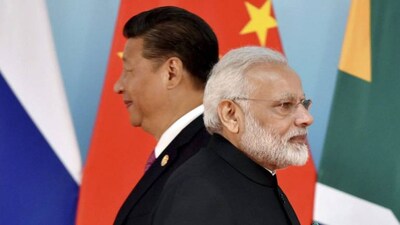
Arunachal Pradesh Row: PM Modi seeks to repair ‘abnormal’ relations with Beijing, as China goes on another renaming spree
India’s vision of stable and peaceful relations with China isimportant not just for the two countries but for the entire region and the world. Any deliberate push by Chinese PLA to occupy the McMahon Line will be at a grave risk of escalation

Jamie Dimon’s inflation worries look prescient. Now what?
Perhaps it could be not just ‘higher for longer’ but ‘higher forever’
Does India have any strategic play in ASEAN value chain?
China’s gradual dominance in ASEAN has given it clout over global value chains. India’s inability to make a mark in high value chains puts it at an economic disadvantage in this fast growing region
What’s behind the rupee’s never-ending depreciation?
Is an HUF structure a no-brainer for managing taxes and assets? Warts you should be aware of
In an era where joint families are no longer the norm and even in nuclear families couples prefer to keep finances separate, combining it in a HUF can lead to grief later on
Chart of the Day: How credit growth floated up through underpricing of risks in FY24
The difference between the weighted average lending rate of fresh loans to small businesses and the repo rate was 4.04 percentage points in April 2022 which narrowed to 3.20 percentage points in February 2024
India’s coal power project pipeline is biggest in the world outside China
The pre-construction capacities are estimated to have risen to 46,033 megawatts
Q4 earnings: What to expect — an action-packed event or a ho-hum showing?
Overall, India Inc. is expected to report sales growth in the mid-single digits, while bottom-line growth is expected to be slightly higher
Why making apprenticeship a right will not solve India’s skills problem
Despite the Apprenticeship law existing on paper, implementation has been nearly non-existent. The data on apprentices from the government also varies widely
Personal Finance | Does the recent price breakout justify a higher long-term allocation to gold?
There isn’t much commentary on gold beating inflation in the long run, but with equities, it is historically known that it is an asset which beats inflation over long periods
Godrej Properties: Standing tall among peers
An outlier in pre-sales of homes in recent quarters, the March quarter is commendable for GPL, though reduction in interest outflow would improve investor returns
Mohamed A. El-Erian: Fed faces a big risk, but it’s not the one many think
Policymakers must acknowledge that we are operating in a more supply-constrained world to avoid prematurely ending the US’s exceptional economic run
The Fed choked clean energy. It’s about to start reviving that
Higher rates have held back green power. As central bankers take their foot off the brake, investment momentum will be unstoppable
Why write a shareholder letter? Ask Dimon or Buffett
The annual shareholder letter has taken on a new significance in corporate America
Human psychology and investments: Daniel Kahneman’s theory decoded
The late Daniel Kahneman, who won the Nobel Prize, established a link between psychology and economics, especially those related to investments
Joe Biden, Fumio Kishida and Ferdinand Marcos go minilateral in the Pacific
This week the US keeps building NATO 2.0 in the Indo-Pacific, even as it prepares to improve NATO 1.0 in July
US: No Labels, a self-described centrist group, and RFK Jr play spoiler in 2024 Presidential race
This election is far too important for the games played by the group, No Labels, or for vanity runs, such as that of Robert F Kennedy Jr -- who apparently thinks it’s his birthright to run for president
Elon Musk picked the wrong fight in Brazil, snubs court orders
As the Brazilian Supreme Court begins its crackdown on social-media accounts spreading misinformation and hate speech on X, the billionaire owner of the social media site pledged to disobey legal orders
Large caps to be in focus with incremental capex expansion
Once the election season is over, both consumption and investment sectors will get a fresh impetus. Large caps are well poised to seize the opportunity
Mohamed El-Erian: Inverted pyramid of investments needs shoring up
The shift towards more opportunistic and tactical positions is risky
Branded edible oil companies’ outlook turns warm
Palm oil prices are up 20 percent over end-2023 and other edible oils too are showing signs of firming up, potentially turning the tide in favour of the organised players
US: $200 billion of M&A wasn't enough in oil patch
The industry consolidated over the last decade in part thanks to moderating oil prices. There are still too many energy companies chasing too little capital
Gaza war may lead to Israel conflict with Hezbollah and Iran
Hezbollah and Iran are OK with the state of things for now, but they could make their move if a peace is brokered between Israel and Hamas
Chart of the day | Growing clout of wealth managers in India’s financial landscape
Jefferies forecasts that assets under management of active Indian Wealth Managers will double by FY27 compared to their levels in FY24
Start-up Street | Perpetual funds – an idea whose time has come?
While a perpetual fund provides a steady fund flow to entrepreneurs without worrying about tapping markets frequently, it needs a shared vision between fund managers and the entrepreneurs