

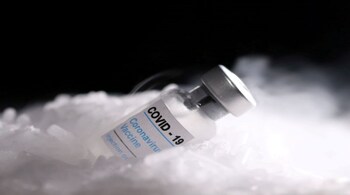
After two American COVID-19 vaccine manufacturers said that they wanted to directly deal with the Centre, state governments are now demanding the union government to import and distribute vaccines to all states.
Pharma giants Moderna and Pfizer have refused vaccine deals with Delhi and Punjab, insisting they would only have direct sale agreements with the Government of India.
Delhi Chief Minister Arvind Kejriwal informed that US pharmaceutical giants Pfizer and Moderna have declined to sell coronavirus vaccines to the city government as they want to directly deal with the Centre.
"We have had talks with Pfizer and Moderna. They said they won't give us vaccine and will directly talk to the Centre," Kejriwal told reporters on May 24.
He appealed to the Centre to talk to these manufacturers and procure the vaccines. “I appeal to the central government with folded hands to talk to these firms, import vaccines and distribute them among states,” said Kejriwal.
Also read | Pfizer to supply COVID-19 vaccine only to central governments, supra-national organisatons
The two vaccine manufacturers have also refused to supply the jabs directly to the Punjab government, citing the company policy that it deals with the Government of India and not with any private party and state.
"Pfizer is working with federal governments across the world to supply its COVID-19 vaccine for use in national immunisation programmes. Our supply agreements at this time are with national governments and supra-national organisations with allocation of doses and implementation within the country being a decision that governments take based on relevant health authority guidance,” said Punjab's nodal officer for vaccination and senior IAS officer Vikas Garg citing Pfizer’s communication to the state.
Follow our LIVE blog for the latest updates of the novel coronavirus pandemic
Kerala Chief Minister Pinarayi Vijayan has asked Prime Minister Narendra Modi to float a global tender for COVID-19 vaccines after taking into account the cumulative need of the states going in for global procurement of shots. This, he said, will prevent states from competing and driving vaccine prices up.
In the letter, he also urged the Centre to provide vaccines freely to all states as it should be treated as a public good from which none should be excluded. He said the most effective way to control the spread of the disease is to vaccinate as many people as possible in the community and build herd immunity.
"To achieve this, we need to have a universal vaccination drive," Vijayan said.
Meanwhile, the Centre is “coordinating deals” with vaccine makers Pfizer and Moderna and would “soon decide on allocation of doses” to states, said union health ministry secretary Lav Agarwal.
“Whether it is Pfizer or Moderna, at the central level, we have been coordinating with them and are facilitating them in two ways—one is the regulatory facilitation in terms of approval and the second is procurement-related facilitation,” he said.
Pfizer and Moderna’s order books are already “full”, said Agarwal, adding that it is dependent on their “surplus” on how much they can provide to India.
(With inputs from PTI)
Follow our full coverage on COVID-19 here.
Discover the latest Business News, Sensex, and Nifty updates. Obtain Personal Finance insights, tax queries, and expert opinions on Moneycontrol or download the Moneycontrol App to stay updated!





