
Union shipping minister Sarbananda Sonowal said that the government has been proactive in monitoring the situation in the Middle East, where the Iran-Israel-US conflict has escalated into the closure of the crucial Strait of Hormuz, and India's energy and cargo flow being significantly stifled as a result. He added that while the government has taken steps to support seafarers, industry stakeholders also need to participate to ensure trade shocks are minimised.
Sonowal was addressing an event in Mumbai organised by the German shipping firm Hapag-Lloyd, in which the company announced around $2 billion worth of investment commitments towards India, including a letter of intent for the development of the upcoming Vadhavan port, creating ship recycling infrastructure, and reflagging four Hapag-Lloyd vessels under the Indian flag.
"While we look ahead with optimism, we must also remain mindful of global challenges. The evolving situation in West Asia, particularly in the Persian Gulf region has introduced uncertainties in maritime threat. In response, the Directorate General of Shipping has issued detailed advisories focusing on enhanced vigilance, voice specific risk assessment and strict reporting protocols and preparedness against emerging threats such as drone and asymmetric attack," Sonowal said, on the government's measures to monitor the situation.
On protecting Indian seafarers, Sonowal said, "A dedicated 24x7 quick response team has also been established to support seafarers and stakeholder in real times. In such a situation, collaboration and responsible conduct by all stakeholders become extremely important. Your cooperation can significantly contribute to ensuring that disruptions are minimized and maritime operation remain secure".
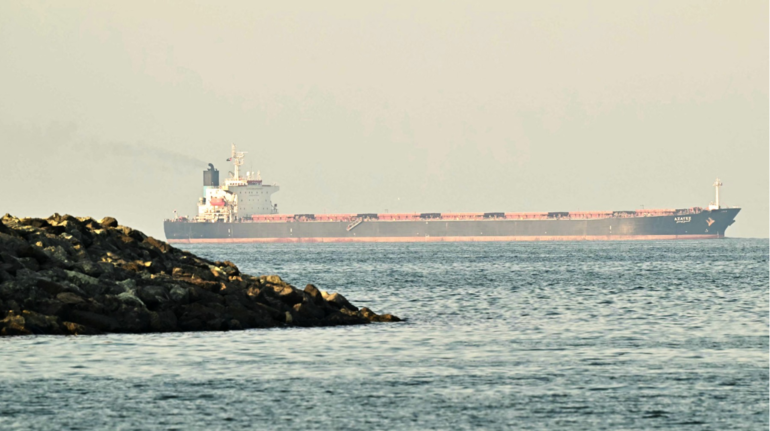
According to media reports, more than 20 vessels of various sizes have been attacked by Iranian missiles, drones, and explosive-laden boats, while trying to cross the maritime choke point. The vessels included oil tankers, as well as container ships and bulk carriers, carrying flags that Iran has deemed to be of "unfriendly" countries, such as the United States.
Shipping lines affected
The attacks, which has caused multiple injuries among ship crews and the death of at least one Indian seafarer, has effectively closed the Strait for shipping, as insurers have refused to issue war-risk insurance for vessels in the region. Even as the US has been seeking to form an international coalition to "open" the Strait, countries have been unwilling to commit warships, fearing an escalation of the conflict.
Hapag-Lloyd's global CEO Rolf Habben-Jansen also noted that six ships of the company's fleet, including owned and chartered vessels, are currently stuck in the Strait of Hormuz region, although the company is managing the situation due to its low exposure (four percent of all shipments) to the oil and gas segment. One of the company's vessels was also hit by debris from an intercepted missile, which caused damage to its engine room. The crew was reported to be safe.
Jansen added that the company is trying to "ringfence" the conflict within the region, in order to keep the global trading situation stable. However, he added that the increasing oil prices as a result of the conflict is causing additional expenses of $40 million to $50 million per week, with shipping lines absorbing some of the costs.
Discover the latest Business News, Sensex, and Nifty updates. Obtain Personal Finance insights, tax queries, and expert opinions on Moneycontrol or download the Moneycontrol App to stay updated!
Find the best of Al News in one place, specially curated for you every weekend.
Stay on top of the latest tech trends and biggest startup news.