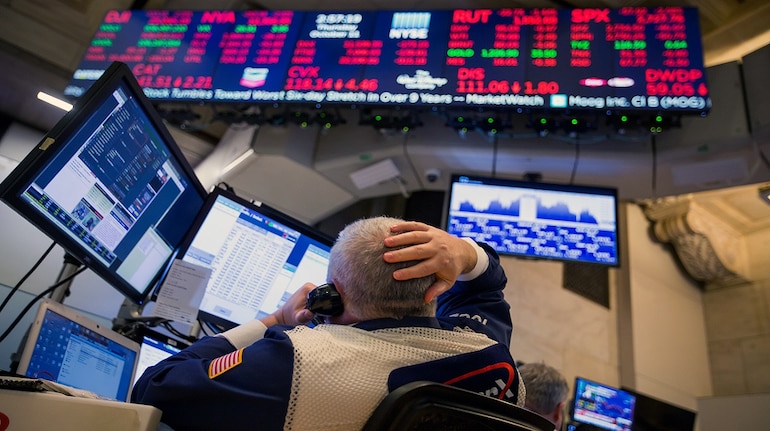
Anxiety that tariffs and government firings will torpedo growth in the world’s largest economy extended a three-week stretch of volatility across global markets. US stocks headed toward their worst slide in 2025 as Wall Street tempered bullish views while demand for recession havens boosted sovereign bonds in the US and Europe.
As if things weren’t jittery enough, a plunge in the S&P 500’s most influential group — big tech — weighed heavily on trading amid a rotation into defensive shares. The benchmark extended its slide from a record to 8% while the Nasdaq 100 sank 3% on Monday. A gauge of the Magnificent Seven megacaps tumbled 5%. Treasury yields slid on bets that an economic slowdown would force the Federal Reserve to cut rates. Bitcoin fell below $80,000.
Speculation is intensifying that President Donald Trump is willing to tolerate hardship in the economy and markets in pursuit of long-term goals involving tariffs and smaller government.
He said the US economy faces “a period of transition,” deflecting concerns about the risks of a cooldown as his early focus on tariffs and federal job cuts causes market turmoil. Asked on Fox News’ Sunday Morning Futures whether he’s expecting a recession, Trump said, “I hate to predict things like that. There is a period of transition, because what we’re doing is very big.”
“President Trump doubled down on the current policy path and acknowledged the chance of a slowdown, and that’s weighing on sentiment,” said Tom Essaye at The Sevens Report.
A chorus of Wall Street strategists is warning about higher stock volatility, with Morgan Stanley’s Michael Wilson the latest to sound the alarm on economic growth worries. Other market forecasters including at JPMorgan Chase & Co. and RBC Capital Markets have also tempered bullish calls for 2025 as Trump’s tariffs stoke fears of slowing economic growth.
“There are always multiple forces at work in the market, but right now, almost all of them are taking a back seat to tariffs,” said Chris Larkin at E*Trade from Morgan Stanley. “Until there’s more clarity on trade policy, traders and investors should anticipate continued volatility.”
The S&P 500 fell 2%, set to close below its 200-day moving average for the first time since November 2023. Its equal-weighted version — one that gives Target Corp. as much clout as Nvidia Corp. — was little changed. The Dow Jones Industrial Average lost 1%.
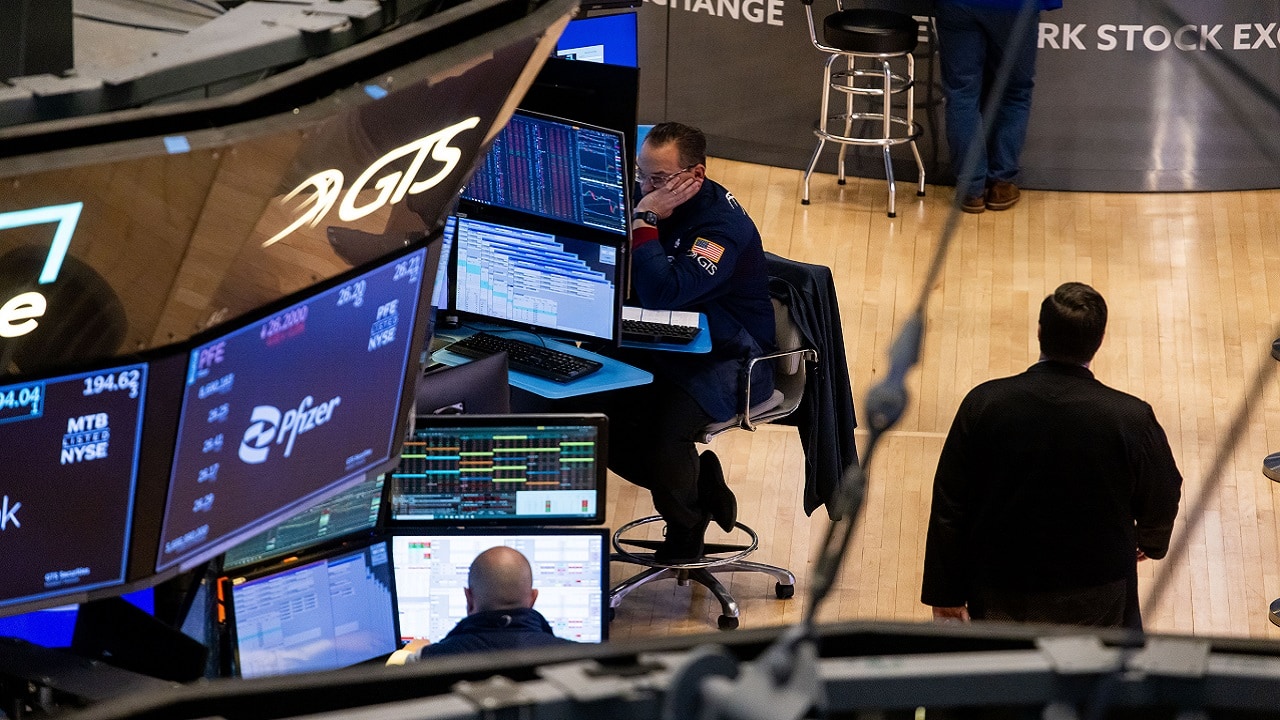 The S&P 500 fell 2%, set to close below its 200-day moving average for the first time since November 2023. Bloomberg
The yield on 10-year Treasuries slid nine basis points to 4.21%. The dollar wavered. US credit risk soared, and over 10 high-grade companies delayed bond sales.
“Markets continue to prove sensitive to trade policy, as considerable uncertainty remains over the size and scope of tariffs to be implemented,” said Jason Pride and Michael Reynolds at Glenmede. “Just as important may be how long the tariffs stay on. Are they temporary in order to extract concessions, or are they a new permanent fixture of US trade policy?”
To Sam Stovall at CFRA, how long this period of investor caution persists depends on how quickly it will take the global trade clouds, and the resulting threat of recession, to dissipate.
The latest moves mark an abrupt about-face for markets, where the dominant driver of the last few years had been the surprising resilience of the US economy even as growth weakened overseas. That’s shaking the aura of economic and market exceptionalism that has dominated for more than a decade.
Investors are turning increasingly unnerved by whipsawing tariff policy, sticky inflation and the unknown pace of the Fed’s interest-rate easing. The Nasdaq 100 Index briefly slumped into a correction Friday as investors dumped the sector that propelled the stock market over the past two years.
From rookie retail traders to hedge fund pros, no one knows what the eventual cost of Trump’s sweeping policies really are. His pro-growth plans were tax cuts, deregulation and energy dominance. Tariffs were supposed to bring manufacturing back to the US and create jobs. But so far there’s little evidence of that.
All of this has mom-and-pop investors spooked. For the first time since 2022, the majority of individual investors say they believe stock prices will drop over the next six months, according to a survey by the American Association of Individual Investors. Fewer than 20% say they expect prices to rise over that period.
Discover the latest Business News, Sensex, and Nifty updates. Obtain Personal Finance insights, tax queries, and expert opinions on Moneycontrol or download the Moneycontrol App to stay updated!
Find the best of Al News in one place, specially curated for you every weekend.
Stay on top of the latest tech trends and biggest startup news.