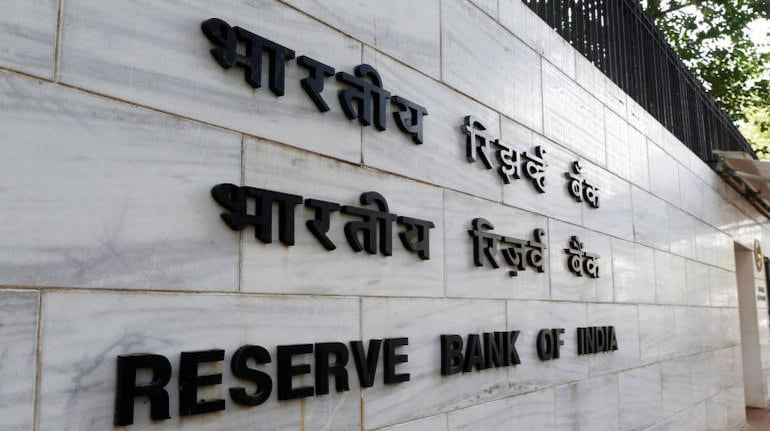
A transparent and comprehensive public credit registry (PCR) is the need of the hour in India to help control loan defaults, improve credit culture, efficiency and financial inclusion, according to Reserve Bank of India Deputy Governor Viral Acharya.
At a time when the banking sector is dappling with large non-performing assets (NPAs), the central bank is proposing to set up an extensive database of credit information accessible to all stakeholders.
“A PCR, if put in place for India, will help in a) Credit assessment and pricing by banks; b) Risk-based, dynamic and countercyclical provisioning at banks; c) Supervision and early intervention by regulators; d) Understanding if transmission of monetary policy is working, and if not, where are the bottlenecks; and, e) How to restructure stressed bank credits effectively,” Acharya said at RBI's Eleventh Statistics Day conference.
Statistics Day in India is celebrated on the birth anniversary of Late Professor PC Mahalanobis, who graduated with honours in Physics in 1912.
Generally, a PCR is managed by a public authority like the central bank or the banking supervisor, and reporting of loan details to the PCR by lenders and/or borrowers is mandated by law. The idea is to capture all relevant information in one large database on the borrower, in particular, the borrower’s entire set of borrowing contracts and outcomes.
According to Acharya, increasingly countries are moving towards this with a view to improving the credit culture in their jurisdictions. Such registers help in enhancing efficiency of the credit market, increase financial inclusion, improve ease of doing business, and help control delinquencies.
A survey conducted by the World Bank reported that as of 2012, out of 195 countries that were surveyed, 87 were having Public Credit Registers – the number must have increased by now.
Dun & Bradstreet (DNB), nearly two centuries old, has perhaps the largest commercial database in the world. Their website claims that they track over 265 million company records which they derive from 30,000 data sources and is updated 5 million times per day, Acharya said.
At present, India has private Credit Bureaus such as Credit Information Bureau (India) Limited (CIBIL), Equifax, Experian, and CRIF Highmark, regulated by RBI. Each one of these focuses on data analytics to provide credit scores, and allied reports and services. These analytics are useful for the member banks for issuing credit cards as well as for taking decisions (primarily on retail loans) as of now.
The RBI has also set up the Central Repository of Information on Large Credits (CRILC) in 2014-15, where our scheduled commercial banks quarterly report credit information of their borrowers having aggregate exposure of Rs 5 crore and above. It covers around 60 percent of the loan portfolio and around 80 percent of the NPAs.
However, CRILC captures only limited detail about the borrowers such as the industry to which they belong and their external and internal ratings. The pooled information under CRILC is shared with the reporting banks but is not shared with the Credit Bureaus, larger lender community, or researchers.
Spelling out the benefits of such a registry Acharya said, apart from a good credit culture, it would help create a level-playing field among different sizes of borrowers, reward the good borrowers, include new borrowers, tap transactional data including payments to utilities like power and telecom for retail customers and trade credit data for businesses.
Why might such data help?
“Lenders in the formal sector often hesitate to extend a line of credit to new customers due to the lack of credit scores. Regularity in making payments to utilities and trade creditors provides an indication of the credit quality of such customers. In turn, credit from the formal sector can become accessible to new borrowers, boosting financial inclusion,” he said adding that a PCR can also have a profound impact for regulatory purposes as it would give a complete picture that is necessary for supervisors and policy makers to assess credit risk of the entire system.
The challenge would be setting up a comprehensive PCR would require much team work and vision, expertise to handle large volumes and varieties of data from diverse sources.
“It will require working with several stakeholders, other regulators and international agencies with expertise in helping set up such registers. That’s a noteworthy challenge for the pool of statisticians,” Acharya said.
There are several other “information base” challenges for the long horizon for the team: Employment Statistics; Household Inflation Expectation Survey in rural and informal economy; Big-data real-time indicators of prices and consumption; Google images and mobile-phone data for economic activity indicators; to just a list few,” he concluded.
Discover the latest Business News, Sensex, and Nifty updates. Obtain Personal Finance insights, tax queries, and expert opinions on Moneycontrol or download the Moneycontrol App to stay updated!

Find the best of Al News in one place, specially curated for you every weekend.
Stay on top of the latest tech trends and biggest startup news.