

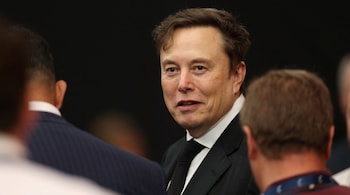
Tesla CEO Elon Musk’s latest comments about a future without poverty and a world where saving money is unnecessary have reignited debate around how far technology can realistically reshape economic systems. Unlike traditional economic forecasts that rely on growth rates, employment data, or policy shifts, Musk’s vision is rooted almost entirely in technological acceleration, particularly artificial intelligence and automation.
The argument assumes that rapid gains in productivity will make goods and services abundant, reducing costs to near zero. In such a scenario, income inequality would narrow not because wealth is redistributed, but because basic needs become easier to meet through automated systems.
The gap between prediction and present reality
While Musk’s comments look decades ahead, the present global economy continues to rely heavily on savings, wages, and financial planning. Inflation, housing costs, healthcare expenses, and education fees still make long-term saving a necessity for most households. Even in advanced economies, automation has so far created uneven outcomes, improving efficiency in some sectors while disrupting jobs in others.
This contrast highlights a key tension in Musk’s remarks: the difference between what technology may enable and what social systems are currently designed to handle. Without structural changes to taxation, welfare, and employment models, technological abundance alone may not eliminate poverty.
Universal income as an unresolved assumption
Central to Musk’s thinking is the idea of universal high income, often linked to discussions around universal basic income. However, his recent comments stop short of explaining how such income would be distributed, funded, or governed. Previous experiments with basic income across countries have shown mixed results, often constrained by political will and fiscal limits rather than technology itself.
The absence of detail leaves policymakers and economists with unanswered questions about implementation rather than feasibility.
Even if Musk’s predictions remain long-term, they influence how governments, investors, and companies think about automation and labour. Statements from influential tech leaders shape narratives around work, education, and skill development, pushing conversations beyond short-term cycles.
For now, saving money remains essential. But Musk’s remarks underline a broader shift: economic debates are increasingly being driven by assumptions about future technology, not just present-day data.
Discover the latest Business News, Sensex, and Nifty updates. Obtain Personal Finance insights, tax queries, and expert opinions on Moneycontrol or download the Moneycontrol App to stay updated!





