

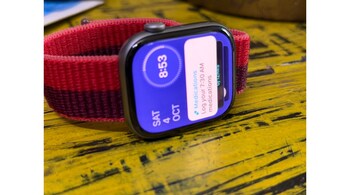
Over the past few years, Apple Watch has earned a reputation for doing more than tracking fitness or sending notifications. From detecting irregular heartbeats to alerting wearers after a fall, the smartwatch has been credited with saving countless lives around the world. For Sahil, a 26-year-old rice manufacturer from Nainpur in Madhya Pradesh, it became the reason he is alive today.
Sahil had been using his Apple Watch Series 9 for almost three years. On what seemed like a perfectly ordinary Wednesday, he travelled to Jabalpur for a business meeting, according to a report by Indian Express. The weather was dull, and he even considered skipping the trip. But work couldn’t wait, so he went. The meeting went well, and to unwind, he decided to catch a movie before returning home by train.
As the movie neared its end, his smartwatch began vibrating with an unusual alert. It showed his heart rate staying above 150 beats per minute for nearly fifteen minutes, even though he was sitting still. “At first, I thought it was nothing serious,” Sahil told IE. “But I was relaxed and not doing anything. That’s when I got a little worried.”
He decided not to ignore the warning. Instead of boarding his 7:30 pm train, he went to see a doctor. To be cautious, he also took an ECG using his Apple Watch. When he showed the reading to the doctor, the results looked normal but the doctor asked him to get a proper ECG and a blood pressure test done. That’s when the real danger surfaced.
His blood pressure was 180/120, which is dangerously high and potentially fatal if ignored. “The doctor told me if I had taken that train, I could have had a stroke or brain haemorrhage. I might have collapsed on the way,” Sahil told the daily.. He was immediately admitted to the hospital for observation.
Looking back, Sahil believes the watch made all the difference. “The Apple Watch actually saved my life,” he said. The close call also made him rethink his lifestyle. Constant work pressure, frequent travel and unhealthy eating had taken a toll on his body. “I’ve stopped eating junk food now. I take better care of my sleep and try not to push myself too hard,” he added.
His family, still shaken by the incident, is grateful that he listened to his instincts. Sahil, who recently got married, says he now plans to buy Apple Watches for his entire family. “When you have a family history of heart problems, you can’t take health lightly. These watches may seem like gadgets, but they can truly make a difference.”
Doctors say Sahil’s case is a reminder of how technology can work hand in hand with awareness. While devices like Apple Watch can alert users to irregularities, timely medical attention is what ultimately saves lives. For Sahil, that small buzz on his wrist was the warning he didn’t know he needed — one that turned an ordinary evening into a second chance at life.
Discover the latest Business News, Sensex, and Nifty updates. Obtain Personal Finance insights, tax queries, and expert opinions on Moneycontrol or download the Moneycontrol App to stay updated!





