

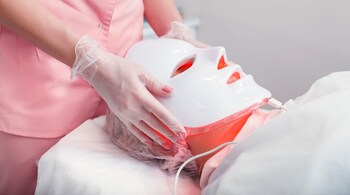
Type ‘red light therapy’ in the search bar of any social media app, and you will find countless videos claiming that it is no less than a magical potion for your skin and hair. Scroll through, and you may even find a few calling it just another beauty fad. But what exactly is this treatment? How does it actually work? Or does it really work?
Here’s everything you need to know to jump on this beauty bandwagon, if you haven’t already.
What is red light therapy?
Light therapies (or photobiomodulation) have been in use in the medical and cosmetic fields for decades now, and are used to combat several bodily disorders. Red light therapy (RLT), in particular, is an FDA-approved treatment that has proven to be effective in treating acne, reducing inflammation, stimulating hair growth, and general facial rejuvenation. It, in fact, has also shown potential in treating compromised blood circulation, decreasing healing time after an injury and reducing joint pain.
The possibilities of red light to treat a variety of health and aesthetic concerns are on a constant rise, and the credit goes to interest from researchers, universities, and derma expects, as well as at-home devices that make it more accessible. Though the research is still ongoing on its effectiveness, the therapy has been proven dermatologically safe (and no, it doesn’t hurt!).
Also read: Ditch the blush, go all natural with these superfoods for a super glowing skin
How does it work?
According to health researcher and author Mark Sloan in his book Red Light Therapy: Miracle Medicine, “of the 50,000+ studies published on red light therapy to date, no adverse side effects have been reported.” Sloan informs that nearly every disease state known to man has been linked to low mitochondrial activity. And since RLT works by activating mitochondria (the powerhouse of the cell), it gives a boost to the cell’s energy centre, enabling it to perform efficiently.
Red Light Therapy exposes the body to the therapeutic application of a low wavelength of red light (620 to 750 nanometers) where photons enter the skin tissues and activate chromophores that increase energy production in the cell. In simpler words, this photoscience treatment is like morning coffee to your cells that wake them up and help them get the job done!
How to pick the right at-home RLT tool?
Dermatology centres around the globe have been using red light therapy for over a decade now. However, at-home RLT tools have gained popularity quite recently. Those looking to get most benefits from the treatment, must first experience it in a clinical setting. But in case you are keen on trying RLT at home – which come in the form of either a mask, lamp, or wand – make sure that the device is FDA-approved, has single-coloured LEDs, and no additional wavelengths.
Discover the latest Business News, Sensex, and Nifty updates. Obtain Personal Finance insights, tax queries, and expert opinions on Moneycontrol or download the Moneycontrol App to stay updated!





