

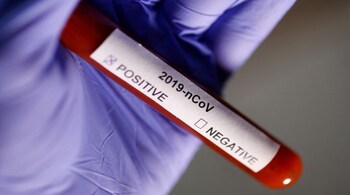
The Karnataka Department of Health & Family Welfare Services on Monday said 34 cases of COVID-19's variant JN.1 have been detected in the state so far, which include three deaths.
Earlier in the day, Health Minister Dinesh Gundu Rao had said about 35 cases of JN.1 have been detected in Karnataka so far, but had maintained that the information is subjected to details shared by the department, later. Out of these 34 cases of JN.1 detected in Karnataka, 20 are from Bengaluru city alone.
"Samples of Covid-19 positive cases were tested for the newly reported Omicron variant of Covid-19, i.e., JN.1 at National Institute of Virology (NIV), Pune and National Centre for Biological Sciences (NCBS), Bengaluru. Genome sequencing results of 60 samples are available as on date, out of 192 samples submitted....Total 34 cases have been detected as JN.1 variant," the department said in a release.
It said, results of the remaining positive cases may be available by Wednesday.
According to the department, out of 34 JN.1 cases in State - 20 are from Bengaluru city, while four from Mysuru, three from Mandya, one each from Ramanagara, Bengaluru Rural, Kodagu and Chamarajanagara, and three deaths.
Among the three deaths, one each was reported from Bengaluru South Zone, Bengaluru West Zone and Ramanagara district.
Noting that currently WHO and Ministry of Health & Family Welfare, Government of India have classified JN.1 as Variant of Interest (VoI) and not Variant of Concern (VoC), the release said, hence, imposing restrictions and creating unnecessary panic amongst public are not advised.
However, in the light of current scenario of COVID-19 in the state, it stressed on compliance with precautions advised by the state government in consultation with the Technical Advisory Committee (TAC).
They include -- all elderly (60 years and above), comorbid (particularly with kidney, heart, liver ailments, etc.), pregnant women and lactating mothers, shall avoid visiting closed, poorly ventilated spaces and crowded areas. However, when outdoors they shall wear face masks covering the nose and mouth.
Calling for safe celebrations during the year-end festivities and new year celebrations, it said, COVID Appropriate Behavior (CAB) of social distancing, face masking, hand-sanitization and respiratory hygiene/ cough etiquette shall be adhered to. "Persons with respiratory symptoms shall avoid places of festivities and recreational centres (including swimming pools) and seek medical consultation."
Further, necessary measures will be recommended after taking stock of the situation in coming days, if required, it added.
Earlier in the day, sharing information about JN.1 cases in Karnataka, Minister Rao had said, the new variant's infection spread is neither surprising nor a sudden development, and asked people not to worry, but to be cautious and take precautions.
"This was expected, as JN.1 is most prevalent and is spreading across the world now. The WHO, Central government and the state government has been speaking about JN.1 infections...we had information about JN.1 infections, but for confirmation genome sequencing was done and through that we have come to know about 35 (actually 34) cases," he said.
The state government's Cabinet sub-committee will meet tomorrow to discuss the recommendations made by the Technical Advisory Committee (TAC) on further measures to be taken to manage COVID-19 situation in the state.
Suggesting that there is no need to worry about JN.1 cases, the Minister reiterated there were no restrictions or guidelines regarding any activities or celebrations like New Year or gathering of people, anywhere. "Anyhow, the cabinet sub-committee will discuss the recommendations made by the TAC tomorrow and decide what further measures need to be taken and will let you know. As of now there are no guidelines restricting any activities or celebrations or gathering of people," he added.
Reiterating that JN.1 infections were expected, Rao said, "no one should feel that it is a surprise or a sudden development...existing guidelines to control its spread are continuing as of now, in case any changes are made they will be made known. No need to worry, but remain cautious and take precautions."
Discover the latest Business News, Sensex, and Nifty updates. Obtain Personal Finance insights, tax queries, and expert opinions on Moneycontrol or download the Moneycontrol App to stay updated!





