

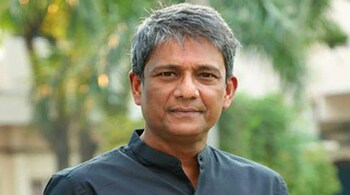
A familiar face in movies (English Vinglish and Life of Pi) and web series (including Delhi Crime), Adil Hussain started his acting journey doing theatre in his hometown Assam. In a career spanning close to three decades, the National School of Drama alumni’s choices have been influenced by his worldview and formative experiences in Assam, Delhi, London and Edinburgh.
The ongoing IHC Theatre Festival in Delhi has him as their actor-in-spotlight this year and will see Hussain in conversation with Jonathan Kennedy, Director Arts India, British Council, on September 25. Edited excerpts from an interview with the actor:
You started your acting journey from the stage and now, the IHC Theatre Festival is doing a spotlight section on your journey. How does that feel?
To be honest, I feel a bit guilty because I haven’t done much theatre in the last 10 years... The kind of theatre I used to do was extremely challenging, exploratory and experimental. It helped me to crush my boundaries and transgress my limits of the ideas of right and wrong. That’s probably the reason I am an actor.
When your acting is limited to films, especially in India, what happens most of the time is that often you don’t have much time to prepare. Most of the scripts which are written are not fully loaded with human complexities. You do not get the opportunity to prepare enough to create the world of the role that you’re playing. That deprives me of the fundamental reason why I act.
I get to experience my other self - which I never knew existed within me - when I have the time to prepare a vivid and detailed world of the role that I play. That’s the reason I feel I am depriving myself of that amazing creative bliss that I feel when I do theatre.
Before you got into NSD, you were a part of the Bhaya Mama Group in Assam where you used to do a lot of political satires. What do you remember of those days and how have they shaped your approach as a performer?
There was an innocent approach to acting, and by that I mean uninformed, where there is a spontaneity which probably stemmed from the magic of being on stage and rehearsals.
I joined the Indian People’s Theatre Association (IPTA) and realised this is one ideology and not necessarily my ideology. I realised it is way bigger than any ideology that anybody can give me. It is my job to discover why I am doing it. For almost three years I did not do any theatre but was searching for the answers. I found a sort of satisfactory answer, and then I stopped searching and instead started focusing on the craft of acting.
And what was the answer?
I understood that if you feel like doing something from within and you don’t do it, you are not being truthful to yourself. Theatre for me then (was), and still probably is, a vehicle to find the truth about your dreams and aspirations.
Also, I realise that I will never be able to wrap my head around the mysteries of the creation. So I have surrendered to the immensity and magnitude of the mystery. What I am doing is swadharma (nature of the self), and for me, it is to practice the art of acting. While doing it, one might find the answers to the questions and reach the destination. That’s good enough for me.
You have done all kinds of roles for different mediums and languages. Do you gauge a project keeping in mind your image?
The whole idea of acting is that I should not have any image. I have learnt from my teachers that you are not bigger than any role that you play. What I care about is the artistic quality of the project. If I like a script, I try to see the intent of the filmmaker behind it. If the film is close to the director’s or writer’s heart, one can feel it when you read the script. And then of course, I see how well it is written.
You have brought a lot of attention to cinema from the North-East and you continue to do that. Why is that important for you?
Historically and politically, the North-East has been one of the most neglected parts of the country. My village was so remote and it was difficult for me at a place where resources and opportunities were limited to find a teacher for myself. So when people try and do something from there, especially in the field of filmmaking and acting, I have all my love and enthusiasm for it. That place has given me so much. I have learnt about the richness of human relationships from there. We were closely knitted as families and emotionally wealthy. My seed was planted in that soil and while the tree is still growing, my seed is still there. I keep telling the authorities there to exploit my connections and expertise, if I have any.
What’s next?
Two of my films are having their world premiere at the Busan International Film Festival. One is The Storyteller by director Ananth Mahadevan and the other is called Max, Min and Meowzaki by director Padmakumar Narasimhamurthy. The latter is a heartwarming tale of three generations. I have also done a film called The Postman where I play a postman who is trying to stop the government from shutting down the post office in a remote mountainous region. I am also the lead in the movie Footprints on Water about illegal immigration which is set in Birmingham. I will also be seen in the web series Mukhbir and another on Netflix set in Kolkata.
Discover the latest Business News, Sensex, and Nifty updates. Obtain Personal Finance insights, tax queries, and expert opinions on Moneycontrol or download the Moneycontrol App to stay updated!





