-
My Account









Chandrayaan-3 Moon Mission: Here's why it is difficult to soft-land on the Moon
ISRO's Chandrayaan-3's Lander Module is expected to land on the Moon on August 23. India will be the fourth country in the world after the United States, Russia and China to achieve this feat but will be the only country to land on the moon's south pole




1/7
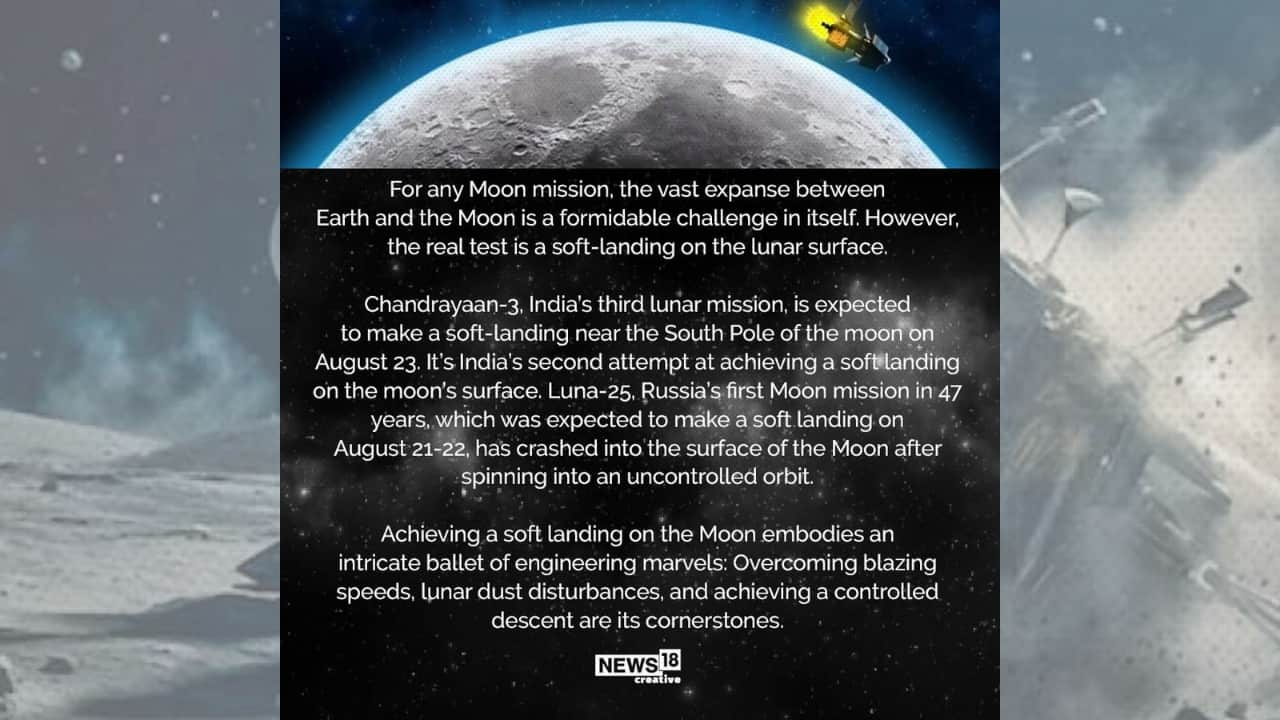
For many Moon missions, the vast expanse between Earth and the Moon is a formidable challenge in itself, however, the real test is a soft-landing on the lunar surface. (Image: News18 Creative)
2/7

Soft landing entails a controlled descent, ensuring the craft’s safe and gradual touchdown, while a hard-landing transpires at a higher descent speed. (Image: News18 Creative)
3/7
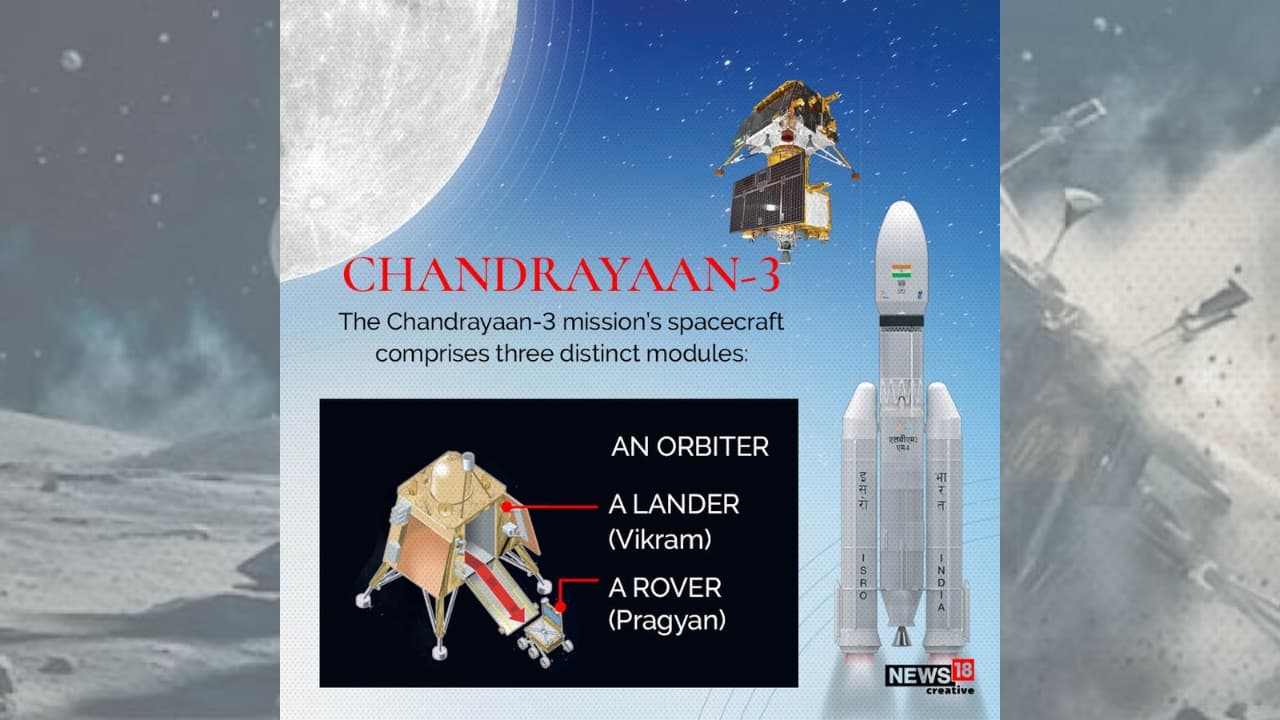
The Chandrayaan-3 mission’s spacecraft comprises three modules: an orbiter, a lander and a rover. (Image: News18 Creative)
4/7

In contrast to Chandrayaan-2, Chandrayaad-3 lacks an orbiter module and is exclusively designed to achieve a lunar south pole landing. (Image: News18 Creative)
5/7

This critical phase demands a precise orchestration of engine firings, altitude adjustments, fuel consumption, and meticulous scans of the lunar terrain. The whole process unfolds autonomously. (Image: News18 Creative)
6/7
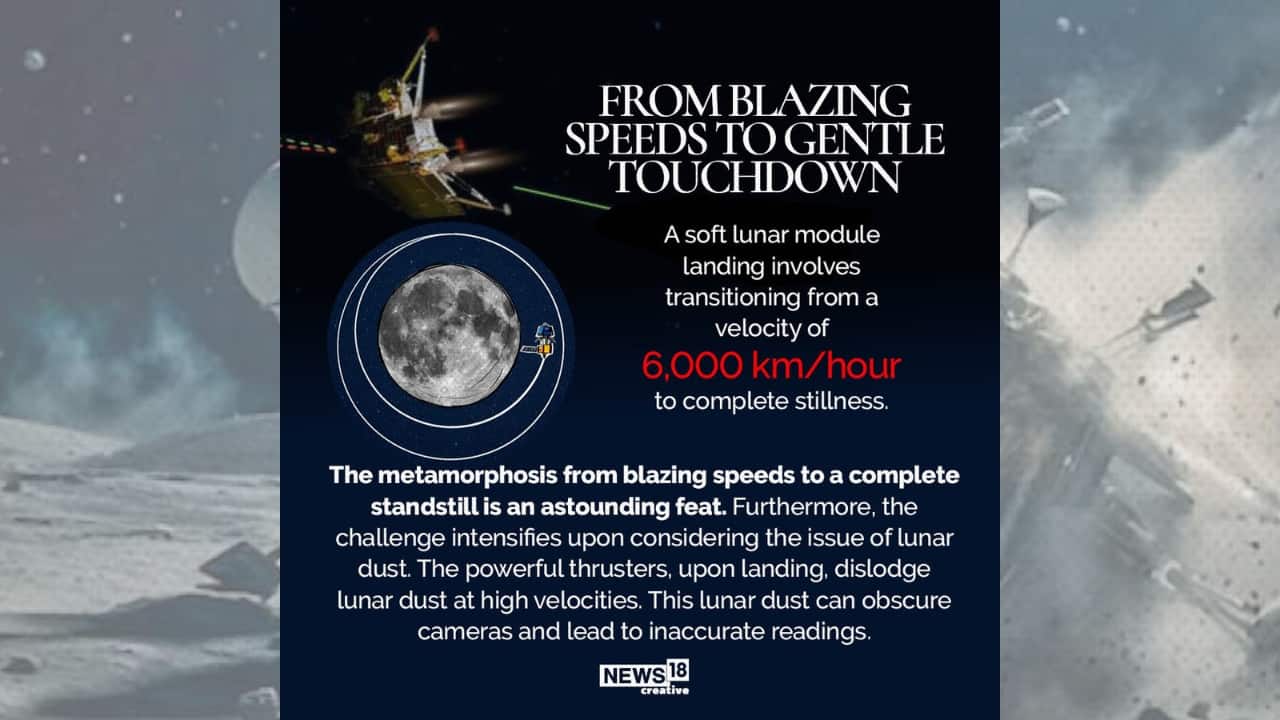
A soft lunar module landing involves transitioning from a velocity of 6,000 km an hour to complete stillness. (Image: News18 Creative)
7/7

Lunar dust, composed of minute abrasive particles from the lunar surface, emerges as a pivotal adversary during soft landings. (Image: News18 Creative)
Discover the latest Business News, Budget 2025 News, Sensex, and Nifty updates. Obtain Personal Finance insights, tax queries, and expert opinions on Moneycontrol or download the Moneycontrol App to stay updated!



