

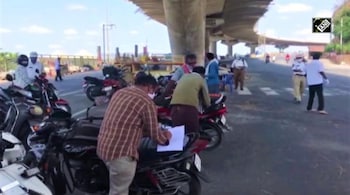
The Centre has extended Lockdown 5.0 till June 30 and stated that Unlock 1.0 will be undertaken in phases through the month to slowly revive economic activity after the prolonged shut down since March 25 due to coronavirus pandemic.
Particulars of the easing have been left up to the states, especially in containment zones. Here are the details for Andhra Pradesh:
> Lockdown in containment zones extended till June 30
> Phased re-opening or Unlock 1 in non-containment zones to be done as per MHA guidelines
> Fines to be imposed for spitting in public spaces
> Wearing of mask and social distancing made mandatory in public spaces
Follow our LIVE Updates on the coronavirus pandemic here
> Unlock 1: Places of worship, hotels and restaurants re-opened from June 8
> Unlock 1: Hospitality services and shopping malls also re-opened from June 8
> Plans for Phase II: Decision on re-opening educational institutes to be taken in July
> Plans for Phase II: Secondary School Certification (SSC) exams or 10th board exams to be held from July 10
> Plan for Phase III: International air travel, theatres, gymnasiums, swimming pools, entertainment parks, bars, auditoriums, assembly halls, and social, political, sports, entertainment, academic, cultural and religious functions may be allowed after assessment
Watch: Business Insight | Here's how states are preparing for Unlock 1.0
> Trains, flights and bus services resume – all passengers to be screened, must enrol to Spandana portal, exemptions in case of death of relative, for medical professionals and other officials
> Restrictions on inter-state transport to continue, symptomatic travellers from Delhi, Madhya Pradesh, Rajasthan, Gujarat, Maharashtra and Chennai to be quarantined for seven days and tested again; asymptomatic travellers to be quarantined in native districts and tested after seven days. Those testing positive to be moved to COVID-19 hospitals
> Those above 60 years and below 10 years of age, pregnant, lactating and terminally ill to be home quarantined. Daily visits by ASHA workers.
Discover the latest Business News, Sensex, and Nifty updates. Obtain Personal Finance insights, tax queries, and expert opinions on Moneycontrol or download the Moneycontrol App to stay updated!





