

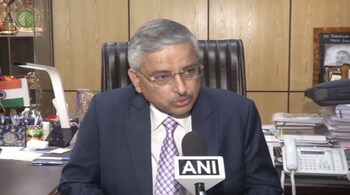
As the threat of the third wave of COVID-19 looms large over India, the AIIMS chief expects approvals for coronavirus vaccine for children by October this year.
Speaking to ANI, AIIMS Director Dr Randeep Guleria said that Bharat Biotech was expected to submit data of clinical trial on children by September-October.
Track this LIVE blog for latest updates on coronavirus pandemic
The pandemic can be controlled only if everyone is vaccinated, Guleria said.
"Bharat Biotech and other companies are doing trials at a very fast pace as parents have come forward with their children for the trials," he said.
"One is hopeful that the trial will be completed early and possibly with follow up of about two-three months, we shall have data by September. Hopefully, by that time, approvals will be there so that by September-October, we'll have vaccines from our country which we can give to children," he added.
Read | COVID-19 vaccines for children: Here's how Centre plans 80% coverage in 12-18 age group
Guleria further said that the Covaxin "covers a wide spectrum" as Bharat Biotech is conducting trials between the age group of 2 to 18 years.
Covaxin, indigenously developed by Bharat Biotech in collaboration with the Indian Council of Medical Research (ICMR), is being used on adults in India's ongoing COVID-19 vaccination drive.
India is yet to approve any COVID-19 vaccine for use for children. So far, the United States, United Kingdom, France and New Zealand have approved the Pfizer-BioNTech vaccine for children over 12 years of age.
Discover the latest Business News, Sensex, and Nifty updates. Obtain Personal Finance insights, tax queries, and expert opinions on Moneycontrol or download the Moneycontrol App to stay updated!





