

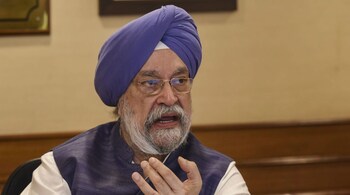
In an exclusive interview to CNN-News 18, Union Civil Aviation Minister Hardeep Singh Puri said the aviation sector in India will be opened in a "gradual and calibrated manner".
Throwing light on the evacuation process of Indian citizens stranded abroad, Puri said: "We are open to the idea of involving private carriers if the situation arises."
India plans to bring back 15,000 Indians stranded in more than 10 countries, over seven days in 64 flights. The evacuation will begin on May 7. On an average, about 2,000 Indians will be flown back each of the days.
Track this blog for latest updates on the coronavirus outbreak
Those coming back to India will be required to fill a self reporting form to declare if they have any COVID-19 symptoms, as well as register the Aarogya Setu app on reaching their destination.
Read Also: First flight with stranded Indians may be on London-Mumbai route
After scrutiny, they would be quarantined for 14 days, either in a hospital or in an institutional quarantine on payment-basis, by the concerned State government.
On the role of the state government, Puri said, “We are not going to go ahead with the evacuation plan until respective states are ready with the quarantine plan. The Centre can only provide service to the people of picking and dropping them to their respective places. Rest, the states have to take care of the logistics.”
On the current status of the aviation sector in India, Puri said, “Challenges that airlines are facing are from the pre-COVID period. We all know that the aviation sector has suffered a lot.”
When asked about resuming operations of the aviation industry after the lockdown lifts, Puri said that the government will navigate the way-forward depending on how the situation evolves.
Read Also: Stranded overseas? Or want to travel from India? This is what you should do
"We will have to open aviation sector in a gradual and calibrated manner. We can only plan for flights between two green zones. It will be difficult to resume services between red zones," Puri added.
The civil aviation minister also told the news channel that the process of divesting Air India is ongoing.
Follow our full coverage of the coronavirus outbreak here
Discover the latest Business News, Sensex, and Nifty updates. Obtain Personal Finance insights, tax queries, and expert opinions on Moneycontrol or download the Moneycontrol App to stay updated!





