

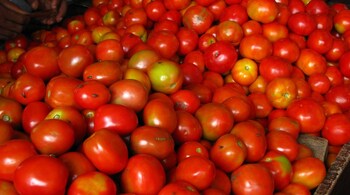
The southwest monsoon arrived late this year. While it has provided some relief from the heat, erratic rainfall has also driven up vegetable and fruit prices across India. Tomato prices surged to as much as Rs 130 per kilo this week in Lucknow. In Kochi, ginger and green chilli prices rose to Rs 230 and Rs 160 per kilo, respectively. In Chennai, Coimbatore and Trichy, vegetables such as brinjal and drumsticks are being sold at Rs 60 and Rs 80 per kilogram, while banana prices touched Rs 80 per dozen in Mumbai. And with the prospect of an El Niño looming in the coming months, the Reserve Bank of India (RBI) too has admitted that controlling food inflation could be a challenge. But why do vegetable prices shoot up so dramatically in the monsoon? Let’s find out.
Cause and effect
The southwest monsoon arrives in India in June and stays till September. It accounts for nearly 70 percent of the country’s annual rainfall, and is crucial to meeting our drinking water and agricultural needs. Nearly half of the population also depends on this sector directly or indirectly.
As per the RBI, “Irrigation infrastructure has expanded at a considerable pace, making India a food sufficient nation by reducing its dependence on monsoons.” Yet, nearly 50 percent of the country’s sown area still depends on monsoon rain as per data published by the ministry of agriculture and farmers' welfare in 2022.
What complicates matters is that the monsoon has been erratic across the country over the past years. For instance, this year, according to the Indian Meteorological Department (IMD), as of the last week of June, India as a whole had a deficit of about 23 percent. But this distribution is not equal. Northwest India witnessed surplus rainfall of 37 percent because of Cyclone Biparjoy. On the other hand, central India and south peninsular had a 35 percent and 45 percent deficient rain, respectively.
Also read: Monsoon 2023 updates
Tomato prices
Most fruits and vegetables are sensitive to climate extremes, which is why we are seeing an unprecedented jump in their prices. Tomatoes, for instance, were first impacted by heat waves in the country, causing the crops to dry out and wilt. Then, unseasonal rain in May damaged produce in Rajasthan, Uttar Pradesh and Haryana. Heavy rainfall in Karnataka also impacted crops in June. Supply was hit.
Also read: Memes flood Twitter as tomato prices simmer across states
“Heavy rains can affect the yield and quality of produce by reducing photosynthetic activity, altering metabolism and enzymatic activity. It has also affected fruits such as apple, pear, peach and plum by reducing yield and deteriorating quality, and by spreading diseases across orchards,” says Anjani Kumar, senior research fellow, International Food Policy Research Institute-South Asia.
Flooding in certain parts of the country also made it difficult for farmers to transport fruits and vegetables from farms to markets. Heavy rainfall in Rajasthan, for instance, on account of Cyclone Biparjoy, destroyed crops, so they never reached local markets. This disruption in the supply chain reduced the availability of vegetables such as tomatoes, green chillies, bitter gourd, lemon and ginger, causing their prices to rise.
Also read: World’s food supply faces new threat from lack of rain in India
Brace for impact
Not all areas of India are equally important in terms of vegetable production. For example, Andhra Pradesh and Karnataka are among the top producers of tomatoes in the country. If these states are adversely affected by extreme weather or crop damage, it can lead to a shortage immediately and drive up prices.
Even otherwise, certain foods are more in demand than others. “The market, irrespective of the production-supply-hoarding chain problem, will essentially drive up prices of essential vegetables consumed by most of us and are critical for meeting our daily nutrient requirements. For instance, onions, tomatoes, (some) greens and green chillies. All of these are short-term crops, which require either rainfall on time or irrigation. Among fruits, I think banana prices may shoot drastically due to monsoon delays,” says Shrinivas Badiger, PhD Fellow at the Centre for Environment and Development, Ashoka Trust for Research in Ecology and the Environment.
Rice, cardamom, soyabean production
What’s also concerning is that the deficient rainfall has delayed the sowing of kharif crops, such as paddy, pulses, oilseeds, cotton, and sugarcane. As per data released by the agriculture ministry data on June 23, sowing was down 4.5 percent on year to 12.9 million hectare.
A delayed and muted monsoon has triggered concerns in the paddy belts of West Bengal, Tamil Nadu, Andhra Pradesh, and Jharkhand. In Idukki district of Kerala, where rainfall has decreased by 74 percent, the farming sector, especially cardamom production, is likely to suffer. The sowing of soyabean has been hit in Madhya Pradesh and Maharashtra due to lack of ample rainfall. But it is too early to say what the impact will be on yields or prices.
In contrast, vegetable price hikes are usually short-lived. As supply increases, prices will eventually stabilize. That is till the next extreme weather event causes a surge again.
Also read: How climate change is changing the food we eat in India: prices, nutrition, taste, seasonality
Discover the latest Business News, Sensex, and Nifty updates. Obtain Personal Finance insights, tax queries, and expert opinions on Moneycontrol or download the Moneycontrol App to stay updated!





