




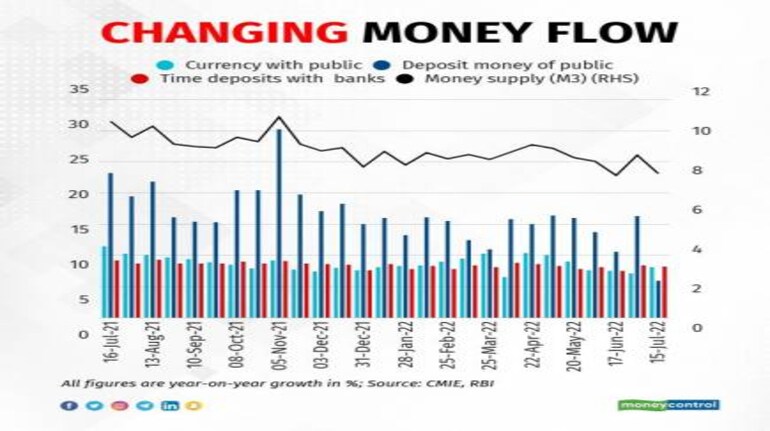
One of the arguments against loose monetary policy is the inflationary effect of persistent surplus liquidity. The Reserve Bank of India (RBI) tracks money supply, a key metric that reflects this relationship between liquidity and inflation to assess potential inflationary pressures to the economy. As money moves through the economy, it multiplies which feeds into inflation as well as growth. Money supply can be looked from the prism of sources or components. Source of money supply are bank loans to the commercial sector and the government, the government’s liabilities with the public through currency and foreign exchange assets of banks. The above chart details the components of money supply which are currency with the public, deposits of the public with financial institutions and post office deposits. Bank deposits are a key component in creating money supply as is cash with the public. But deposit growth has decelerated over the past several months which has dragged down money supply growth somewhat. That said, currency with the public is still showing decent growth and post office deposits also show stability. A deceleration in money supply is led by slowdown in bank deposits and that explains the fall in surplus liquidity in the banking system. It also means that inflationary pressures stemming from here are lower than before.
Discover the latest Business News, Sensex, and Nifty updates. Obtain Personal Finance insights, tax queries, and expert opinions on Moneycontrol or download the Moneycontrol App to stay updated!
Find the best of Al News in one place, specially curated for you every weekend.
Stay on top of the latest tech trends and biggest startup news.



