

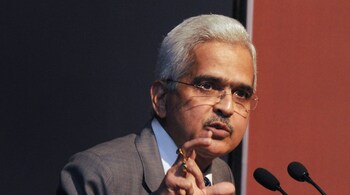
On a normal policy day, Reserve Bank of India (RBI) Governor Shaktikanta Das is not someone who likes to surprise his audience. But, on February 10, Das read out the decision of the Monetary Policy Committee (MPC) that surprised most economists. The MPC kept the key policy rates unchanged. Further, to confirm its continued focus on the economic growth-revival, the MPC also continued with the so-called ‘accommodative’ stance. During an accommodative monetary policy, a rate hike is ruled out.
A no-action policy was not expected today. The MPC was seen taking steps to indicate policy normalisation or gradual exit from the easy money regime. The MPC’s move is surprising because most economists were betting on a reverse repo rate hike and change in policy stance to ‘neutral’ from ‘accommodative’. A shift to a neutral stance would have meant that the central bank would look at all options on the rate front including a rate hike.
But, none of this happened.
Das said the MPC will continue its growth-supportive stance till the time there are signs of a durable recovery. This is largely the continuation of the policy stance adopted by the MPC in the last two years during the pandemic period.
RBI Monetary Policy Highlights
There was a reason why economists predicted a hike in reverse repo rates and change in stance to 'neutral'. The RBI has infused significant amounts of liquidity into the financial system to make sure the banking system is not short on cash during the pandemic days. With growth picking up and inflation concerns continue to be present, the central bank needs to gradually unwind the loose monetary policy approach. Also, the move would have conveyed to the markets that interest rates will now begin to inch upwards from this point. But, Das and his team chose to play the waiting game.
Despite improving inflation outlook, continued policy support warranted
By opting for the status quo, the MPC has chosen the waiting game for more cues to go aggressive on the policy normalisation process. For now, growth remains the focus. With the MPC continuing its accommodative stance and keeping the rates unchanged, it is quite clear that the rate setting panel’s focus continues to be growth revival. The RBI is in no hurry to pursue the path of policy normalisation.
Growth scenario has started improving. The Economic Survey has projected 8 percent-8.5 percent growth in GDP for the fiscal year 2022-23 while the first advance estimates suggest India’s GDP may grow 9.2 per cent in the current financial year. The MPC may have drawn comfort from the fact that the ongoing Omicron wave isn’t as serious as feared and there are no localised lockdowns hampering the economic activity--at least till now.
RBI Monetary Policy meeting: Key takeaways
On the other side, inflation fears are still present. Retail inflation jumped to 5.59 percent in December. High inflation eats into the fruits of economic growth as the consumer needs to pay more for goods and services while the income level remains. This situation hurts the poor more. The MPC expects inflation to remain under control going ahead. Das has projected a 4.5% retail inflation in FY 23 and for FY 22, the RBI has retained the 5.3% inflation projection.
To sum up, today’s policy is largely a non-event for markets and only suggests the continuation of the growth-supportive policy stance. The stock markets are trading flat despite the 'surprise element' from Das. Going ahead, one needs to watch closely how the Omicron wave will pan out in the approaching months and how the inflation trajectory will evolve. For now, Das and his colleagues at the MPC have a clear message to the markets—growth remains the highest priority for the policymakers.
Discover the latest Business News, Sensex, and Nifty updates. Obtain Personal Finance insights, tax queries, and expert opinions on Moneycontrol or download the Moneycontrol App to stay updated!





