

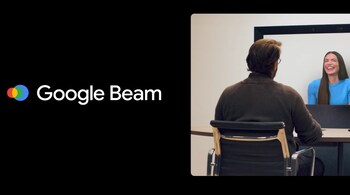
Google has officially rebranded Project Starline, its experimental 3D video communication initiative, as Google Beam. The new platform builds on the original project’s aim to make video calls feel like real-life conversations, using cutting-edge AI and display technology to simulate in-person interaction—without the need for headsets or glasses.
What is Google Beam?
Initially introduced as Project Starline, the platform was a research effort to push the boundaries of remote communication. With its evolution into Google Beam, the technology is moving from the lab to real-world use cases, targeting enterprises and eventually broader markets.
Google Beam: How it works
At the core of Google Beam is a new AI-driven volumetric video model. This model converts conventional 2D video into dynamic 3D visuals in real time, creating a natural sense of presence and depth. Combined with a light field display, it enables users to make eye contact and interpret facial cues as if sitting across from each other.
The system relies on Google Cloud infrastructure and AI capabilities to ensure seamless performance, offering enterprise-grade reliability and integration with existing workflows. In practice, it transforms typical video calls into immersive experiences, helping people feel more connected regardless of their location.
What’s in it for users?
The platform’s key benefit is natural communication—users can read body language, make eye contact, and perceive spatial audio as they would in real life. This has significant implications for remote work, virtual healthcare, education, and customer support, where non-verbal cues are critical.
Google Beam is also tackling language barriers. A new feature, already rolling out to Google Meet, enables near real-time speech translation, while preserving the speaker’s tone and expressions. This makes cross-lingual conversations smoother and more human-like.
Google is partnering with companies like Zoom, HP, Diversified, and AVI-SPL to bring Beam hardware and software to the enterprise segment. The first Beam-powered devices from HP will debut at InfoComm and will reach selected customers later in 2025.
Organisations such as Salesforce, Deloitte, Duolingo, and NEC are among early adopters, highlighting its potential to transform workplace communication.
With Google Beam, the promise of “being there from anywhere” moves closer to reality, offering a new standard in immersive, AI-enhanced video calling.
Discover the latest Business News, Sensex, and Nifty updates. Obtain Personal Finance insights, tax queries, and expert opinions on Moneycontrol or download the Moneycontrol App to stay updated!





