

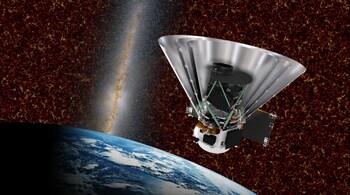
Sometimes, answers to life’s biggest questions float in space. NASA’s newest space observatory, SPHEREx, has now begun its science mission. The observatory aims to explore how galaxies and life itself took shape.
Sky-wide survey begins with daily image capture
NASA confirmed on Thursday that SPHEREx has entered full science operations. The telescope launched on 11 March and spent six weeks in space calibrating its instruments. Engineers ran detailed checks to ensure the observatory performs as designed.
SPHEREx will now scan the entire sky over two years. It will take nearly 3,600 images every day during its mission. NASA says the telescope will orbit Earth more than 11,000 times. It will circle the planet over 14 times daily.
Uncovering clues about life and the universe
The main goal is to map hundreds of millions of galaxies. These charts will help scientists learn how the universe evolved. SPHEREx will work in three dimensions to trace galaxy positions and movements. This will shed light on how cosmic structures formed.
NASA officials say the observatory could also find signs of life’s building blocks. The data may reveal the ingredients found in planetary systems across our galaxy.
Shawn Domagal-Goldman, acting head of NASA’s Astrophysics Division, said SPHEREx will support bigger missions. It joins other space surveys that pave the way for the Nancy Grace Roman Space Telescope.
Together, these missions could help answer how the universe began and what lies ahead.
Discover the latest Business News, Sensex, and Nifty updates. Obtain Personal Finance insights, tax queries, and expert opinions on Moneycontrol or download the Moneycontrol App to stay updated!





