

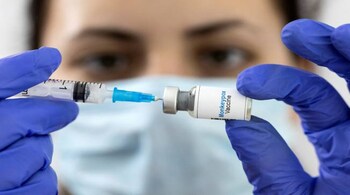
Advisers to the U.S. Food and Drug Administration on Thursday unanimously voted in favor of targeting the same coronavirus strain for initial COVID-19 vaccine doses and boosters going forward, but some expressed skepticism about whether all Americans need to receive the shots annually.
The agency is trying to simplify its COVID-19 vaccine policy as it considers whether to recommend Americans get an annual booster shot for the virus. But several members of the expert advisory group asked for more robust data on benefits of annual shots for younger, healthier people.
"We're in a very different place. We have a lot of population immunity," said Hayley Gans, professor of pediatrics at Stanford University Medical Center. "Now that people are immune, how long does that last?"
Vaccine makers Pfizer Inc with partner BioNTech SE and Moderna Inc introduced late last year updated versions of their COVID vaccines tailored to target Omicron variants as well as the original coronavirus. In the United States, those were used only as booster shots.
The FDA advisory group unanimously backed using those shots for the primary series for those who have yet to be vaccinated against COVID-19 as well.
The FDA said it envisioned holding a meeting later in the year to determine the composition of shots for the fall, although some vaccine makers might be able to produce updated shots more quickly.
Pfizer/BioNTech and Moderna were able to produce the currently available messenger RNA boosters in about three months last year, but Novavax Inc said on Thursday it would require six months to make a new version of its protein-based COVID-19 vaccine designed to match circulating coronavirus variants.
FDA would consider an earlier timeline for vaccines like Novavax's following the company's manufacturing assessment, Peter Marks, director of the agency's Center for Biologics Evaluation & Research, said.
Health officials in the Biden administration have suggested that annual, updated COVID-19 booster shots could provide a high level of protection against severe disease.
Discover the latest Business News, Sensex, and Nifty updates. Obtain Personal Finance insights, tax queries, and expert opinions on Moneycontrol or download the Moneycontrol App to stay updated!





