

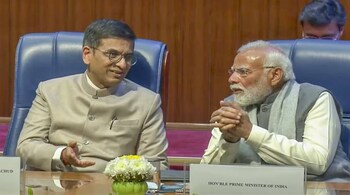
Chief Justice of India (CJI) DY Chandrachud on February 22 launched the AYUSH Holistic Wellness Centre inside the Supreme Court premises. During the inauguration, he spoke about his personal experience with AYUSH treatments and how they helped him overcome his fight with COVID-19.
Expressing concern for the Supreme Court staff's well-being, CJI Chandrachud emphasised extending holistic healthcare beyond the judiciary. He stated, "I want them to have a holistic pattern of life," highlighting his commitment to comprehensive wellness for all.
“I have been associated with AYUSH since Covid broke out,” he said, adding, “I took medicine from AYUSH when I was down with Covid. The second and third time when I had Covid, I didn't take any allopathic medicine at all.”
CJI Chandrachud also talked about how Prime Minister Narendra Modi aided him in gaining access to AYUSH treatment for SARS-CoV-2 infection. He said, “The Prime Minister called me when I was down with Covid and arranged for a consultation with an AYUSH vaidya. I took the medicine and did not require allopathic treatment in subsequent Covid infections.”
"I underwent Panchakarma about a year ago, and I am looking forward to doing it again now, as it is the turn of the season,” he added.
Providing details of his holistic lifestyle, the CJI said, “I do Yoga and follow a vegan diet for the past five months. I believe a holistic pattern of life begins with what you eat.”
“They have a wonderful facility at Saket, and now we are bringing this to the Supreme Court. Each of the doctors who contributed to this has scientifically prepared this facility. We are unveiling this to the Supreme Court and, through it, to the entire nation," he said.
(With ANI inputs)
Discover the latest Business News, Sensex, and Nifty updates. Obtain Personal Finance insights, tax queries, and expert opinions on Moneycontrol or download the Moneycontrol App to stay updated!





