

Many years ago, on one of my many travels I stood at the gates of a North Melbourne suburb called Albert Park pondering the answer to a question: Do you want to drive the circuit? My breath was forever stuck in my throat as my wallet died and went to hell. I could not afford the drive I sorta knew by heart. Three corners. On the exit at T3 to fuel up, the flashiest double corner on turn 11 and 12, and the extended chicane on turns 15 and 16…
Isolation is getting to me, I think because I need to come back to reality and so I chose to binge-watch something that you could sit down with everyone in the family. And it has inspired me often times when I have felt the need to look at my own life and felt wanting. Finding heroes that can fly on the ground at speeds that are more than 250 mph is good enough.
Formula 1: Drive to Survive is a show (now in season 2) that has been consistent in quality and it takes you so close to the action you can actually feel the excitement in your living room. Season one starts innocuously enough. We follow different teams through their ups and downs and the narrative is so intimate that you feel as nervous as Ricciardo’s mum watching him race. You can hear the gears inside Magnussen’s head click as his blue eyes concentrate on the race ahead.
This Netflix and F1 collaboration works out rather well because the camera goes where ordinary paparazzis cannot. It was such a thrill to see the camera go into McLaren’s facilities in England and you get to see Niki Lauda’s car and Senna’s car and before you know it, you are watching the episode with your jaw on the floor, just awestruck by the big engineering and technological feat that is a car created for the F1. To hear them say that they need to work hard to keep Alonso driving for them is surreal. But then I've not watched an F1 race for years. After Schumacher and Senna… Before I carbon date myself, let us look at the unveiling of the cars!
The only reason why I’d ever want to visit Azerbaijan is that as a teen I was a fan of a cricketer with a similar name and that a pen pal I made in middle school sent me a postcard with Maidan Tower in Baku. But today there’s Eurovision and F1 in Baku! The race track in Baku feels narrow somehow and the accidents you witness will make you drop your popcorn on the floor (that’s a warning!)
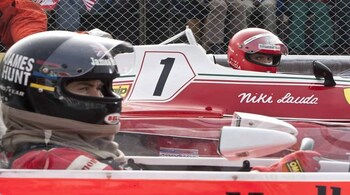
Barcelona brings out the competition between Alonso and Carlos Seinz Jr and I am forced to sidetrack to one of the coolest movies about rivalry in motorsport. The film is called Rush, and it’s got everything you’d think motorsports is all about: Fame and glory and the passion to win aside, there’s that knack to build a machine that outperforms everything and everyone else.
I have flown in a small plane owned by Niki Lauda, so clearly the film Rush made me feel like I was a part of history. (Sorry for bragging!). The film is available on Netflix UK, so do search for it if you have not seen it.
The desire to win above all made these men legends and when you go back to the Netflix show you see why many of the F1 drivers choose to live in Monaco. It’s the glamour, the movie stars, the glittering harbour, the boats… And most importantly as the youngest F1 driver explains, ‘Mom’s there, she does the laundry…’
I’ve been to Monaco, and you can hear the resounding screams of the cars and smell the Champagne in the air. I have walked the 3.337 km (2.074 miles) Monaco circuit. You can too. The best part of the racetrack is that it goes into a tunnel. When you walk there, you can feel the reverberations of the cars. Now imagine the banshee-like F1 cars zooming into the tunnel and coming out into the harbour! Brilliant!
Of course, Monaco is one of the richest towns in the whole world and because of that, staying there is steep, but you can take a short train ride from Nice just to ogle at all the fancy cars parked at the famous Casino there (the only time I have seen a Rolls and a Lamborghini parked next to one another only to be outshone by a snazzy Ferrari 488. But I digress. The Monaco races in the show will mean decision-making time for Ricciardo and Verstappen after they crashed into one another...The camerawork in this episode is awesome because you get to see what the driver is seeing - the narrowest of roads and the twists and turns - breathtaking!
Must confess I was taken aback at seeing Vijay Mallya in the midst of the F1 dream, so I skipped the part. The business of F1 is like all sports. The money is there when you win, and there’s only that much space on the podium. You are welcome to hear Mallya, but I cared more about Alonso’s retirement. But what happens when bad luck seems to follow a driver? Can Grosjean get out of the hole or will he continue his run down the spiral?
Driving that mean machine. There are cheers and fans all over you when you are doing well, but when you don’t, do you even get invited for the team dinner? And how does that help your self-confidence?
The crashes are spectacular, and if you are like me, you will watch them again and again, the first time horrified, the second and the third and the fourth time as if you were trying like Rashomon, to get to the truth… The moment when the crash occurs...Senna’s death was very personal because I was very young then and he was a hero to me. He was practically flawless in the car, and his death in 1994 made Formula One sort of pointless to me. This 2018 series instilled that interest once again, even though they have not followed the phenom called Hamilton at all in the driver’s seat.
The young men driving these beasts are really young. Charles Leclerc is only twenty years old, He has grown up in Monaco and has dreamt of driving for Ferrari since he was four. Now that is how I wish this generation of young people should be: Driven. Drivers who have been childhood friends and have grown up racing Go Karts with one another now face competition in the F1! ‘Fascinating’, as Mister Spock would say. Does that mean we cannot be inspired by the likes of Kimi Raikkonen? While Hamilton smiles away Kimi makes reporting F1 difficult. Teams vie for the best drivers and it’s all about contracts and managing things behind the scenes that makes things happen.
And yes, there’s that fascination with machines that can perform so brilliantly. Even when the races are run at night! The Singapore Grand Prix is a visual delight, especially if you have played those racing car games (I crash spectacularly and often, I must admit). But when Leclerc dedicates his success to a fallen friend Jules Bianchi, you realise that there is so much humanity behind the competition.
The American weekend follows Haas as they prepare for a fierce battle with Renault. Watching Magnussen drive on the Carolina dirt track reminded me of the children’s animation film Cars, where old-timer Doc Hudson races with Lightning McQueen just to bring him down a notch or two.
And if you enjoy speed, then you must travel to the Utah salt flats where the sheer expanse of the vista is sure to stump you. The Bonneville racing track is where the world’s fastest racing happens. Motorbikes are tested here (you can search for the Honda Goldwing project and thank me later!) and one of my favourite movies was shot here. A true story of a New Zealander Burt Munro who drives The World’s Fastest Indian.
When did I watch the entire season of F1 and go on to Season 2? Being in isolation does funny things to your sense of time. I watch the young lads take the podium, talk about competition, dreams made, dreams lost, and what? I am more than halfway through the second season? No breather? For someone who gets impatient with repetitive tasks, watching the second season of the same F1 circuit should have been a pain. But the new blood driving the vehicles that are supported by teams that have been around for decades is just magnificent.
And I’m glad to watch Lewis Hamilton drive on a rain-soaked German Grand Prix. To see the winner go back to the 12th position mid race and having to bring out all that inner strength is brilliant. The series takes the chequered flag with everyone thinking about performance as individuals and as teams. The owners, the pit crew as well as the drivers as seen by the journalists who cover this sport not just as fans but with a critical eye. And at one point you know even though this sport is made by money, that’s what draws thousands and thousands to the stands (and to our television sets) race after race, it is the heart.
As they say in the show, ‘Formula One is addictive and it draws you in. The characters, the competition, the drama, the theatre, the performance of these spectacular machines’ and the next season already looks like a classic… I cannot end this piece without urging you to watch the docudrama about the greatest Formula One driver in my opinion: Senna.
Manisha Lakhe is a poet, film critic, traveller, founder of Caferati — an online writer’s forum, hosts Mumbai’s oldest open mic, and teaches advertising, films and communication.
Discover the latest Business News, Sensex, and Nifty updates. Obtain Personal Finance insights, tax queries, and expert opinions on Moneycontrol or download the Moneycontrol App to stay updated!





