

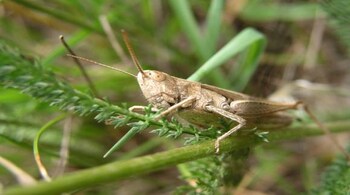
I am no locust-sympathiser but of late, as battalions of locusts filled the sky, the short-horned grasshopper has been hated, trolled, meme-d. Drones, beating drums, banging pots and insecticides have been pulled out as ammo against them.
The menace rages and the bug-blizzard is still lurking. I am no locust-sympathiser but for a moment, let’s leave the locust-hate on the sidewalk and think of the 2-gram insect as something else. As mention in the Bible. As the only kosher insect. As the mighty bug lending its name to the identity of Ethiopians - in second century BCE, Diodorus of Sicily called people from Ethiopia Acridophagi (eaters of locusts and grasshoppers). As the world’s oldest migratory pest. And, of course, as dinner.
No, I am not propounding the devil as dinner theory. History vouches for locusts as meal. Delicacy, actually. As early as 8th century BCE, servants served locusts arranged on sticks in royal banquets in the palace of Asurbanipal (Ninivé, Middle East). There are records of locusts being consumed in the Fertile Crescent for long; nomads of Libya still boil and eat locusts and it is a common roadside snack in Indonesia and Thailand. For centuries, Yemenite Jewish communities have snacked on grasshoppers, specially ones that have fed on sesame plants while Palestinian Bedouins still cook locusts in butter or with rice and milk. In an article, Israel’s senior lecturer Zohar Amar talks of the custom of eating locusts being very widespread during the period of the Mishnah and the Talmud and is documented in many sources.
Worldwide, eating insects is not uncommon. Over 2 billion people eat insects with nearly 1,900 species on the menu, with locusts and crickets comprising 13 percent of insect consumption (Source: FAO).
Israel’s famous locust chef
No one serves locusts better than Chef Moshe Basson, owner of The Eucalyptus restaurant in Jerusalem. Calling himself a defender of Biblical culinary tradition, Chef Basson sources locusts from Jerusalem-based locust-grower Dror Tamir and serves them in various ways. Over a long-distance phone call, Chef Basson talked of the goodness of locusts and his favourite locust recipes.
Is locust the only kosher insect?
Yes. Locust is the only insect considered kosher and four types of desert locusts are mentioned in the Torah (five books of the Hebrew Bible) - the red, the yellow, the spotted grey, and the white. “Yet these may you eat of every winged swarming thing that goes upon four, which have legs above their feet to leap with upon the earth. These then you may eat: the locust (arbeh) after its kind….” (Lev. 11 21-22)
What does a locust taste like?
Think of it as a tasty, crunchy snack. Something similar to an aftertaste of sunflower seeds. Call it a cross between chicken schnitzel, prawns and toasted sunflower seeds. The female locusts filled with eggs are more flavourful. However, the most delicious locusts are ones that have feasted on sesame plants - they acquire an oily, shiny tinge and are extremely succulent.
Are locusts nutrition-dense?
The two-gram insect is packed with nutrients - high in protein, zinc and iron with traces of potassium. Emitting very little in the way of greenhouse gases, locusts are no global-warming villains.
What are the best locust dishes?
Before cooking comes careful cleaning. First, take off the heads like you might do with a prawn. Remove the black thread from along its spine, its wings and the smaller legs. If you don’t, you might wake up to a constipated morning.
Throw locusts in boiling vegetable stock. Ignore the squeals. The shell might shoot off, so be careful. When the locusts turn pink, remove from the stock. You can dip the locusts in beaten eggs, roll them in flavoured flour (chickpea flour with added garlic, chilli, salt) and deep fry. Or, you can add them to salad. Add it to your pasta. And if you have a sweet tooth, boil locusts in sugary syrup; caramelise them for a crunchy dessert.
Rename locusts as 'sky prawns'
Ever thought of rechristening ‘locust’? Christopher Carr and Edward Joshua of the New South Wales Department of Primary Industries did. They proposed renaming of locusts as ‘sky prawns’ to make it more palatable to Western menu nomenclature.
Locusts, Pillsbury and a Prayer
Every kitchen pantry has a Pillsbury. Pillsbury Flour. Pillsbury Cookies. Pillsbury Pie crust. Pillsbury Brownies. But not many know that Pillsbury has a ‘miraculous’ locust connection. One Pillsbury - John S. Pillsbury, co-founder of the eponymous company and the governor of Minnesota during the Grasshopper Plague of 1877. When swarms of locusts invaded Minnesota and destroyed 500,000 acres of rich cropland, Governor Pillsbury declared April 26, 1877, to be set aside for prayers to end the plague. As the prayer day approached, sleet killed the destructive locusts. A chapel was built in Cold Springs (Minnesota) to honour the miracle. As for Governor Pillsbury, he won two more terms as governor.
Preeti Verma Lal is a Goa-based freelance writer/photographer.
Discover the latest Business News, Sensex, and Nifty updates. Obtain Personal Finance insights, tax queries, and expert opinions on Moneycontrol or download the Moneycontrol App to stay updated!





