

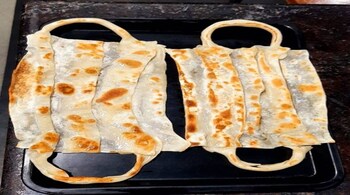
Madurai's Hotel Temple is now dishing out mask parottas, which they hope will raise awareness about the importance of wearing a mask as COVID-19 spreads across the country, CNBC-TV18 reported.
"We have been following the news and noticed how the government has been trying to educate citizens about the importance of wearing masks and decided that we would do our bit to spread the message too," says KL Kumar, the owner of the hospitality and restaurant chain, adding that he thought it would be a good reminder for patrons to wear their masks if they were served parottas shaped like one.
Explained | Parotta: The richer cousin of the plain chapati
Rolling the dough in the shape of a rectangle, Kumar asked his chefs to add two pieces of dough at the end of the parotta, resembling the shame of a mask. Available at Rs 50, these are served in a pair, with a side of korma and raita. By July 7, Kumar's Temple Shop sold almost 500 sets of the unique parottas without having any dine-in service.
"Word got out on social media that we were serving up these parottas even before we sold our first plate, and we sold 50 sets of parottas by lunch," says Kumar.
This is not Kumar's first foray into trendy foods.
"I’ve always tried to cook food in keeping with pop-culture trends," says Kumar, "In 2002, when Rajinikanth's Baba released, I launched my first-ever dosa innovation — the Baba Paneer Masala Dosa, which had a serving of vegetable korma to resemble Rajinikanth’s signature hand gesture in the film.”
Also Read: The parotta v/s bread GST classification is just one in the list of many such tax disputes
Temple Shop's mask parotta now joins a whole range of coronavirus-shaped delicacies like the Corona Bonda and Corona Rava Dosa, which made the rounds on social media earlier.
Discover the latest Business News, Sensex, and Nifty updates. Obtain Personal Finance insights, tax queries, and expert opinions on Moneycontrol or download the Moneycontrol App to stay updated!





