

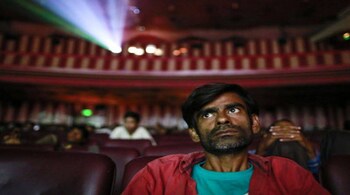
It’s a double whammy for cinema theatres. First, the coronavirus-led lockdown and theatres remaining shut for over 100 days with no sign of reopening yet. And now, star-studded films directly releasing on over-the-top (OTT) platforms.
The impact of both these aspects is felt more by single screens. Some of them have already shut and many single-screen exhibitors are contemplating bringing the curtains down forever.
In the last few months, many single-screen theatres including Maharani and AVM Rajeswari in Chennai, and Shantala and Padma in Karnataka have permanently closed.
These were iconic single-screen properties that were entertaining Indian audiences for years. AVM Rajeswari was opened in 1979, Maharani in 1949, Shantala was a 46-year old theatre and Padma, which started 80 years back, was considered among the first-generation theatres.
“There are dozens of single screens that have shut down pan-India and dozen more are contemplating a shutdown because there is no relief of any form from the government despite cinemas being shut for over 100 days. The degree of uncertainty we are facing right now is a stepping stone towards shutting down,” says Akshaye Rathi, film exhibitor and director, Saroj Screens Pvt.
According to film trade experts, 50 percent of the total 6,327 single screens in India will not reopen whenever theatres in the country are allowed to restart business.
“When cinemas reopen, a lot of single screens will not restart immediately and wait for tentpole films to come because exhibitors are worried that the sale would not be enough to match up to the expenses,” he said.
Rathi added that there is hardly any clarity around how many films will take to theatrical release and when will they release.
Exhibitors across the country have expressed their displeasure regarding the direct-to-digital release of tentpole films like Akshay Kumar’s Laxmmi Bomb and Ajay Devgn’s Bhuj.
“These films would have done well in theatres. We have missed out on the opportunity,” said Rathi.
Many other single-screen exhibitors are disappointed by digital premieres of star-studded films. According to them, Bollywood has acted prematurely and could have waited for at least two months before taking the OTT route directly.
Big star names pull people in huge numbers to theatres and such films are particularly more important for single screens. This is why single screen owners are saying big ventures going to OTT has added to their woes.
But exhibitors also think that taking big films to OTT first will have long-term negative impact on the Hindi film industry.
Theatres to give preference to Hollywood, films from south
Very few tentpole Hindi films are left for theatrical release including Sooryavanshi, Salman Khan’s Radhe, Varun Dhawan and Sara Ali Khan-starrer Coolie No 1 and Ranveer Singh’s 83. Hence, single-screen exhibitors are now planning to focus more on Hollywood films and movies from South India.
Producers of films from down south like Vijay’s Master, Suriya’s Soorarai Pottru have said that they will wait for theatres to reopen because the stars of their films have huge fan base in Tamil Nadu who prefer watching movies in theatres.
Rathi is of the opinion that dubbing of films from South India will result in large content pipeline .
“It is important to demolish linguistic barriers and we need to start looking at all movies as Indian films. South stars like Rajinikanth and Vikram have a huge fan base across India. Also, many Hindi ventures are remakes of South Indian films. And in the south, the content is phenomenal,” he said.
While Hollywood and regional films can help single screens in terms of content, what these properties need immediately is government support.
As a first step, Rathi said the government can immediately waive off minimum demand charges for electricity. States such as Bihar and Andhra Pradesh have already waived off electricity fixed-load charges.
“Also, whenever theatres reopen the electricity tariffs for cinemas should be at industrial power rates rather than commercial tariffs,” he stated.
“We are hoping that subsidies or rebates for the salaries we have been paying to employees is given to us. Generating liquidity for us to sustain longer could be through zero-interest loans, grants, subsidies or waiver on GST payment. Also, property tax and local body taxes can be waived off,” he said.
According to Rathi, effective implementation of laws under the Copyright Act, which penalises anyone who engages in piracy as a buyer or seller with three months of jail and a penalty of Rs 75,000 could be a game-changer. "Piracy is rampant currently. When Gulabo Sitabo released at 12 in the night on Amazon Prime Video, at 1 am its pirated version was available. Hence, the implementation of laws against piracy will help theatres, OTTs and satellite channels,” he observed.
Rathi reiterated that the government needs to step in to support single-screen theatres as there will be an additional cost that exhibitors will have to bear when they reopen.
“Additional cost for safety will increase cost of operations by around 15 percent at least. And what is critical is the fact that the exhibition sector is not highly profitable. It is a sector with roughly 8-9 percent EBITDA (earnings before interest, taxes, depreciation and amortisation),” he said, adding that banks are not offering loans to exhibitors.
In fact, Vishek Chauhan, a single-screen exhibitor who runs Roopbani Cinemas in Bihar tweeted that when one of his exhibitor friends asked for a loan to renovate his cinema during the lockdown, banks were not interested and told him that since movies were coming on OTT, he shouldn’t be investing in cinemas.
“Cinemas employ an average of 15 to 20 people. So, more than 6,000 single screens in India that employ one lakh directly and around two lakh indirectly have got no credit facilities or extensions from banks,” Chauhan added.
Discover the latest Business News, Sensex, and Nifty updates. Obtain Personal Finance insights, tax queries, and expert opinions on Moneycontrol or download the Moneycontrol App to stay updated!





