

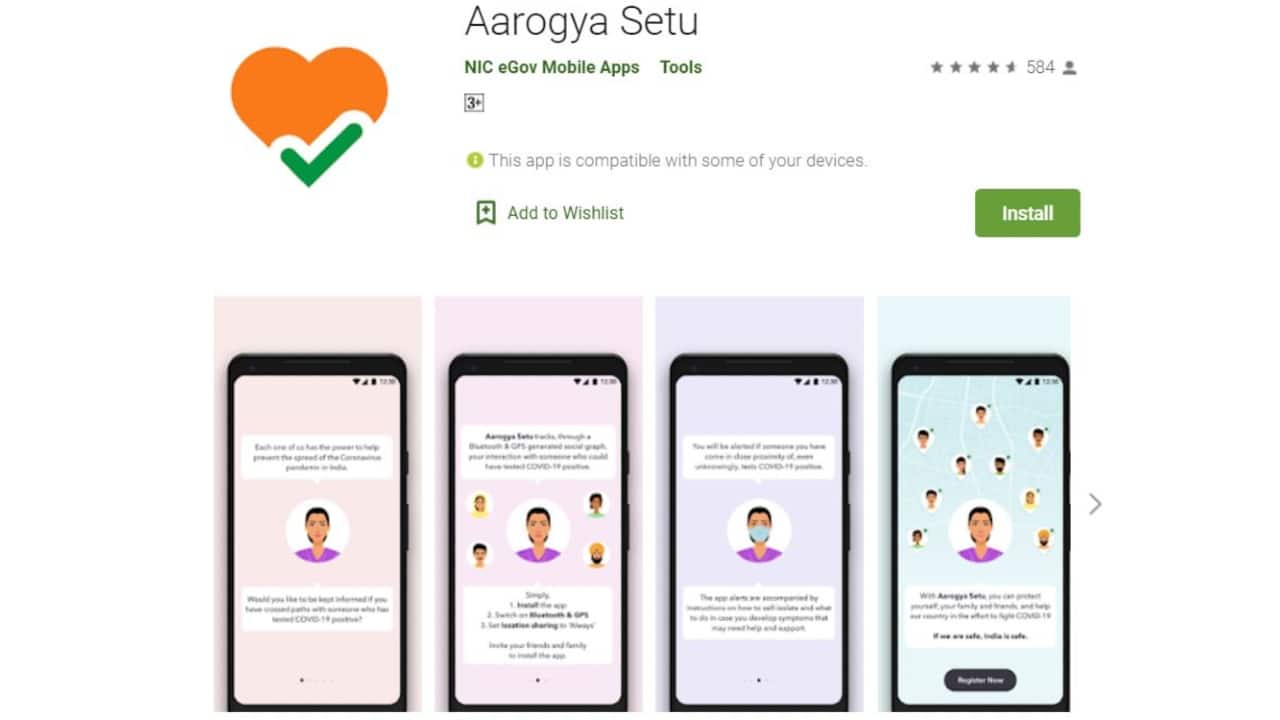
The Indian government is stepping up its efforts to make credible information about the novel coronavirus accessible to the masses with the launch of a new tracking app, Aarogya Setu.
The new app is available for both Android and iOS users and can be downloaded from the Play Store or Apple's App Store. According to the description of the app, it is aimed at "augmenting" efforts to "proactively" inform the citizens about the "best practices and relevant advisories pertaining to the containment of COVID-19."
Aarogya Setu essentially helps users in identifying whether they are at risk of being infected by the coronavirus by checking if they have knowingly or unknowingly come into contact with individuals that have been tested positive with COVID-19.
The app was first spotted by The Next Web noting that Aarogya Setu uses a government database of infected people to function. It was developed by the National Informatics Center which falls under the Ministry of Electronics and Information Technology (MeitY).
Aarogya Setu supports up to 11 different Indian languages, including Hindi and English and requires Location and Bluetooth access to determine if you have recently come in contact with a COVID-19 positive patient. People will have to first register their mobile number before using the Aarogya Setu app.
The app also asks users for their credentials, but that step is optional. The government also claims that the data stored on the app is "encrypted" and doesn't share any third-party vendors. The app will also tell you if you are in a safe location or not. Android users will also receive live tweets from the Ministry of Health.
Both union and state governments have launched a host of coronavirus-related apps over the last few weeks to curb the spread of fake information about the pandemic in the country.
Discover the latest Business News, Sensex, and Nifty updates. Obtain Personal Finance insights, tax queries, and expert opinions on Moneycontrol or download the Moneycontrol App to stay updated!





